Ameenpur Lake: Our Heritage – It Is Our Responsibility to Protect It
*Ameenpur Lake: Our Heritage – It Is Our Responsibility to Protect It*
*– India’s First “Biodiversity Heritage Site”*
*– Ameenpur Lake: A Site of Exceptional Biodiversity – Now a Hub for Encroachments*
*– The Biodiversity of Ameenpur Lake Has Now Become a Haven for Encroachments and a Cesspool of Pollution*
*Author: Ravi Babu Pittala, Environmentalist*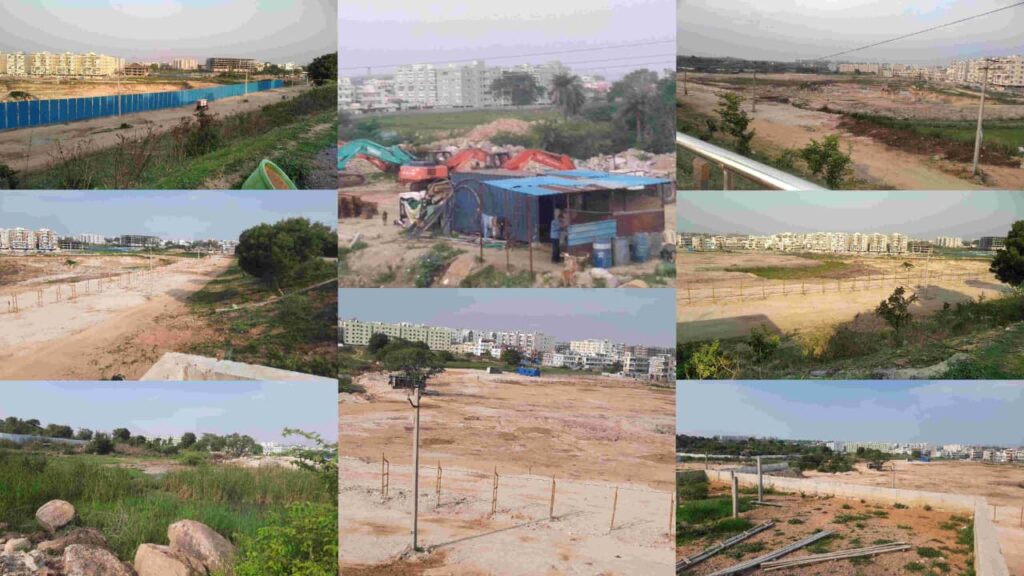
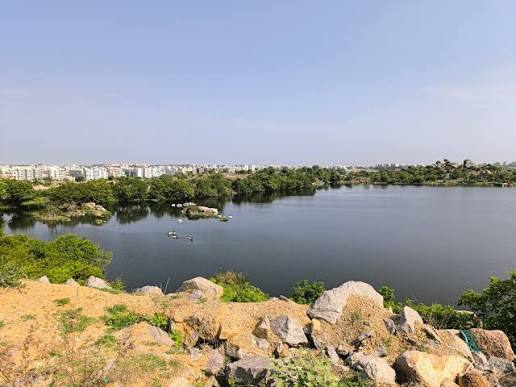
*Ameenpur Lake Biodiversity Heritage Site:* Ameenpur Lake once stood as a biodiversity hub of paramount importance in the vicinity of Hyderabad. It is a rare lake, distinguished as the very first “Biodiversity Heritage Site” in the entire country. Migratory birds, native avian species, fish, amphibians, and aquatic plants—all converged here to create a balanced and harmonious natural ecosystem. For birdwatchers and nature researchers, it served as a living laboratory. The region encompassing Hyderabad, Secunderabad, and their surrounding areas was once a treasure trove of natural wealth, teeming with biodiversity across more than 1,400 water bodies—including reservoirs, ponds, interconnected tank systems, streams, rivulets, dams, and embankments. However, the current state of this lake is becoming increasingly alarming. Encroachments are gradually eroding the lake’s natural boundaries, and driven by pressures from the real estate sector, illegal constructions are proliferating around the lake. As a result, natural water flow channels are being disrupted. Water bodies with a history spanning 400 years—including reservoirs, ponds, and tanks—are being encroached upon by self-serving individuals, under the guise of “development.”
*The Nature and Scope of Pollution in Aminpur Lake:* Pollution has emerged as yet another major challenge. The quality of the water is deteriorating rapidly as sewage and industrial effluents from neighboring areas flow directly into the lake. The accumulation of plastic waste, discarded religious offerings, and household refuse within the lake is having a severe impact on its aquatic ecosystem. Consequently, adverse effects such as mass fish deaths and a decline in bird populations are becoming increasingly evident. With each passing day, the lake is losing its inherent physical and chemical properties, while its natural geographical contours are being erased. With the active support of land grabbers, encroachers, and corrupt officials—and under the tacit patronage of self-serving politicians—laws are being brazenly flouted as the lake’s land is systematically encroached upon.
If we fail to halt this destructive trend—which runs counter to the very fabric of nature—we stand to lose these biodiversity-rich lakes forever; their serene environments and unique biodiversity will vanish from our midst.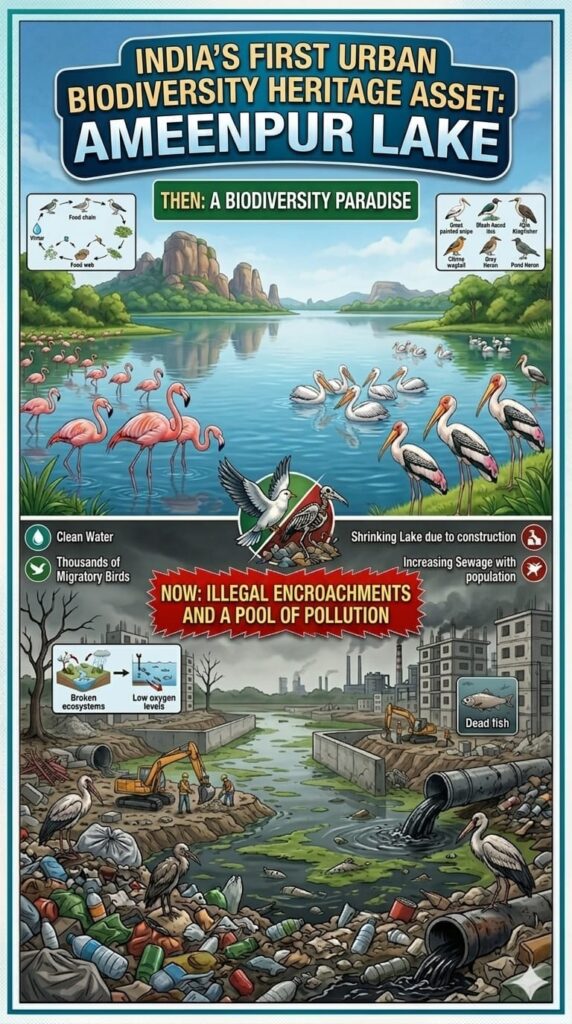
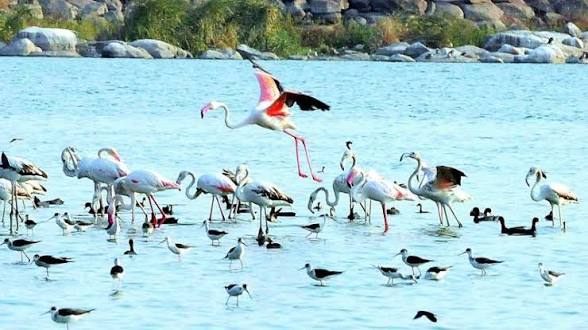
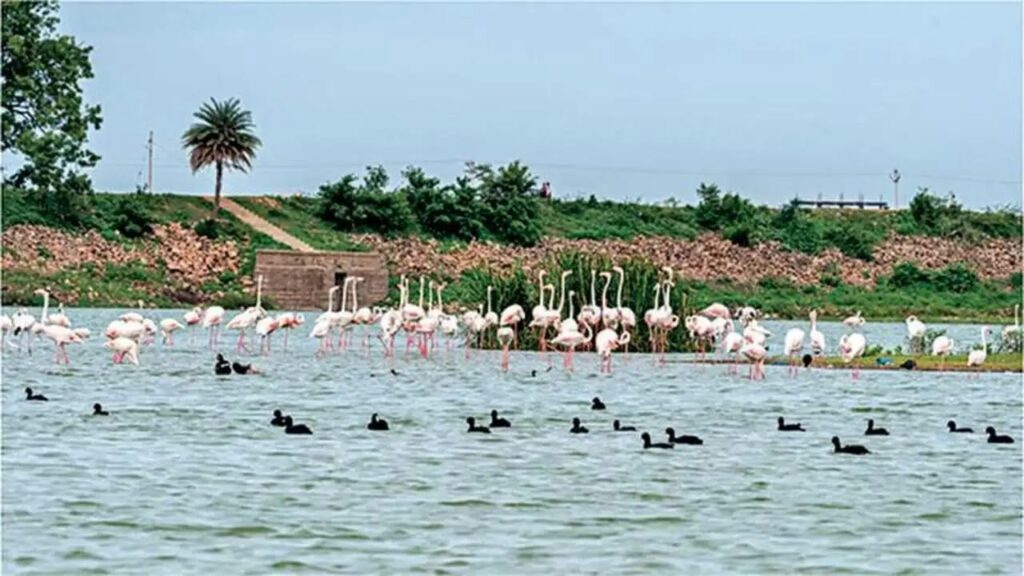
*Habitat and Geographical Details of Aminpur Lake:* Unless we act now to preserve these aquatic habitats—specifically lakes, which constitute one of nature’s most vital resources—nothing will remain of them in the future. Consequently, the entire ecosystem within this lake—including its zooplankton and phytoplankton, as well as its diverse array of animal, plant, and avian species—will cease to exist. This imbalance in the aquatic habitat poses a grave risk, potentially leading to the extinction of numerous species. Aminpur Lake (also known as Aminapur Lake) is but one example among the many lakes and ponds that are vanishing day by day. Ameenpur is a small lake situated within the Beeramguda locality, on the outskirts of Hyderabad city, in the Sangareddy district of Telangana, India. It is the first water body in India to be recognized as a Biodiversity Heritage Site, as well as the first biodiversity site to be designated within an urban area. Ameenpur Lake (Ameenpur Cheruvu) spans a total area of 93 acres. This lake is a familiar landmark to anyone acquainted with the twin cities of Hyderabad. Across the state, various water bodies—including ponds, lakes, reservoirs, streams, rivulets, and other water storage sources—are being encroached upon and are gradually disappearing. Once vital repositories of fresh water, these sites are now degenerating into cesspools.
*Area of the Aminpur Lake Habitat:* While precise official statistics regarding Aminpur Lake—covering all parameters such as depth and water capacity—may not be fully available in the public domain, generally available estimates are as follows: Area: Approximately 93 acres (about 37–38 hectares). Width/Spatial Configuration: The lake does not possess a uniform, geometrically measurable shape. However, on average, its width ranges from approximately 300 meters to 600 meters in various sections. Depth: This varies depending on the season; typically, it ranges from 2 meters to 6 meters (reaching greater depths during a good monsoon season). Water Storage Capacity: A precise figure has not been officially announced. However, based on estimates derived from the aforementioned dimensions, the capacity is likely to fall between approximately 0.5 and 1.0 million cubic meters. It is crucial to note here that these dimensions are diminishing over time due to encroachments, the inflow of sewage, and siltation (the accumulation of sediment). Consequently, the lake’s current actual storage capacity is likely significantly lower than its original potential capacity.
*Biodiversity Significance of Aminpur Lake:* It holds the distinction of being India’s first “Biodiversity Heritage Site.” Aminpur Lake is an aquatic ecosystem that serves as a vital sanctuary for exceptional biodiversity. Indeed, Aminpur Lake is characterized by a truly unique and rich biological diversity. Over 272 species of migratory birds visit this site. It is an international wetland ecosystem that offers both shelter and hospitality to a diverse array of species. Every year, birds migrate here from various countries to escape harsh weather conditions; they rest in this tank, spend nearly half of their life cycle here, and eventually return to their native lands once favorable conditions prevail.
Residents from surrounding villages, nature enthusiasts, landscape photographers, and wildlife photographers—among others—would visit this site to delight in its unique, natural environment, its rich natural resources, and its exceptional biodiversity. They would spend their time here joyfully, sharing their experiences with others. Capturing unique photographs in their own distinct styles, they would express and share their passions. Farmers engaged in natural farming practices would utilize the water from this tank—drawn through sluices and spillways—to irrigate their crop fields. Similarly, this tank serves as a vital resource for fishermen and countless others whose livelihoods depend on its waters. Such is the ecological significance of the Aminpur Tank wetland ecosystem.
*The Responsibility to Enhance Wetland Biodiversity Rests with Everyone:* This tank—a site of immense biodiversity, cherished by all who constantly seek the well-being of nature and the environment—is now facing encroachment and degradation. Besieged on one side by encroachments and on the other by the discharge of sewage from urban settlements, this water body has become a hotbed of pollution, thereby losing its natural attributes, physical and geographical integrity, and physicochemical characteristics. The sole cause of this degradation lies in selfish human actions. This pond is the very foundation of a unique and delightful ecosystem—a diverse tapestry of life where various species of birds, macro- and micro-organisms, plants, and plankton (both zooplankton and phytoplankton) coexist, relying on one another to sustain the food chain. It is imperative that, even at this late stage, nature enthusiasts, environmentalists, conservationists, guardians of natural resources, and non-governmental organizations dedicated to environmental protection come forward to rescue this vital resource; they must participate actively in this endeavor, aspiring to serve as role models for the rest of society.
*Status of Chemical Water Pollution:* Ameenpur Lake is a critical habitat in terms of both water quality and biodiversity. However, in recent times, its natural equilibrium has been disrupted due to chemical pollution and anthropogenic pressures. This can be understood scientifically as follows: sewage, domestic waste, and industrial effluents entering the lake are degrading its water quality. Specifically, the excessive accumulation of nutrients—such as nitrates, phosphates, and ammonia—is driving the water body into a state of eutrophication.
*Biochemical Oxygen Demand (BOD):* This parameter indicates the level of organic pollution present in the water. Typically, it should remain below 3 mg/L. If current levels in the lake are elevated, it signifies a high degree of pollution. *Chemical Oxygen Demand (COD)* is a metric used to quantify chemical pollution; elevated levels suggest an impact from industrial or domestic waste discharges. *Dissolved Oxygen (DO)* is absolutely vital for aquatic life and should ideally exceed 5 mg/L. A current risk of declining DO levels poses a threat of fish mortality. *Zooplankton & Phytoplankton:* Zooplankton are microscopic animals inhabiting the water; they play a pivotal role in the aquatic food chain. As pollution levels rise, the biodiversity of these organisms declines. Phytoplankton are microscopic plants (algae); when nutrient levels increase, their growth accelerates, leading to “algal blooms.” Eutrophication refers to the excessive accumulation of nutrients in water bodies, resulting in the rampant growth of algae. This process causes a decline in Dissolved Oxygen (DO) levels, which, in turn, leads to fish mortality. Currently, Aminpur Lake is entering this critical phase.
*Water Laws and Lake Conservation:* The Water (Prevention and Control of Pollution) Act, 1974, serves as the primary legislation for regulating water pollution. It grants the authority to take punitive action against polluters. Another pivotal piece of legislation is the Environment Protection Act, 1986, which acts as a comprehensive framework for safeguarding the environment. Through these statutes, lakes and their associated biodiversity receive legal protection. *Protection of Aquatic Habitats:* It is imperative to establish a buffer zone around the lake and to mandatorily set up a Sewage Treatment Plant (STP) to process wastewater. Furthermore, the use of plastics within the lake premises must be prohibited; biodiversity within the lake should be monitored using scientific methodologies; and the lake’s habitat must be preserved through continuous public participation. In essence, Aminpur Lake currently stands at the precarious intersection of eutrophication and pollution-induced stress. If appropriate measures are not implemented promptly, there is a grave risk that it will degrade into nothing more than a cesspool of pollution. However, with timely scientific interventions, strict enforcement of regulations, and active public engagement, there remains a distinct possibility that the lake can be restored to its former glory as a vibrant hub of biodiversity.
*According to Article 51-A(g) of the Indian Constitution, our Fundamental Duty is this:* The natural wealth and resources surrounding us constitute our property—and indeed, the property of our nation. Therefore, the responsibility to protect this natural heritage has been enshrined as a Fundamental Duty conferred upon us by Article 51-A(g) of the Indian Constitution. If we fail to discharge this duty—if we overlook encroachments and pollution, and neglect to take action to halt them and preserve our resources—then in the future, all our water bodies will inevitably transform into cesspools and fall into ruin. Consequently, we will have nothing left of this national heritage to bequeath to future generations. Such a failure would rest entirely upon our shoulders. It is imperative to strictly remove encroachments, establish sewage treatment systems to prevent wastewater from entering the lake, and enforce stringent regulations regarding waste disposal.
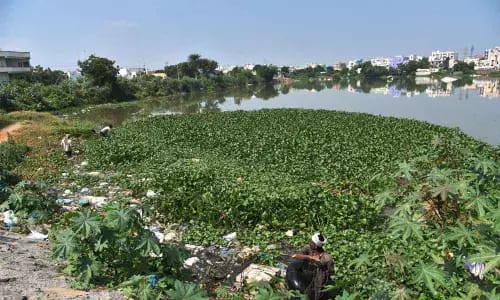
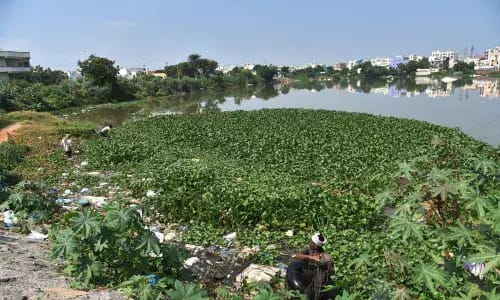
*Current Status:* Aminpur Lake is not merely a water source; it is a sanctuary for hundreds of bird species. However, today, this lake faces grave peril. Serving as a vital avian habitat, the lake attracts over 170 different bird species—including Flamingos, Pelicans, and others—that flock to its waters. The lake is currently ensnared in the clutches of pollution; the quality of its water is deteriorating rapidly due to the inflow of industrial waste and sewage from surrounding industries. Furthermore, the lake’s surface area is gradually shrinking as a result of illegal encroachments, unauthorized construction activities along its periphery, and the indiscriminate dumping of earth and debris to reclaim land. Plastic Waste: The local biodiversity is being destroyed due to the plastic bottles and wrappers left behind by tourists. Among the significant challenges we face, one stands out: if we protect nature, nature will, in turn, protect us. 1. Water Hyacinth: The accumulation of water hyacinth on the pond’s surface depletes the oxygen levels in the water, leading to the death of fish and other aquatic organisms. 2. Foul Odor: The inflow of sewage water is giving rise to health issues among local residents. 3. Groundwater: If the pond becomes contaminated, the water in the surrounding borewells also turns toxic.
*Protecting Ponds is a Social and Collective Responsibility:* Therefore—environmental enthusiasts, eco-friendly citizens, conservationists, environmentalists, researchers, students, educators, NGOs, wildlife photographers, and everyone else—must come forward collectively. We must unite to protect our natural resources, specifically safeguarding numerous ponds like the Aminpur Pond. We must step up and extend a helping hand to those who are already leading this movement. To transform this situation, the active participation of local communities is just as essential as government intervention. Only by raising environmental awareness and embracing pond conservation as a collective responsibility can we restore this site to its former glory as a vibrant hub of biodiversity. *A lake is not merely a reservoir of water—it is the very breath of nature.* Protecting Ameenpur Lake means protecting our own future. Just as our ancestors bequeathed this natural resource—a national treasure—to us, we must safeguard it as a legacy and pass it on to our future generations.
*What can we do? (Action Plan):* Do not litter: Refrain from dumping trash into the lake or along its banks. Let us prevent encroachments: If you observe any encroachment upon the lake’s land, report it to the authorities immediately. Appeal to the Government: Let us advocate for the establishment of Sewage Treatment Plants (STPs). Let us raise awareness: Let us educate environmental enthusiasts and future generations about the significance and grandeur of Ameenpur. Slogan: Let us save Ameenpur Lake—let us protect the environment! Important Note: Protecting this lake is not merely about conserving water; it is about safeguarding our future. Every individual must become a partner in this movement.
*Author: – Ravi Babu Pittala, Environmentalist, Former Assistant Professor, JNTUH, Hyderabad. Cell: +919849425271*