Our Survival Depends on Nature – A Comprehensive Call to Awaken
*Our Survival Depends on Nature – A Comprehensive Call to Awaken*
*Article Author: Ravi Babu Pittala, Environmentalist.*
The time has come to recognize that nature serves as the very life force sustaining all living beings on Earth. We must acknowledge that the destruction of nature—currently occurring under the guise of “development”—is jeopardizing our very existence; this is evident in regions like Karimnagar, where hills are being razed and water bodies encroached upon. As mandated by Article 51-A(g) of the Constitution, environmental protection is not merely a responsibility; it is our fundamental duty. We are in a critical state of urgency where we must awaken to the reality that “only if we protect nature, will nature protect us.” To this end, rulers and the administrative machinery must cease amending laws for their own vested interests and instead prioritize the preservation of nature with a focus on Sustainable Development. Furthermore, all citizens must cast aside their apathy and mobilize at the grassroots level—wielding environmental awareness as their weapon—to ensure a lush, green future free from droughts and famines for generations to come.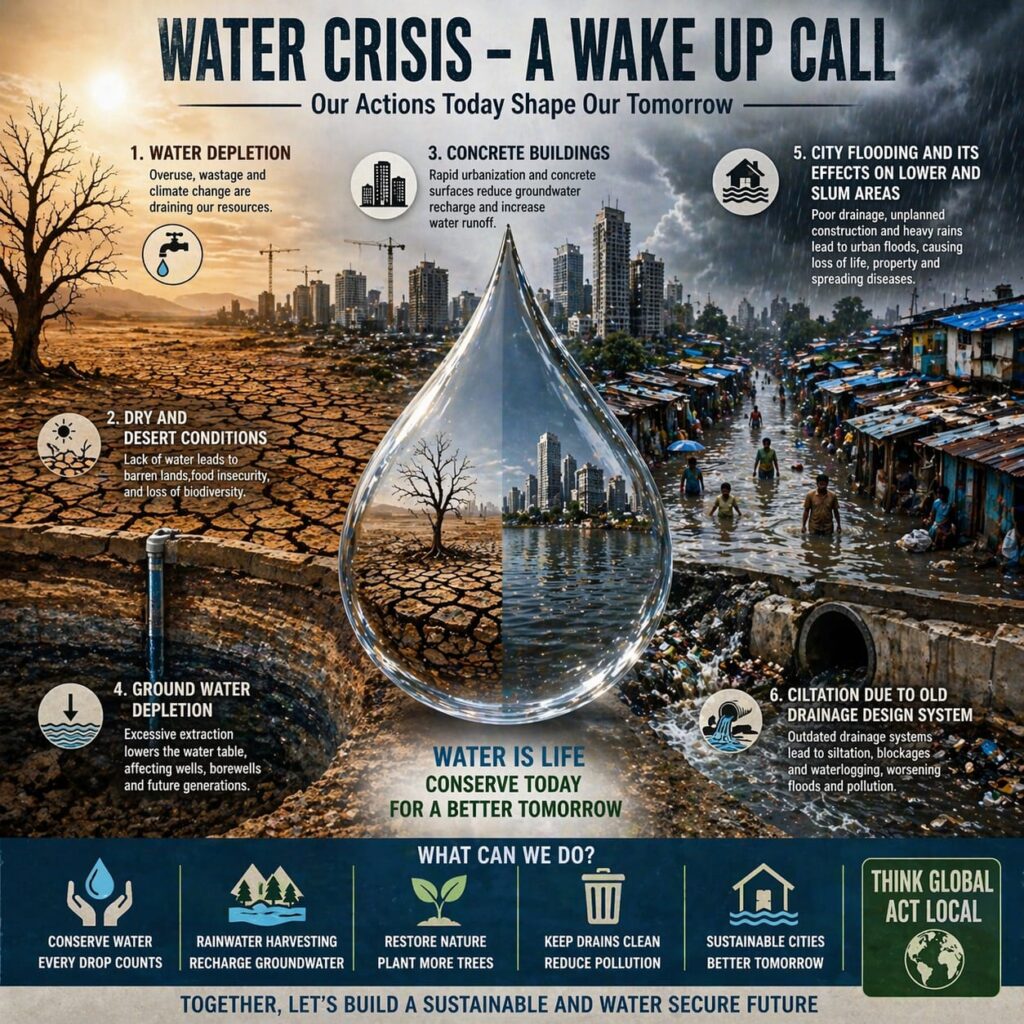
*This is a Critical Moment to Comprehend the Environmental Crisis*
The environmental destruction unfolding right before our eyes is no ordinary change; it is a severe crisis that threatens to impact the very future of human civilization. Hills are vanishing, lakes are disappearing, and forests are being decimated. This is not a natural phenomenon; it is a situation of our own making. Driven by a thirst for power and the pursuit of financial gain, the utilization of nature has crossed a critical threshold, devolving into outright exploitation. The environmental crisis we currently face is not merely a localized issue; it represents a perilous stage in which we are transgressing Earth’s “planetary boundaries”—the limits of the planet’s capacity to sustain itself. According to scientific data, Earth’s average temperature has risen by approximately 1.2°C compared to pre-industrial levels. This has resulted in atmospheric instability, and in regions like Karimnagar, the destruction of hills is having a severe impact on the hydrological cycle. Hills serve as natural “recharge zones” that replenish groundwater reserves; however, their removal under the guise of mining is depleting water resources and preventing rainwater from percolating into the soil, thereby leading to both floods and droughts. According to United Nations reports, approximately 10 million hectares of forests are being destroyed annually. This not only diminishes carbon sinks and exacerbates global warming but also facilitates the spread of viruses and pathogens from forests into human settlements—a phenomenon known as “zoonotic spillover.” Furthermore, the encroachment upon and pollution of lakes and ponds are causing a decline in ecosystem services; specifically, the reduction in pollination rates is placing food security at grave risk. Environmentalists warn that this short-sighted exploitation—undertaken for immediate economic gain—will inflict an irreparable blow to our nation’s future GDP, particularly impacting agriculture and the availability of natural resources. Therefore, they caution that unless plans grounded in a scientific perspective—specifically involving the immediate restoration of forests and water bodies—are implemented without delay, these natural resources bestowed upon us by nature will vanish before our very eyes, creating extremely critical conditions for the survival of human civilization.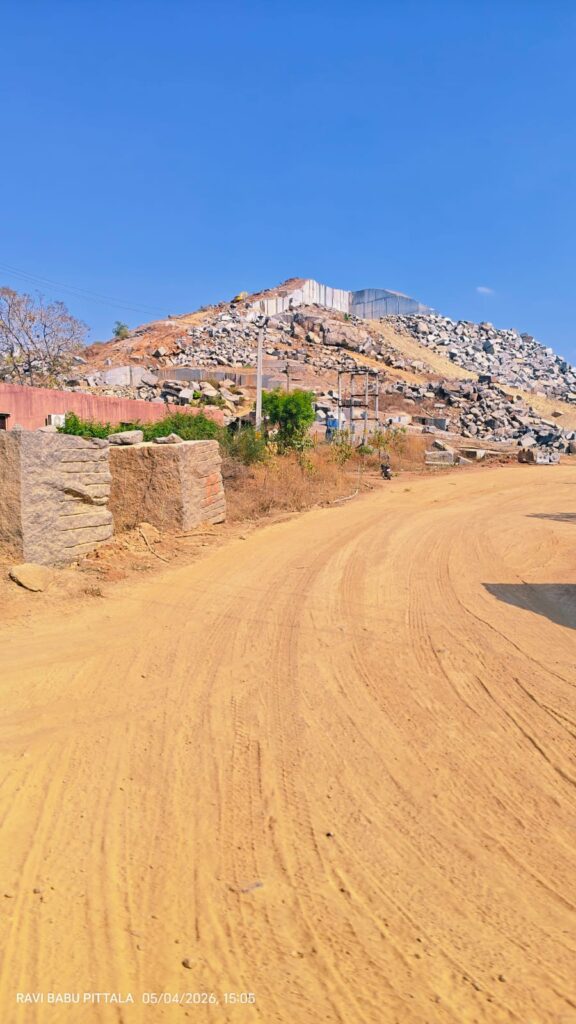
*Natural Resources – The Right of the People, The Responsibility of Governments*
Natural resources do not belong to any specific government; rather, they constitute the national assets of the people. The government serves merely as their custodian (trustee). However, under current circumstances, this responsibility is being disregarded, and resources are being diverted for private interests. This is an issue that demands to be challenged—not only on ethical grounds but also legally. Under the “Public Trust Doctrine,” natural resources are not merely economic commodities but are communal assets belonging to all citizens. The government must manage these resources solely in the capacity of a custodian (trustee) and must not treat them as its own private property to be handed over to private entities. From a scientific standpoint, natural features such as forests, hills, and riverbanks provide vital ecosystem services—including carbon sequestration, water filtration, and the regulation of local climatic conditions. In the absence of these elements, the resilience of the ecosystem is compromised, leading to the occurrence of disasters such as droughts and untimely floods. Environmental studies clearly demonstrate that when governments, driven by an eagerness to boost revenue sources, make decisions involving activities like mining and forest clearance, the biodiversity index of those regions suffers a drastic decline; furthermore, both groundwater availability and soil fertility are permanently impaired. For instance, when a hill is razed, the loss incurred—specifically the forfeiture of water security and climatic equilibrium that the hill would have provided for decades—is several times greater than the short-term mineral revenue derived from its removal. Therefore, any act by the government that disregards its fiduciary duty and subjects public assets to exploitation must be viewed not only as morally reprehensible but also as a measure that undermines the sustainable development essential for the survival of future generations. We can safeguard this natural heritage only through the collective efforts of the public, environmentalists, and non-governmental organizations engaging in legal struggles and challenging government policies with the backing of scientific data.
*Laws: Protection or Tools for Exploitation?*
Fundamentally, laws are intended to safeguard nature, all living beings, and the public. However, if they remain unenforced or are manipulated to suit specific interests, these very laws transform into instruments of exploitation. The current reality we observe involves the distortion of existing statutes, the crafting of new laws to serve partisan agendas, and the unilateral imposition of decisions without public consent—practices that pose a grave threat to the democratic system. The law ought to serve as a regulatory framework for preserving the ecosystem; yet, the current trend of amending and distorting environmental laws—thereby steering environmental protection toward deregulation—is profoundly dangerous. According to scientific studies, the simplification of environmental clearance procedures or the relaxation of Environmental Impact Assessment (EIA) regulations leads to a drastic increase in habitat fragmentation caused by mining and infrastructure projects within forested areas, thereby becoming a devastating blow to wildlife survival and biodiversity conservation. Data further indicates that the manipulation of laws to align with the interests of those in power results in an expanded ecological footprint, exerting severe adverse effects on the local environment. For instance, it has been scientifically confirmed that in regions where regulations have been relaxed, adverse effects such as declining groundwater levels, increased soil erosion, and rising urban and local temperatures (the “Urban Heat Island Effect”) have occurred. Due to public hearings—which are meant to be democratic processes—being reduced to mere formalities, not only are the rights and livelihoods of local communities being undermined, but the very principles of environmental justice are being completely disregarded. Since the framework of statutory protection is being exploited as a tool for plunder—leading to the continuous depletion of the nation’s natural capital and thereby jeopardizing both the country’s future economic security and the fundamental rights of its citizens—it is the urgent responsibility of every citizen and intellectual to demand transparency and scientific objectivity in the enforcement of these laws.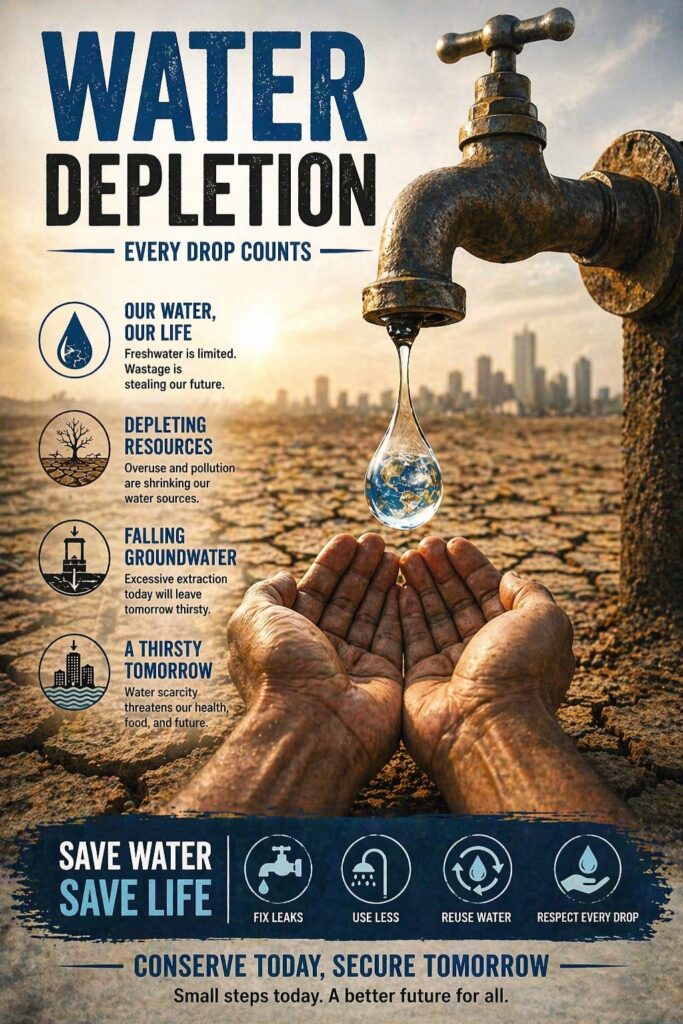
*Hills – Not Merely Rocks, but Sources of Livelihood*
In times past, hills were revered as sacred spaces—akin to temples. This was because they served vital functions: providing fodder for livestock, facilitating water storage for villages, serving as sanctuaries for biodiversity, and maintaining the equilibrium of the local climate. Today, however, they are being subjected to relentless excavation and leveled into flat terrain. This constitutes far more than a mere geographical alteration; it represents the degradation of entire ecosystems. Hills are not merely rocky formations; they serve as critical natural bio-structures within the ecosystem, playing a fundamental role in groundwater recharge and the stabilization of the local hydrological cycle. Scientifically speaking, hill slopes naturally facilitate watershed management by reducing the velocity of surface runoff and allowing rainwater to percolate into the soil; however, data reveals that their removal—often under the guise of mining—accelerates soil erosion, resulting in the loss of fertile topsoil and a drastic decline in groundwater levels. Furthermore, these hills function as ecological corridors for diverse flora and rare wildlife, thereby conserving biodiversity; their leveling leads to elevated local temperatures and a disruption of the micro-climate in these regions, thereby severely undermining rural livelihoods that depend on fodder and forest produce. The removal of hills not only alters the Earth’s surface but also results in the loss of entire ecosystem services, thereby exposing us to the risk of future water scarcity, climatic imbalances, and severe droughts. Consequently, it is our immediate social and moral responsibility to safeguard these hills—by integrating our traditional wisdom, which revered local hills as divine entities, with modern scientific conservation methods.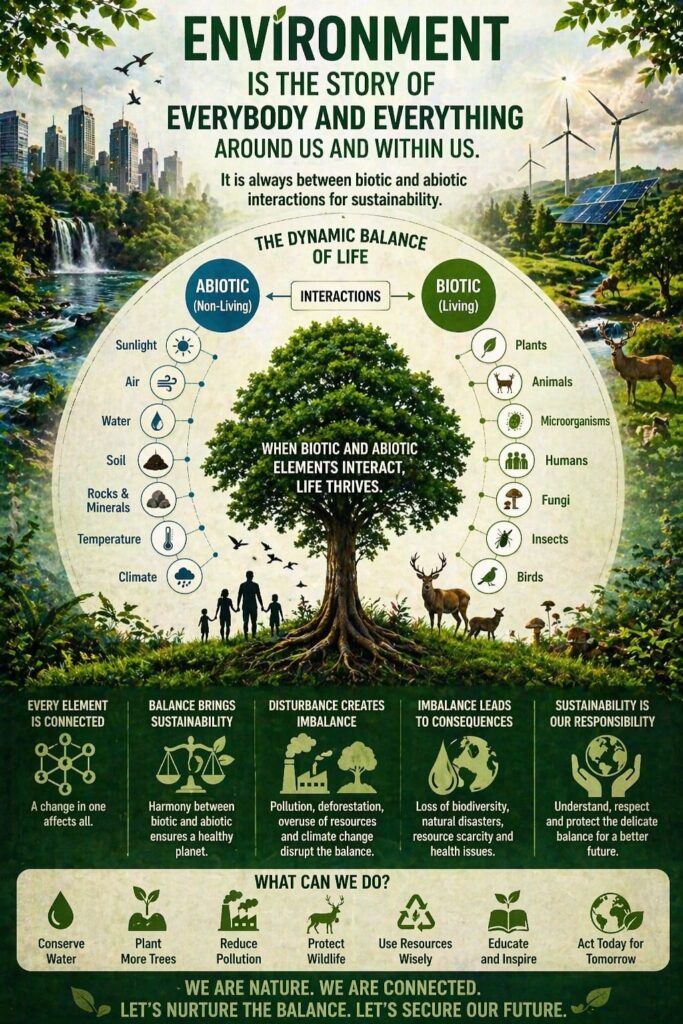
*Loss of Biodiversity – An Unseen Tragedy*
When hills are destroyed, the wildlife inhabiting them perishes along with them. Birds, animals, and smaller creatures—all lose their habitats. Although this loss may not be immediately apparent to us, its impact becomes severe in the long run. The loss of biodiversity resulting from the destruction of hills and hilly regions is a silent and unseen tragedy that gradually erodes the resilience of the ecosystem. Scientifically speaking, every organism occupies a specific ecological niche within its habitat; due to habitat fragmentation, animals and birds lose the resources essential for sustenance, reproduction, and migration, eventually drifting toward the brink of extinction. The demise of smaller organisms—such as insects and pollinators—disrupts the natural cycle by hindering plant fertilization, thereby directly impacting our food security. According to IPBES reports, approximately one million species are currently at risk of extinction due to human activities; the extinction of a single species signifies the disintegration of a critical component within an ecosystem—a breakdown that triggers a process known as a “trophic cascade,” ultimately destabilizing the entire ecosystem. Even if this destruction is not immediately apparent to us, in the long run, it will severely impact us economically and in terms of health—manifesting through signs such as declining pollination, the increased spread of pathogens (zoonotic diseases), and the degradation of soil fertility. Therefore, recognizing that biodiversity is not merely about protecting animals but rather about safeguarding the balance of nature—and, by extension, human survival—there is an absolute necessity to conserve forest areas and natural habitats.
*Rapid Climate Change – Signs Already Visible*
The phenomena we are experiencing today—such as extreme heat, unseasonal rains, excessive rainfall, droughts, water scarcity, floods, cyclones, tornadoes, wildfires, blizzards, melting ice, and rapid shifts in biodiversity—are all indicators of environmental imbalance. If these trends persist, these rapid changes will exert a profound impact on the nation’s economy, agriculture, and public health. The extreme heat, unseasonal rains, floods, and droughts currently being witnessed globally—and particularly within our own country—are not merely symptoms of climate change; they serve as clear signals of “extreme weather events” that occur when the Earth’s climate system is disrupted. According to scientific data, as the Earth’s average temperatures rise, the atmosphere’s capacity to retain moisture increases; this leads, on one hand, to extreme precipitation (floods) and, on the other, to drought caused by the rapid evaporation of soil moisture. This climate volatility undermines agricultural productivity and severely impacts crop yields, thereby directly compromising the nation’s food security and, consequently, its GDP. Furthermore, the increased heat resulting from global warming not only accelerates glacial melting—leading to rising sea levels—but also significantly heightens the frequency and intensity of cyclones and storms due to rising ocean temperatures. This environmental instability triggers drastic changes within biodiversity—ranging from rapid adaptation to species extinction—thereby disrupting the ‘food web’ of our ecosystem. Moreover, rising temperatures and environmental pollution impose a severe burden on public health, particularly in the form of respiratory ailments and vector-borne diseases. Scientists warn that we are already crossing these environmental tipping points; therefore, to safeguard our economy and future, immediately reducing carbon emissions and implementing nature-based solutions are urgent and essential measures.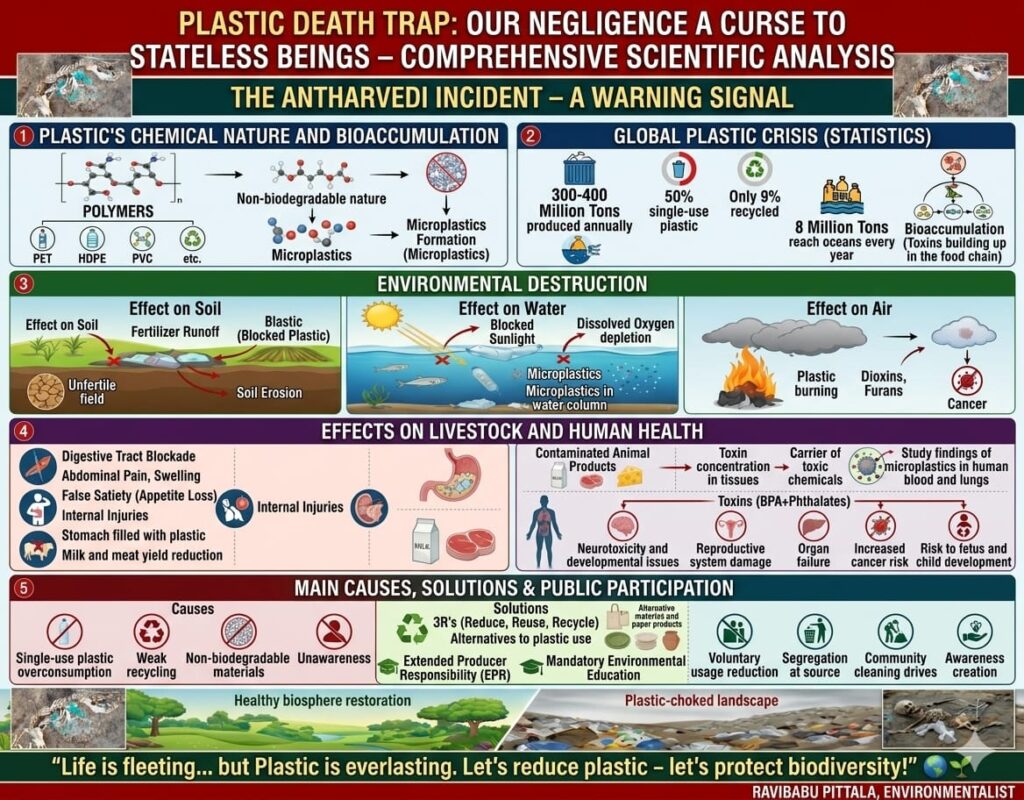
*Public Silence – A Dangerous Trend*
A matter of grave concern is public apathy. It represents a profound shift that a society which once revered nature now chooses to disregard it.
The consequence of this silence is that exploitation accelerates, institutions become further weakened, and future generations suffer irreparable harm. Public silence—or the prevailing environmental apathy within society—acts as a “social-ecological trap,” serving as a major catalyst that hastens the destruction of nature. Scientifically speaking, the absence of any response from civil society—or a decline in public participation—leads the administrative machinery and mining lobbies to perceive that they have been granted a license to plunder natural resources unchecked. Consequently, hills and lakes—once revered as sacred—are today reduced to mere inanimate assets, permanently losing their vital ecosystem services. Data indicates that in democratic systems, in the absence of public initiative, transparency in the enforcement of environmental laws is compromised, causing environmental governance to falter. Due to this silence, institutions are further debilitated, and we end up sacrificing the natural heritage and natural capital essential for future generations in exchange for short-term economic gains. Scientific studies warn that due to this public passivity, insufficient pressure is exerted upon governments regarding climate change; consequently, progress stagnates in critical areas such as controlling carbon emissions and environmental restoration. Ultimately, this silence fuels environmental destruction, leaving future generations to face droughts, health crises, and severe climatic instability. Therefore, these studies emphasize that it is an urgent necessity for every citizen to recognize their constitutional duty—to question environmental destruction and to cultivate environmental consciousness.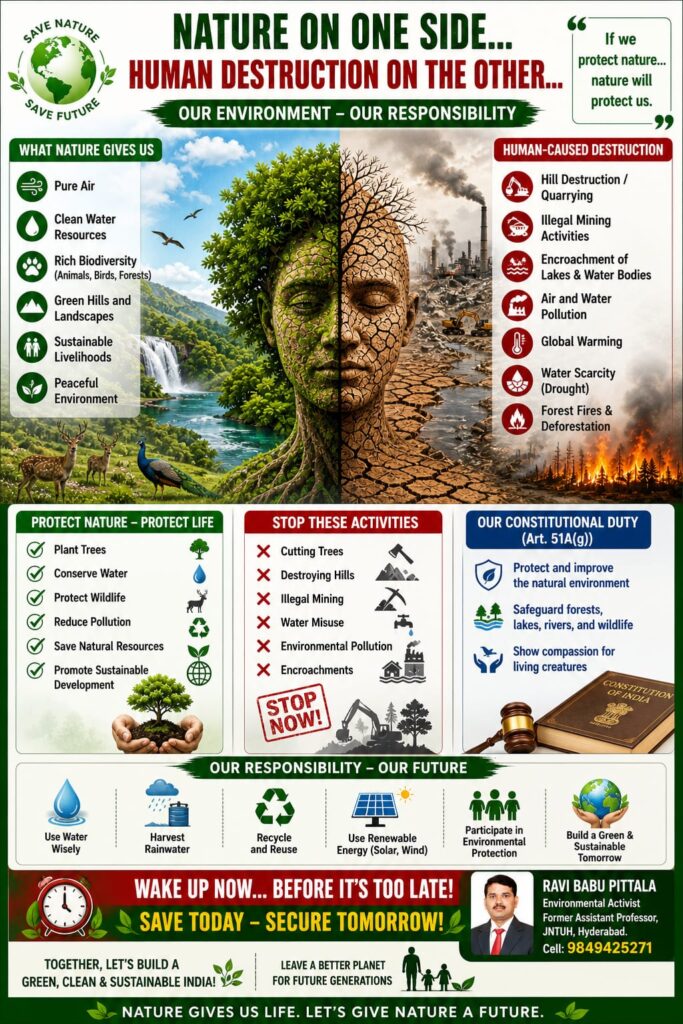
*Environmental Education – A Tool for Change*
Environmental education is not merely an academic subject—it is a life skill. By fostering awareness among the public, it cultivates a sense of responsibility, instills the courage to ask critical questions, and catalyzes collective action. Environmental education is not merely a matter of gathering information; rather, it is a vital cognitive and behavioral skill that fosters an eco-centric mindset and responsible conduct within individuals. From a scientific perspective, numerous studies demonstrate that increased environmental literacy leads to a reduction in an individual’s personal ecological footprint within society, while simultaneously encouraging their active participation in decisions regarding environmental conservation. Through this education, citizens learn to analyze the conditions of their surrounding environment, biodiversity, and water resources from a scientific perspective; this encourages them to engage in critical thinking—logically questioning the destruction caused by mining mafias or government policies. Beyond merely fostering individual awareness, this education inspires community-based action, thereby laying a strong foundation for local NGOs and civil society groups to unite and fight for environmental justice. According to global data, nations that have integrated environmental education into their curricula and societal fabric are evolving into climate-resilient societies capable of withstanding the impacts of climate change. This initiative not only serves to conserve forests but also imparts to future generations a vital life skill: living in harmony with nature; in doing so, it empowers citizens to break their silence regarding environmental issues and exert pressure on governments to identify and implement effective solutions.
*Environmental Action – From Words to Deeds*
The prerequisites for change include: the restoration of local resources (such as lakes and hillocks), legal advocacy, public participation, the application of scientific methods, and transparent governance. The ongoing efforts to restore water bodies in Hyderabad serve as an excellent example of this approach. Such initiatives must be expanded. To transition from an environmental crisis toward sustainability, merely raising awareness is insufficient; on-the-ground action is absolutely critical—specifically, the restoration of local resources like lakes and hills constitutes a vital component of ecosystem restoration ecology. Scientifically, data indicates that measures—such as those currently being implemented in Hyderabad’s water body restoration efforts—including preserving hydrological flows, establishing buffer zones around lakes, and treating wastewater (sewage treatment), not only significantly raise the local water table but also aid in mitigating the “Urban Heat Island Effect” by lowering urban temperatures. The rigorous enforcement of environmental laws can only be achieved through transparency in governance on the part of the administration, coupled with citizens exerting pressure on the system through lawful means and legal advocacy. Environmental studies demonstrate that protecting lakes and hills at the grassroots level—through the collaborative efforts of citizen science programs and non-governmental organizations—leads to a resurgence in local biodiversity and fosters greater stability in the regional climate. By scientifically integrating Nature-Based Solutions into the design of development projects, it is possible to strike a harmonious balance between infrastructure development and nature conservation. By extending the initiatives currently underway in Hyderabad to other cities and villages, we can not only build a climate-resilient society but also revive a culture that honors nature not merely as a resource, but as the very foundation of our existence.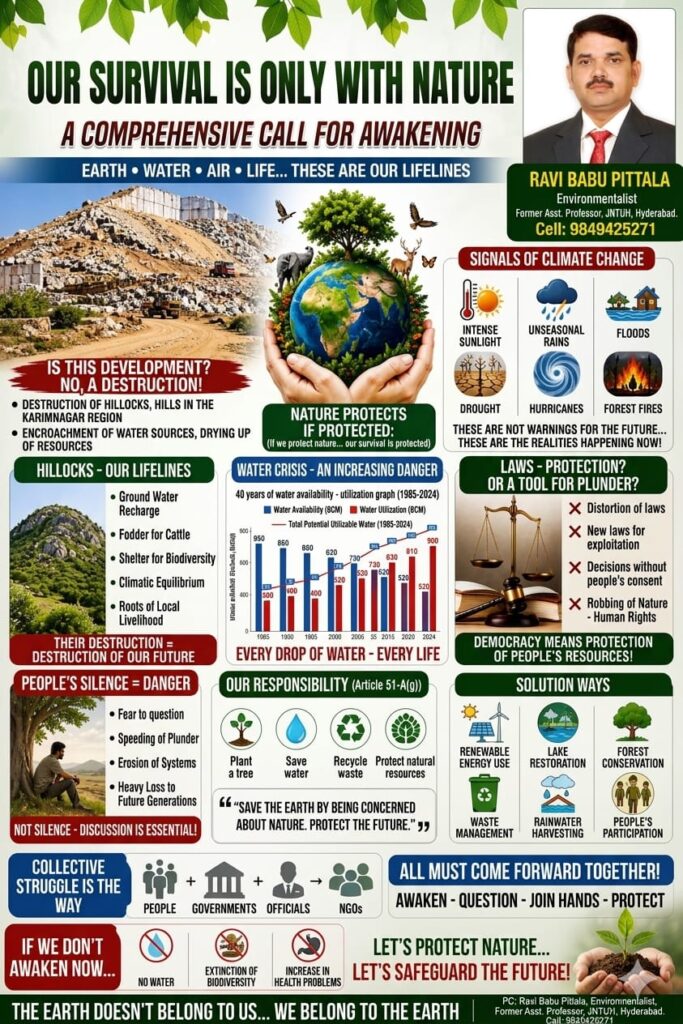
*Collective Struggle – For the Future*
This is not a battle to be fought by a single individual. It is a movement that requires the entire community to act in unison.
Citizens, government officials, and non-governmental organizations must join forces to strive for environmental protection. Where necessary, we must be prepared to engage in active struggle. The environmental crisis is not merely a matter of individual responsibility; it is a systemic issue demanding global collective action. To resolve it, the convergence of citizens, government machinery, and non-governmental organizations on a common platform stands as an urgent imperative for modern society. Scientifically speaking—and in accordance with the “Tragedy of the Commons” theory—shared resources such as hills, lakes, and forests face rapid depletion if no single individual takes responsibility for their protection. Consequently, data clearly demonstrates that ecosystem resilience is significantly enhanced when the entire community participates collectively in safeguarding these resources. A synchronized effort toward environmental conservation becomes possible only when officials implement transparent policies, non-governmental organizations gather scientific data at the grassroots level to raise awareness, and citizens—acting as conscientious members of society—actively hold authorities accountable. When the entire community unites in this struggle, it generates powerful social pressure against mining operations and forces destructive entities to adhere to the law; for instance, statistics indicate that forest cover and biodiversity are significantly better preserved in regions where Community-Based Resource Management is actively practiced. The collective struggle we are currently undertaking is not merely for the sake of the environment itself, but rather to secure a healthy, prosperous, and sustainable future for generations to come; therefore, we can ensure our own survival only if this movement advances with a scientific outlook, through constitutional means, and with unwavering commitment.
*The Future – It Lies in Our Hands*
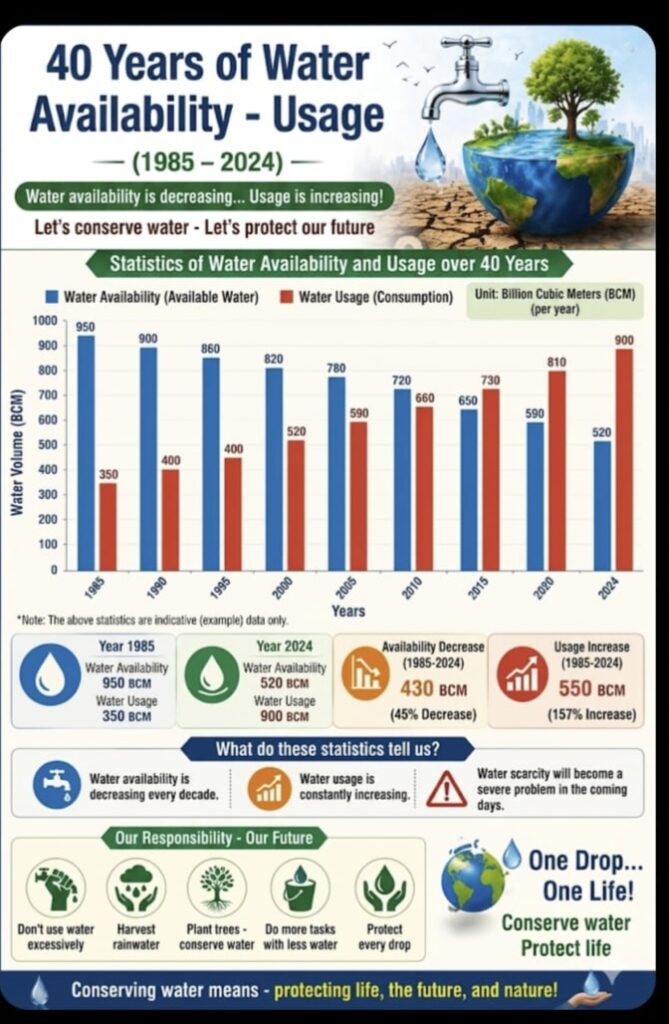
If we do not take action immediately, natural resources will deplete significantly within the next 20 years. Consequently, water scarcity will intensify, biodiversity will decline, and living standards will deteriorate. The coming two decades represent a critical period for the survival of humanity; scientific projections warn that if our current ecological footprint and rate of natural resource consumption persist, the Earth will lose its natural regenerative capacity by 2046, making severe resource shortages inevitable. According to data, reports from the World Bank and the United Nations clearly indicate that—driven by deforestation and the overexploitation of groundwater—approximately 40% of the global population will face severe water stress by 2046, a crisis that will directly undermine agricultural productivity and national GDPs. Furthermore, the decline of biodiversity threatens the very backbone of our food systems—pollinators and natural pest control mechanisms—and by eroding the resilience of our ecosystems, it leaves us increasingly vulnerable to natural disasters. This depletion of resources not only drastically degrades human standards of living but also increases the burden of infectious diseases on the healthcare sector, ultimately leading to social unrest. Therefore, the future is not merely a chronological progression of time, but a consequence shaped by the decisions we make today; only by immediately implementing Sustainable Development Goals, embracing renewable energy, and adopting nature-based solutions can we avert that bleak future. The 20-year window that lies before us is nature’s final opportunity for us to reconcile with it; only if we wake up now—reforming our systems and transforming environmental conservation into a mass movement—can we bequeath a habitable Earth to our future generations.
*A Call to Awaken*
This is not merely an article—it is a warning. It is a call to action. It is a responsibility. To save nature is to save our own future. We must wake up now. We must question. We must take action. Otherwise, nothing but a void will remain for the generations to come. This call is not merely a social aspiration; it is a scientific imperative essential for our very survival. If we do not wake up now—as the Earth’s biocapacity and resource availability continue to dwindle—nothing but a resource-depleted ecological desert will remain for future generations. Scientifically speaking, if current environmentally destructive trends continue at their present pace, within the next two decades, the Earth’s temperature will exceed 1.5°C above pre-industrial levels, pushing us past irreversible climate tipping points. This will trigger a chain reaction—manifesting as glacial melt, deforestation, and rising sea levels—that will severely undermine our standards of living. Although the Constitution, under Article 51-A(g), explicitly mandates that protecting the environment is the duty of every citizen, our collective silence has allowed the cause of environmental justice to be sidelined; consequently, we are sacrificing our ‘natural capital’ through activities such as mining and encroachment. It is only when citizens, policymakers, and non-governmental organizations unite to undertake scientific interventions at the grassroots level—such as the restoration of hills and water bodies—that we can enhance ecosystem resilience and ensure the prospects for our continued survival. We can navigate this environmental crisis only by recognizing nature not merely as a resource, but as the vital life-support system upon which our very existence depends, and by cultivating a spirit of critical inquiry coupled with responsible action. Otherwise—since the destruction we are currently perpetrating will strip future generations of their rights and cast them into a void devoid of resources—it is the immediate and urgent duty of us all to awaken before it is too late, and to choose a sustainable path of development that moves in harmony with nature.
*”Let us protect nature… Let us sustain life itself…”*
*”Nature protects those who protect her.”*
*– Ravi Babu Pittala, Environmentalist, Former Assistant Professor, JNTUH, Hyderabad. Cell: 9849425271*