The Changing Hydrological Cycle – Depleting Groundwater Levels
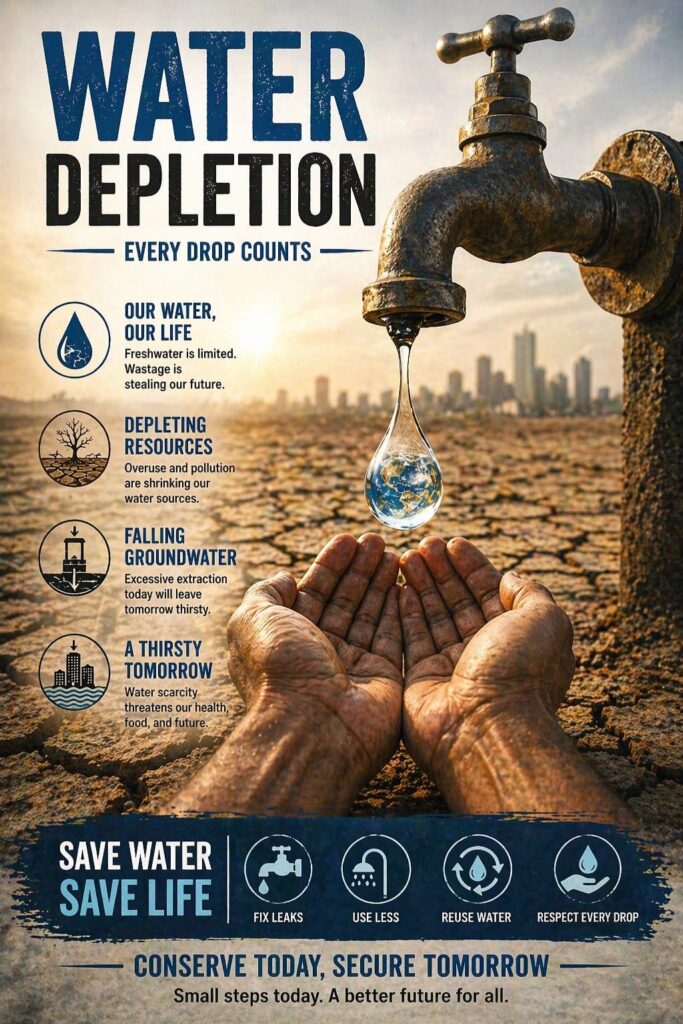
*The Changing Hydrological Cycle – Depleting Groundwater Levels*
* Climate change, driven by anthropogenic activities, is the Root Cause.*
* Rapid shifts in Biodiversity are resulting from the evolving Water Scarcity.
*Water is the essence of life – its preservation is our imperative duty.*
*Article Author: Ravibabu Pittala, Environmentalist; Former Assistant Professor, Centre for Water Resources, JNTUH, Hyderabad.*
Water… it is the lifeblood for every living organism on Earth, including humans. Every single drop of water is invaluable; yet, the environmental changes currently unfolding across the globe are profoundly impacting our way of life. In particular, alterations to the water cycle, the depletion of groundwater reserves, and rapid shifts in biodiversity have emerged as the most formidable challenges confronting us today. Although these issues may appear distinct on the surface, they are inextricably interconnected. Historical records bear witness to the fact that early human civilizations—such as those of Egypt, Mesopotomia, and the Indus Valley—first took root and flourished precisely where water was readily available. However, under present-day circumstances, this precious water resource is coming under immense and mounting pressure. Rather than prioritizing essential water usage, human self-interest—coupled with emerging lifestyle trends and excessive consumption masked as “development”—often sidelines genuine necessities, thereby exacerbating the problem through the indiscriminate and boundless use of water. The consequences of rapidly depleting groundwater levels, the pollution of rivers and lakes, and the disruption of the water cycle—driven by the rapid changes associated with climate change—stand before us as clear warning signs.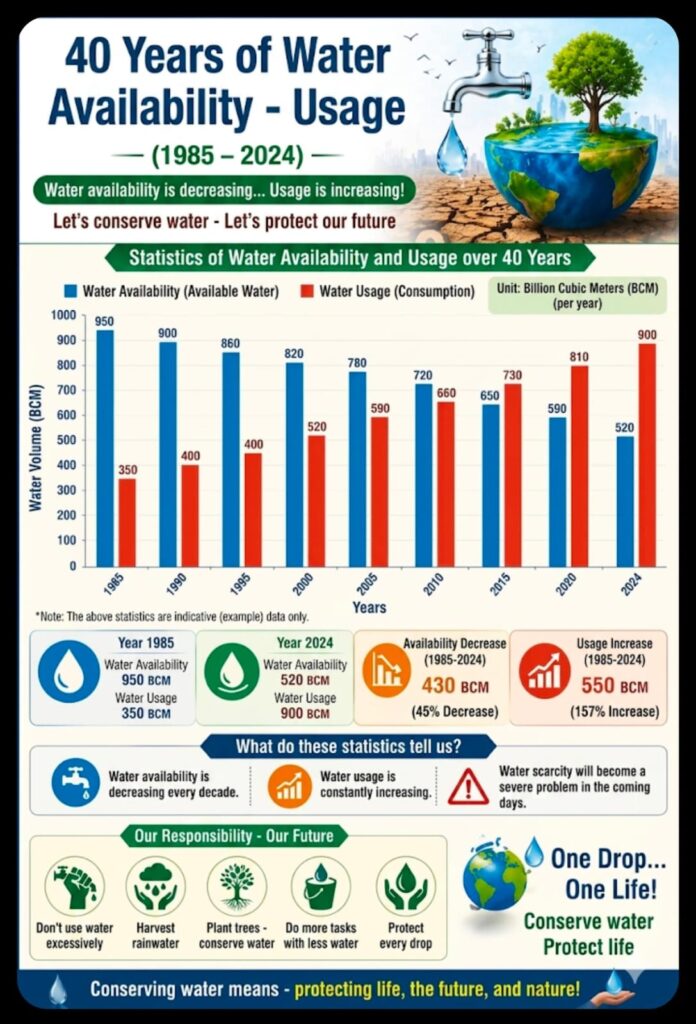
Shifting rainfall patterns are giving rise to contrasting extremes: floods on one side and drought conditions on the other. All of this reflects the negligence embedded in our lifestyles and water usage, as well as our lack of awareness regarding the natural world. To overcome these challenges, immediate and comprehensive measures are imperative. Every individual must cultivate the habit of conserving water in their daily life—for it is the small actions that pave the way for significant change. Implementing rainwater harvesting systems in homes and workplaces can effectively replenish groundwater levels. Furthermore, measures such as regulating industrial effluents and treating sewage play a pivotal role in curbing water pollution. On another front, planting trees and restoring forests can help the water cycle regain its natural equilibrium.
*Water Conservation:* It is our responsibility to utilize every drop of water with care and to prevent unnecessary wastage. *Rainwater Harvesting:* By installing rainwater collection systems in our homes and workplaces, we can effectively boost groundwater levels. *Pollution Prevention:* We must ensure that industrial waste and chemicals do not flow directly into water bodies, and we must take proactive steps to treat sewage water. *Afforestation:* Planting trees and restoring forests not only improves rainfall but also enhances groundwater reserves. *Public Participation:* Environmental conservation is not solely the responsibility of governments; it is the duty of every citizen. Only when everyone participates can we ensure water availability for future generations. True change becomes possible only through public participation, awareness, and responsible behavior. We can ensure water security for generations to come only if everyone steps forward, keeping in mind the principle that “protecting nature is protecting our own future.”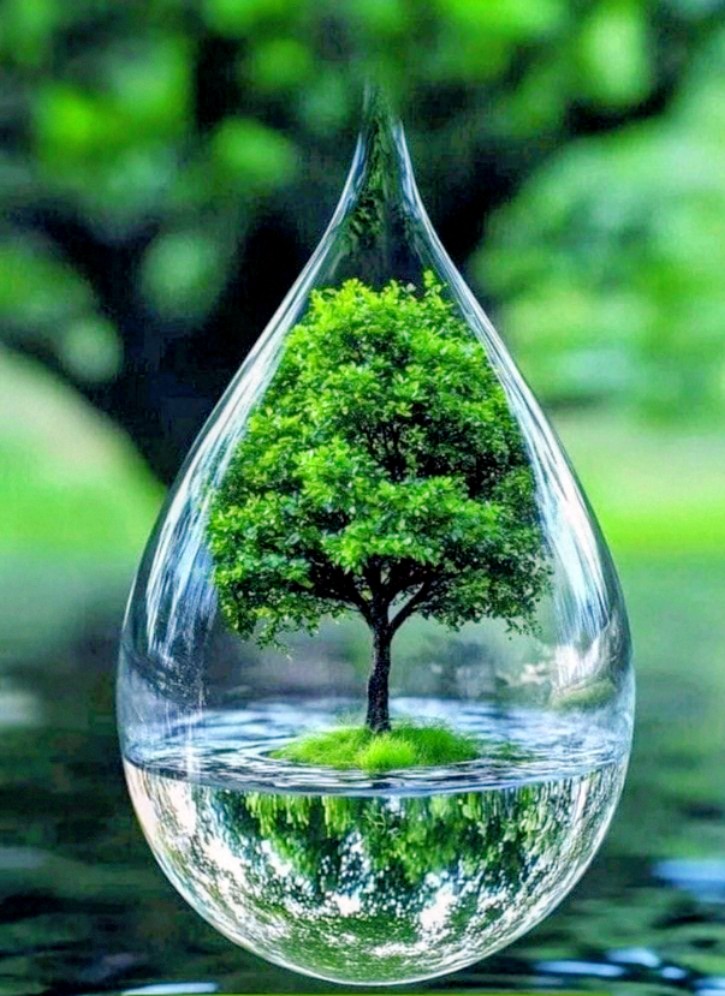
*Profound Shifts in Climatic Equilibrium Due to Changes in the Water Cycle*
The water cycle is a continuous process of water exchange occurring among the oceans, the atmosphere, and the land, playing a pivotal role in regulating Earth’s temperature. However, due to atmospheric warming caused by global warming, the air’s capacity to retain moisture is increasing by approximately 7% for every 1°C rise in temperature—in accordance with the Clausius-Clapeyron principle. (The Clausius-Clapeyron equation is a fundamental scientific principle that describes how pressure changes during the phase transition between a liquid and a vapor as a function of temperature.) Consequently, the rate of evaporation has accelerated, injecting additional energy into the atmosphere and creating instability in cloud formation and rainfall patterns. According to scientific data, extreme precipitation events worldwide have increased by up to 30% over the past five decades. This shift is evident not only in rainfall patterns but also in the melting of glaciers and the rise in sea levels. Furthermore, due to urbanization, the transformation of land surfaces into concrete prevents rainwater from infiltrating the soil; instead, the water flows directly across the surface, leading to flooding. Consequently, while on one hand, unusually heavy rainfall occurring over short periods causes loss of life and property, on the other, during dry spells, the failure of groundwater to recharge leads to severe drought conditions. This imbalance directly undermines food security and biodiversity, thereby disrupting the entire ecosystem.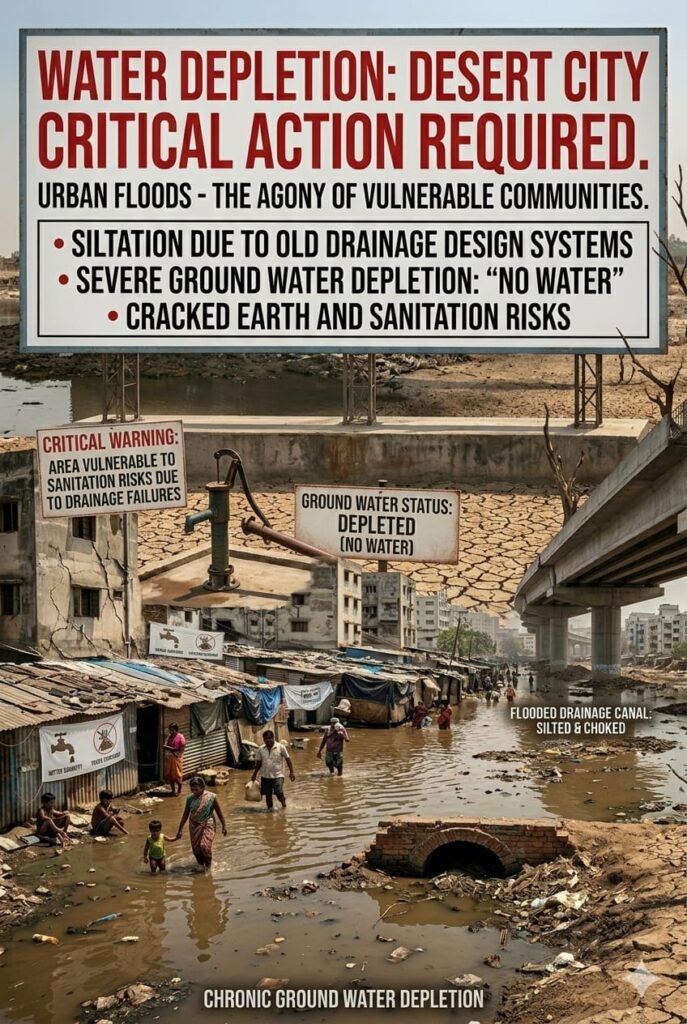
*The Impact of Groundwater Depletion: A Vital Lifeline Plummeting into the Depths*
Groundwater is stored within subterranean rock layers known as ‘aquifers,’ which possess the capacity to hold water beneath the earth’s surface. These aquifers naturally replenish over the course of centuries as rainwater percolates (infiltrates) into the ground. However, we are currently extracting water at a rate far exceeding its natural replenishment rate. From a scientific perspective, India utilizes more groundwater than any other nation in the world—surpassing the combined usage of the United States and China. According to data from the Central Ground Water Board (CGWB) and NASA’s ‘GRACE’ satellites, groundwater levels in Northern India and the Deccan Plateau regions are declining by an average of 0.3 meters annually. Of the 230 cubic kilometers of water we extract each year, approximately 89% is utilized solely for agricultural purposes. As groundwater levels recede, the concentration of naturally occurring heavy metals—such as arsenic and fluoride—within the earth’s strata increases, rendering the water toxic. This crisis is further exacerbated by urbanization; the proliferation of concrete structures on the land surface leads to increased rainwater runoff, thereby preventing rainwater from percolating into the ground. This situation not only results in a scarcity of drinking water but also leads to a reduction in subsurface pressure, creating a risk of land subsidence in certain areas.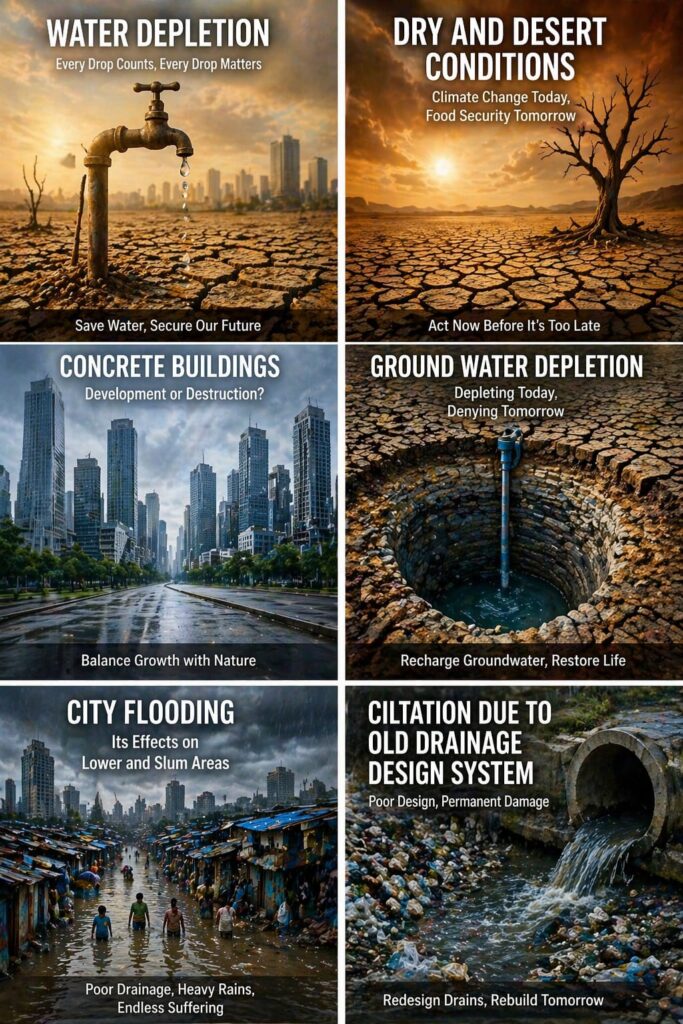
*Water Pollution – A Chemical Assault on Ecosystems*
Water pollution is not merely the physical fouling of water; it is a complex process in which the physical, chemical, and biological properties of water undergo alterations, rendering it harmful to living organisms. From a scientific perspective, heavy metals—such as lead, mercury, and cadmium—discharged from industrial sources enter water bodies and, through the process of ‘biomagnification,’ infiltrate the food chain, thereby damaging the central nervous system of humans. The indiscriminate use of nitrates and phosphates in agriculture leads to ‘eutrophication’ when these substances are washed away by rainwater and enter water bodies. This phenomenon triggers the excessive proliferation of aquatic plants—such as water hyacinths—on the water’s surface, depleting the levels of dissolved oxygen within the water; consequently, aquatic creatures like fish suffocate and perish. According to statistics from the World Health Organization (WHO), approximately two billion people worldwide rely on water contaminated by fecal matter as their primary source of drinking water. As a result, nearly 1.4 million people die annually from diseases such as cholera, typhoid, and diarrhea. Reports from the Central Pollution Control Board (CPCB) warn that approximately 40% of the rivers flowing through our country fall into the hazardous ‘Category C’ in terms of pollution levels.
*Biodiversity Decline: The Collapse of Ecosystems*
Biodiversity represents the interdependent network connecting all living organisms on Earth. From a scientific perspective, changes in water availability and rising temperatures are having a severe impact on the ‘phenology’ of organisms—specifically their migration patterns and reproductive cycles. The disruption of the water cycle is causing wetlands—some of the most productive ecosystems on Earth—to dry up. According to the 2023 Red List report by the International Union for Conservation of Nature (IUCN), approximately one million species worldwide are at risk of extinction within the coming decades. Amphibians, in particular, are being affected at an alarming rate; 41% of these species are already on the path toward extinction. The contamination of water resources is fracturing the aquatic food chain, resulting in ‘habitat loss’ for a wide range of organisms—from fish to birds. If even a single insect or a small plant species goes extinct within an ecosystem, it destabilizes the entire system through a ‘cascade effect’ (Cascade Effect: A cascade effect is a chain reaction occurring within an ecosystem or a sequential process. Simply put, it describes a scenario where a minor change or event triggers a series of impacts on other related elements, ultimately leading to a significant, often unforeseen, change or disruption). United Nations scientists warn that a decline in pollinating insects could lead to reduced crop yields globally, potentially triggering a food crisis.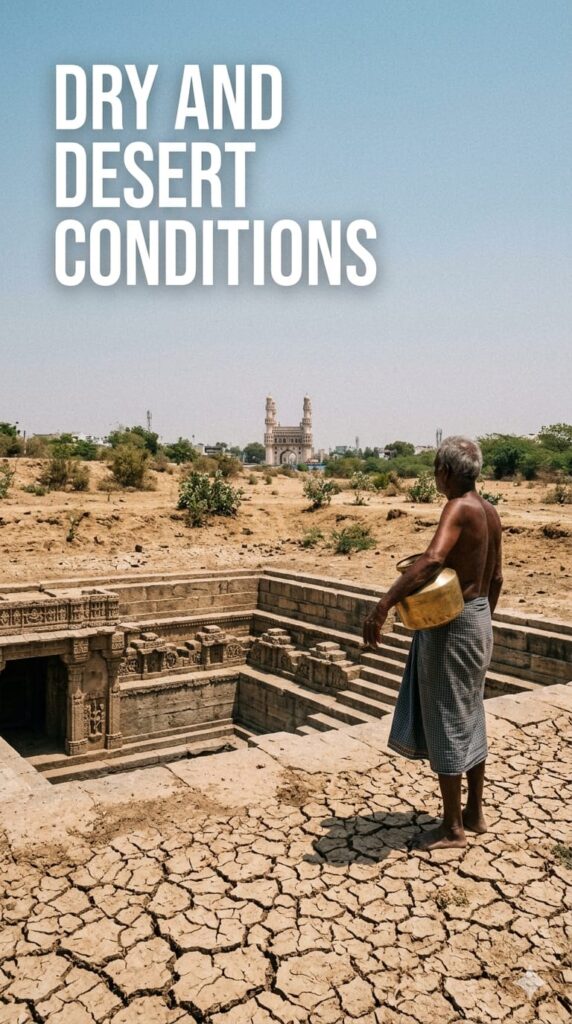
*Data Analysis: Scientific Warnings on Water Security and Future Challenges*
A scientific analysis of current statistics reveals that India stands on the brink of a severe ‘water crisis threshold’ (water stress threshold). Notably, *70% of the available freshwater in our country* is consumed solely by the agricultural sector. From a scientific perspective, the cultivation of water-intensive crops—such as rice and sugarcane—using unscientific methods is increasing the ‘water footprint,’ resulting in the rapid depletion of both surface and groundwater resources. According to the ‘Falkenmark Indicator’—which measures the balance between water availability and population needs—*60% of India’s landmass* is already facing water stress. Furthermore, reports from the Central Pollution Control Board indicate that *40% of the rivers* in our country have become contaminated due to industrial waste and sewage, exceeding the permissible limits for ‘Biological Oxygen Demand’ (BOD). Consequently, the deterioration of water quality renders available water unfit for consumption. According to reports by NITI Aayog—which analyze the gap between water supply and demand—water demand is projected to *double by 2030* compared to current levels. In essence, this data serves as a warning that unless we immediately implement revolutionary changes in water management practices, we face the risk of a severe food crisis and economic instability in the future.
*Comprehensive Solutions: A Scientific Action Plan for Environmental Restoration*
In the current environmental landscape, mere awareness is insufficient to combat the water crisis; scientific and systemic changes are an urgent necessity. *Rainwater Harvesting* is not merely about saving water; it is a pivotal process that boosts the groundwater ‘recharge rate’ and restores hydraulic pressure within aquifers. Studies indicate that in urban areas, the adoption of scientifically designed percolation pits can improve groundwater levels by 40% to 60%. Turning to *Afforestation*, trees play a crucial role: through the process of ‘transpiration,’ they increase atmospheric moisture—thereby regulating local rainfall—while simultaneously curbing soil erosion and facilitating the percolation of water into the ground. In the agricultural sector, adopting *micro-irrigation techniques* (such as drip and sprinkler systems) can enhance water-use efficiency by up to 90%; this translates to a water saving of approximately 40% to 50% compared to traditional irrigation methods. As part of *pollution control* measures, industries can prevent toxic chemicals from entering rivers by treating their wastewater through ‘Effluent Treatment Plants’ (ETPs) and subsequently recycling and reusing the purified water. Finally, *biodiversity conservation* is not merely about protecting animals; it enhances the ‘resilience’—the inherent capacity to withstand shocks—of the ecosystem. Through the preservation of lakes and wetlands, natural water purification occurs, which indirectly acts as a protective shield for human survival. It is only when all these measures are undertaken in a coordinated manner that we can achieve ecological balance.
*Environmental Restoration – Our Collective Responsibility*
In nature, every element is inextricably linked to every other. Instability within the water cycle is not limited solely to rainfall patterns; it leads to the depletion of groundwater and, consequently, to the decline of biodiversity. In scientific terminology, this phenomenon is referred to as an *’ecological feedback loop’*. This implies that damage occurring within one system further weakens another interconnected system. The water and biodiversity crises we face today are not merely human-induced consequences; they serve as signals that Earth’s natural protective shield is being compromised. As scientific research warns, we stand on the brink of an *ecosystem collapse*. It is imperative that, even at this juncture, we move forward by adhering to the principles of *sustainable development*—harmoniously blending cutting-edge technology with time-tested, traditional water conservation methods.
*The Pivotal Role of Watershed Management in Water Conservation*
Watershed management is not merely a matter of land management; it is a comprehensive scientific process. When rainwater falls upon the earth, it follows various pathways—such as evaporation, surface runoff, and infiltration into the soil. The primary objective of watershed management is to regulate this flow and enhance water storage capacity. Through effective watershed management techniques, the rate of infiltration increases, thereby replenishing groundwater reserves; simultaneously, surface runoff is reduced, and soil erosion is brought under control. Measures such as contour trenching and the construction of check dams extend the duration of water retention, thereby accelerating the rate of groundwater recharge. According to research, in regions where these strategies have been implemented, groundwater levels have risen significantly; furthermore, soil fertility has improved, leading to an increase in biomass production. Moreover, this process plays a pivotal role in balancing the local climate and mitigating the adverse effects of climate change. Consequently, watershed management stands as an indispensable and sustainable solution for water conservation, agricultural sustainability, and the preservation of biodiversity. *Atmospheric Water Harvesting: A Novel Scientific Solution for Desert Survival*
Even though rainfall is extremely scarce in desert regions, Atmospheric Water Harvesting (AWH)—the process of converting atmospheric moisture into liquid water—has emerged as a revolutionary scientific approach. It is estimated that approximately 12.9 trillion tons of water are continuously available in the Earth’s atmosphere in the form of vapor. This technology primarily operates on the principles of thermodynamic condensation and adsorption. Notably, advanced materials such as Metal-Organic Frameworks (MOFs) are capable of absorbing moisture even under extremely arid desert conditions, where the relative humidity in the air is as low as 10–20%. According to research, one kilogram of MOF material can generate approximately 2.8 liters of water per day by utilizing sunlight. Through the use of fog nets and solar hygroscopic systems, it is becoming possible to harvest clean water without the need for electricity. This not only alleviates the pressure on groundwater resources but also stands as a powerful and eco-friendly solution for ensuring sustainable drinking water security in desert regions.
*Failure to Conserve Water Will Lead to Both Scarcity and Conflicts in the Days Ahead*
If we fail to conserve water, the looming water crisis will intensify in the coming days, posing a grave risk of leading not only to difficulties in daily living but also to social and economic conflicts. A growing population, excessive consumption, and the impacts of climate change are collectively depleting water availability even further. Already, in many regions, people are compelled to travel kilometers to access drinking water; in the future, this situation is likely to worsen, potentially escalating into disputes—or “water conflicts”—between villages and even between states. Therefore, it is imperative that we treat every drop of water as precious, minimize wastage, and adopt practices such as rainwater harvesting. Everyone must act responsibly, guided by the conviction that “only by taking precautions now can we avert future struggles for water.”
*Environmental Protection: The Sole Path to Our Survival*
A shifting water cycle, rapidly depleting groundwater levels, and swiftly declining biodiversity constitute a chain of interconnected disasters—a “cascade effect”—that has emerged as a grave challenge to human survival. While rising global temperatures are increasing the atmosphere’s moisture-holding capacity—thereby creating instability in rainfall patterns—India, on the other hand, is being pushed into an “over-exploited” crisis as it extracts a staggering 230 cubic kilometers of groundwater annually—the highest volume in the world. Due to this water scarcity and escalating pollution, approximately one million species are teetering on the brink of extinction—as reported by the IUCN—a situation that is severely disrupting the balance of ecosystems. In light of the fact that water demand is projected to double by the year 2030, every citizen—rather than relying solely on the government—must embrace rainwater conservation, forest restoration, and responsible water usage as a personal social responsibility. Only by recognizing that “protecting nature is tantamount to protecting our own future,” and by taking immediate action guided by a scientific perspective, can we ensure a safe and secure planet for future generations.
*Ravibabu Pittala, Environmentalist; Former Assistant Professor, Centre for Water Resources, JNTUH, Hyderabad.*