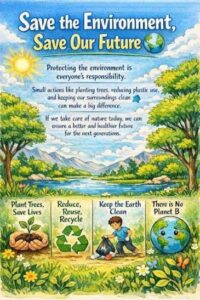
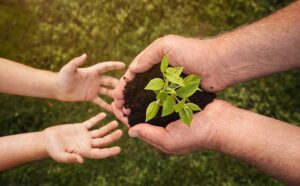
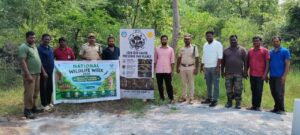
We are the ones who need to change; not nature
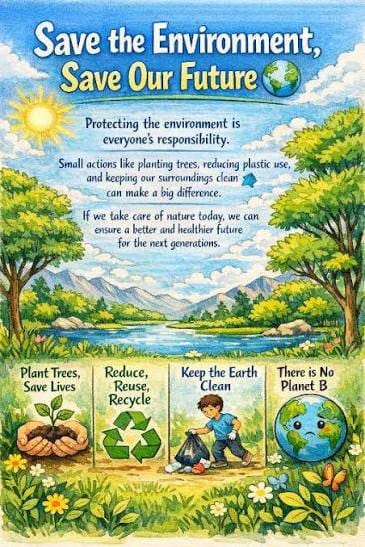
*Who should change…? Our collective responsibility in protecting nature*
*— We are the ones who need to change; not nature*
*— If we don’t change… nature will change us*
*— Change begins with behavior, not words, writings, or statements*
*— Article author: Ravibabu Pittala, environmentalist*
*The first step to changing nature is for us to take*
Conserving natural resources is not just the responsibility of governments; it is also the moral duty of every citizen, every family, every organization, and every generation. Soil, water, air, forests, oceans, and biodiversity—all these are assets that we have borrowed from our ancestors; it is our responsibility to hand them over safely to future generations. The United Nations clearly states that the threats of climate change, pollution, and biodiversity loss are increasing simultaneously around the world. That is why “Who should change?” The answer to the question is not only the government—the government, the citizen, the businessman, the media, the student, the farmer, the scientist—everyone must change together. Cutting down forests, filling ponds, encroaching on riverbanks, and removing mountains for minerals in the name of development are only temporary gains. But their consequences are long-term losses: changing water courses, decreasing groundwater, erratic rainfall, and increasing heat. When the balance of nature is lost, man first loses his food security, then his health, and finally his livelihood. That is why every citizen should start with small changes in his daily life—reducing plastic, saving water, planting trees, segregating waste, and protecting the local ecosystem. These small actions can become a big social movement. In India, however, Articles 48A and 51A/(G) of the Constitution of India have made it a responsibility through the Constitution. But the implementation of laws and the execution of punishments are not being done properly. As a result, the perpetrators of destruction have no fear of laws and punishment, and day by day, the destruction of the environment and the national natural resources is increasing, causing immense damage. In some countries, governments themselves are committing this atrocity, and individuals are squandering the country’s wealth in the guise of development. Governments too should start with behavior, not with statements.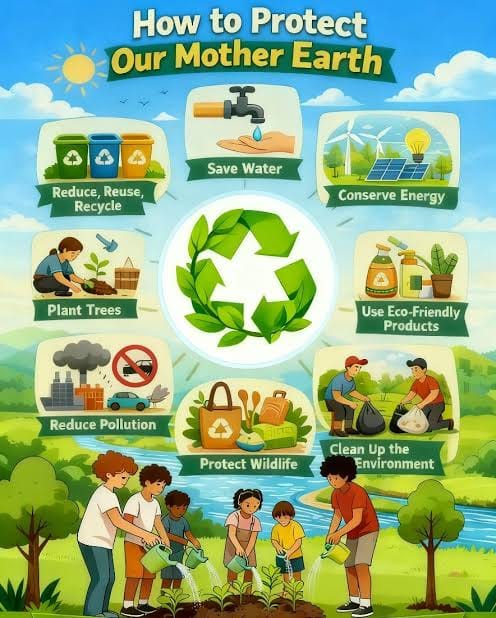
*Government, contractors, administrative accountability*
The government should not only formulate environmental policies, but also implement them on the ground. Transparency, public participation, and scientific impact assessment are mandatory in granting environmental permits for projects. Strict and timely action should be taken against contractors if they are involved in activities like sand mining, soil mining, tree felling, filling of ponds, and encroachment on river banks. Fines alone are not enough; taking responsibility for environmental restoration and revitalizing the damaged area should also be a condition. Poor forest health is estimated to have a negative impact on water resources, agriculture, biodiversity, human health, and the livelihoods of tribal communities. Research shows that many forests in India are degraded, overexploited, and have lost their natural reproductive capacity. That is why balance in governance means a balance between economic growth and environmental protection. Roads, housing, industries, and mines are necessary; but where to build them, how to build them, and what environmental compensation should be determined scientifically. Making decisions without listening to the opinions of local people is anti-democratic; ignoring scientific evidence is inefficient governance. The government should stand as a protector of nature, not a protector of contractors. Only then will public trust increase, civic cooperation expand, and environmental justice be possible.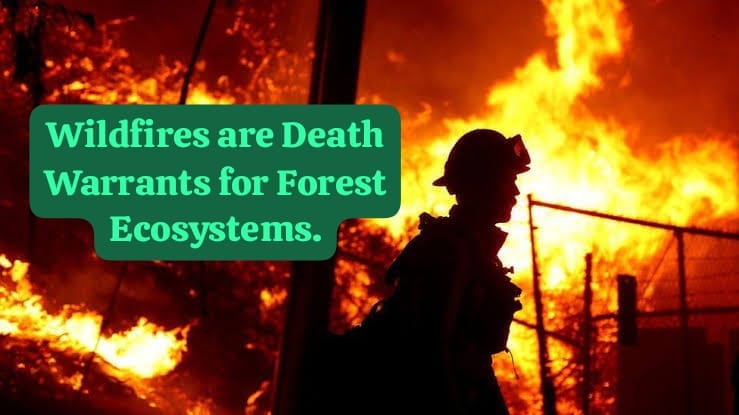
*Civil society should not be a passive bystander*
A responsible citizen should not sit idly by and say, “The government will do it.” Civil society is not just a group that protests; it is a force that gathers information, identifies local problems, proposes scientific solutions, and holds government accountable. Documenting a pond’s sinking with photos, GPS locations, and dates; writing letters to local officials about tree felling; raising awareness about water quality or pollution—these are all legitimate, peaceful civic actions. Activism is not violence; it is a collective, public voice calling for a just solution. The United Nations says that healthy biodiversity and ecosystems are powerful tools for climate resilience and disaster risk reduction. For example, protecting a pond means protecting the storage of rainwater during the rainy season; protecting trees on a hillside means preventing landslides; Saving mangroves means reducing the speed of storms. Citizens should consider the environmental health of their village, colony, and town as their personal wealth. Environmental clubs in schools, tree conservation groups in colonies, water management associations in villages, digital awareness campaigns with youth—these are the paths to lasting change. If people remain silent, exploitation increases; if they speak with appeal and knowledge, governance improves.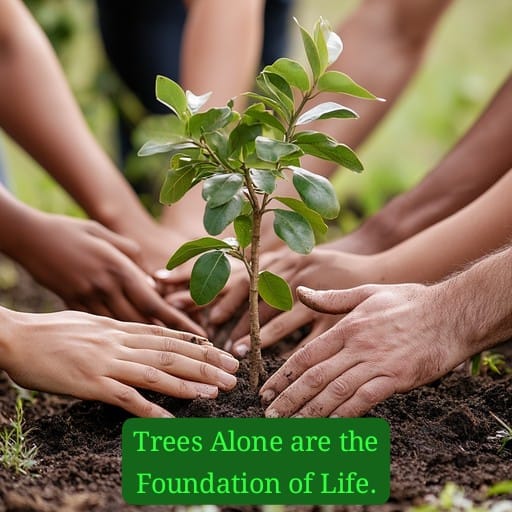
*There should be no destruction in the name of development*
Development is necessary; but it should not be development achieved through the destruction of nature. Roads, bridges, houses, industries, mining, power projects—these are necessary for the progress of human life. However, river basins, wetlands, mangrove forests, forest corridors, and biodiversity areas should be taken into account in their construction. The United Nations says that 203.1 million hectares of forests have been lost worldwide in the last 35 years, with 41 million hectares lost since 2015 alone. These numbers are not just about the loss of trees; they are about the loss of bird nests, animal paths, rainwater storage, soil fertility, food for local people, medicinal plants—everything. Development is not just about concrete expansion; it is also about clean air, drinking water, food security, healthy soil, and a peaceful living environment. That is why the concept of “sustainable development” is important. It means meeting the needs of today without compromising the needs of tomorrow’s generations. Every major project should be preceded by an environmental impact assessment, public consultation, alternative planning, and restoration plan. It is not enough to cut down a tree and plant native species in its place; the surrounding ecosystem must also be revitalized. Otherwise, it is not development, but a generational debt.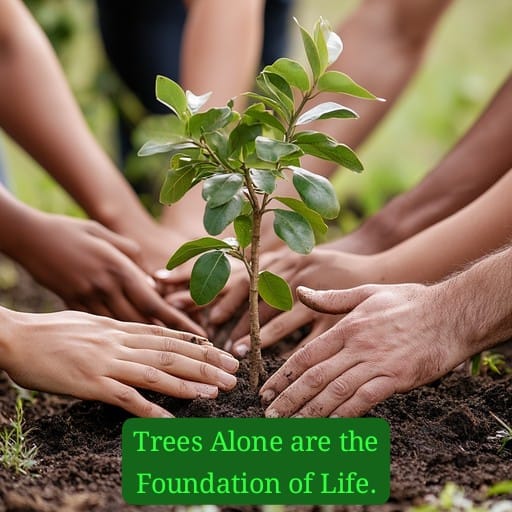
*Climate Change—A Threat Not Far Away*
Climate change is not a future problem; it is a reality that has already entered our daily lives. Unseasonal rains, heavy rains, prolonged sun, floods, cyclones, heat waves, droughts—all these are symptoms of climate imbalance. Global warming increases sea surface temperatures; this increases the intensity of cyclones and the uncertainty of rainfall. Deforestation reduces the carbon absorption capacity; this leads to the accumulation of greenhouse gases in the atmosphere. Analyses suggest that forest degradation in India reduces the carbon storage capacity and increases the intensity of rains and droughts. This means that the destruction of nature and climate change are mutually reinforcing cycles. If we cut down trees, the heat increases; if the heat increases, the forests weaken; if the forests weaken, the rains and droughts intensify. Two ways are needed to break this cycle—reducing carbon emissions and rejuvenating natural systems. Renewable energy, efficient transportation, clean technology in industry, greening cities, water management in rural areas—these are all climate actions. Governments must create policies; citizens must implement them; the media must reach the public. Tackling climate change is not the job of one country or one organization; it is the collective responsibility of humanity.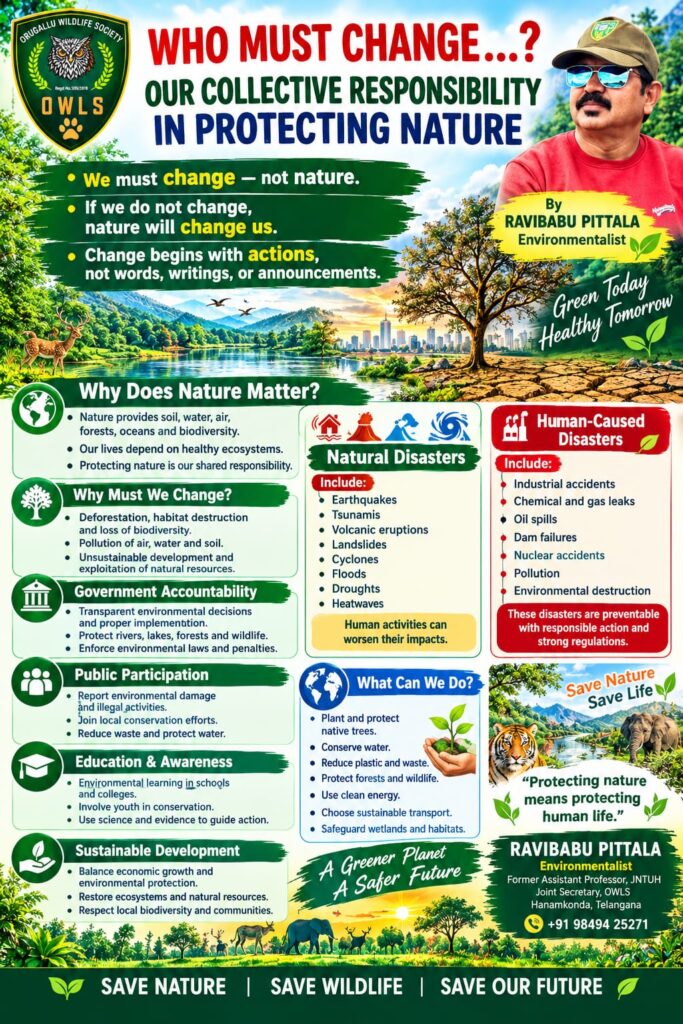
*Air, Water, and Soil—The Pillars of Life*
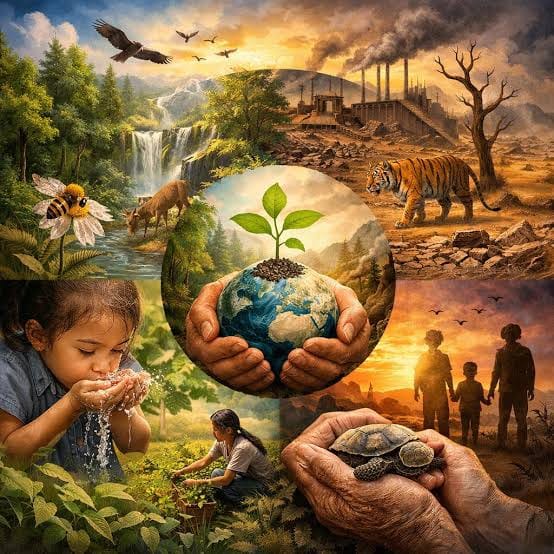
The environment is not merely about trees; it is a composite of the atmosphere, hydrosphere, lithosphere, soil, and biosphere. If any one of these is compromised, it impacts all the others. Air quality deteriorates due to vehicle emissions, industrial smog, construction dust, and the burning of agricultural waste, leading to a rise in lung diseases, heart ailments, and health issues among children. Discharging sewage into ponds and rivers depletes oxygen levels in the water, causing the death of fish, snails, and microorganisms. When plastics, chemicals, and heavy metals accumulate in the soil, they enter our food supply through crops. Deforestation leads to soil erosion; rainwater fails to seep into the ground and instead flows rapidly, causing floods. Reports clearly indicate that forests influence water resources, agriculture, biodiversity, health, and the climate. Therefore, environmental protection is not just about planting trees in isolation; it is about safeguarding the entire air-water-soil system. Increasing green cover in cities, facilitating groundwater recharge through rainwater harvesting, strengthening sewage treatment plants, segregating waste, and using bio-fertilizers instead of chemical ones—these are all practical solutions. If we fail to value the services nature provides us for free, we will one day have to pay an enormous price for them.
*Loss of Biodiversity: A Silent Disaster*
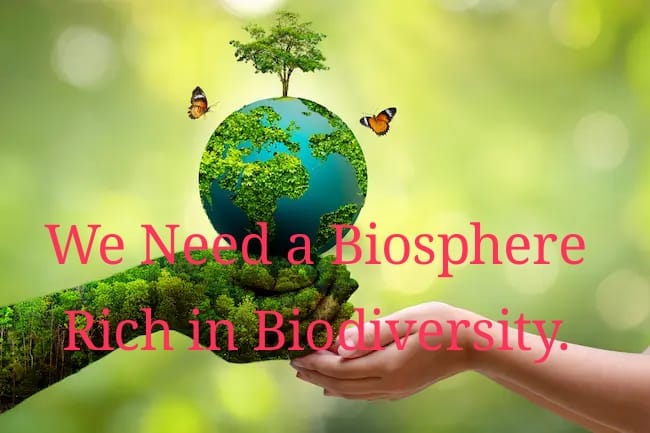
Biodiversity encompasses far more than just wild animals and birds; it represents the diversity of life forms ranging from microorganisms to massive trees, and from unicellular to multicellular organisms. Every living being plays a role in the ecosystem—be it pollination, seed dispersal, soil enrichment, pest control, water purification, or carbon sequestration. If a single species disappears, other organisms dependent on it are also affected; while this impact is often invisible to the naked eye, it undermines the food system in the long run. United Nations reports indicate that forests are shrinking globally, the protection of key biodiversity areas is being delayed, and the rate of species extinction is accelerating. Statistics show that the loss of primary forests continues in India, with 18,200 hectares of primary forest lost in 2024 alone. These are not merely numbers; These represent a loss to life-sustaining systems. A decline in bee populations leads to reduced crop yields; a drop in fish stocks jeopardizes marine-based livelihoods; and a decrease in bird populations causes insect numbers to surge, damaging agriculture. Therefore, protecting biodiversity is synonymous with safeguarding human food security, health, and economic stability. Planting native tree species, preserving wetlands, preventing hunting, curbing illegal trade, and revitalizing ecological corridors are all urgent measures.
*Urbanization, Pollution, and the Urban Environment*
As cities expand, concrete coverage increases, diminishing the land’s ability to absorb water. During rainfall, instead of seeping into the ground, water flows across streets, overwhelms drainage systems, and causes urban flooding. Lakes, ponds, streams, and riverbanks serve as a city’s natural drainage system; filling them in is akin to planting a bomb within the city itself. The “urban heat island” effect is intensifying in cities, where temperatures rise above those of surrounding rural areas due to heat generated by concrete, asphalt, and vehicles. The solution lies in increasing greenery—through trees, parks, rooftop gardens, and water bodies. Official data indicates that forest and tree cover in India stands at 82.74 million hectares, accounting for 25.17% of the country’s geographical area. However, the quality of this cover is crucial; urban areas often feature planted trees rather than natural forests, and these cannot fully substitute for true biodiversity. Therefore, it is essential to revive native tree species, wetlands, and bird habitats within cities. Measures such as waste segregation and reduction, solar power adoption, public transport, and cycling lanes are vital for improving the urban environment. A city is not merely a collection of houses; it is a community of living beings. Our own health depends on the health of the city.
*Natural Calamities (Disasters): Nature’s Warnings*
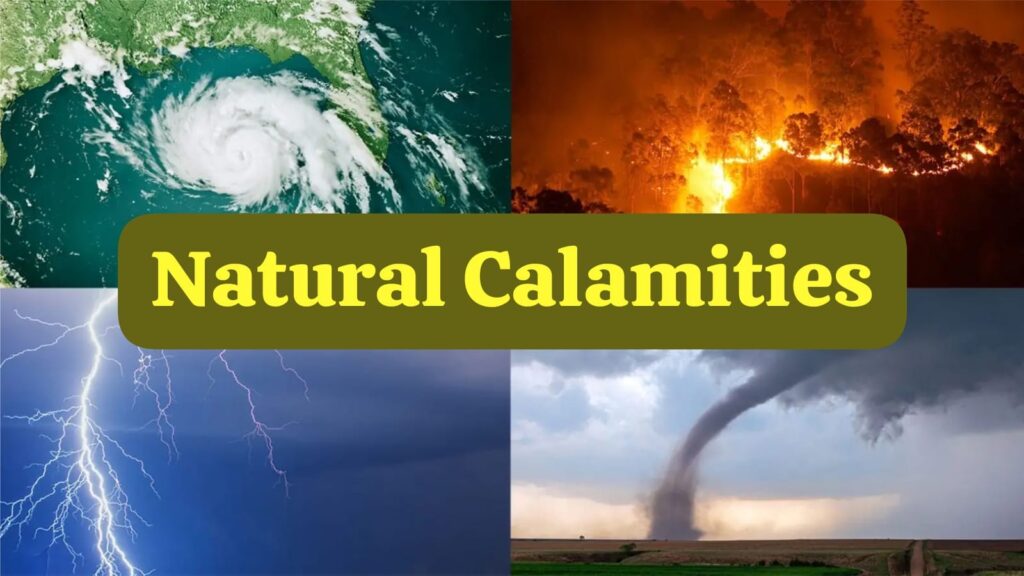
Events caused by sudden changes in nature that result in loss of life and property are known as natural calamities or disasters. These can be broadly classified into two categories. The first category consists of earth-related calamities. These include earthquakes caused by the movement of tectonic plates within the Earth, tsunamis triggered by undersea earthquakes, volcanic eruptions, and landslides. The second category comprises atmospheric and water-related calamities; prominent examples include cyclones, heavy rains, floods, droughts, and heatwaves. These calamities cause severe damage to human lives, property, and the environment. However, human activities can exacerbate their severity. Floods, droughts, cyclones, landslides, and forest fires are not merely natural calamities; many of them are the consequences of human actions. Deforestation leads to soil erosion and reduces the soil’s ability to retain stability, resulting in landslides; filling up tanks and ponds leaves no storage space for rainwater, causing floods; excessive extraction of groundwater leads to drought; and the destruction of mangrove forests removes a natural barrier that would otherwise reduce the intensity of cyclones. This implies that the term “natural disaster” is somewhat of a misnomer—many disasters are actually “disasters caused by human negligence.” Studies indicate that forest fires in India doubled during 2020–21, with some states recording an increase of over 500%. This involves more than just the loss of forests; it entails carbon emissions, air pollution, the death of wildlife, and life-threatening risks to local communities. Therefore, disaster management is not merely about providing aid after a disaster strikes; it encompasses early warnings, early warning systems, public awareness, and nature-based protective measures. Conserving water bodies, regenerating forests, and protecting mangroves are all strategies for disaster mitigation. The United Nations emphasizes that healthy ecosystems are powerful tools for climate resilience and disaster risk reduction. Ultimately, protecting nature means protecting our own lives.
*Recent Natural Disasters Worldwide*
A look at recent examples of natural and man-made disasters reveals widespread devastation caused by earthquakes, floods, cyclones, sandstorms and blizzards, volcanic eruptions, landslides, and wildfires across the globe. A magnitude 7.7 earthquake in Myanmar, Cyclone Dithva in Sri Lanka, floods in Indonesia, Typhoon Kalmaegi in the Philippines, and a series of earthquakes in Venezuela claimed thousands of lives and destroyed homes, roads, bridges, and agricultural lands. In India, heavy rains caused urban flooding, overflowing drains, and water stagnation in low-lying areas across Kerala, Hyderabad, and Warangal; meanwhile, landslides and floods in Uttarakhand endangered pilgrims and villagers. In the Langtang region along the Nepal-China border, a glacier collapse triggered a torrent of snow, rock, and mud that caused devastating floods in the Trishuli River basin, destroying homes, hydroelectric facilities, and border trade centers. In Indonesia, the eruption of the Anak Krakatau volcano spewed ash that severely disrupted air travel, while a powerful earthquake in the same country caused building collapses and fatalities, and displaced hundreds of thousands of people. Earthquakes result from the movement of the Earth’s tectonic plates; tsunamis are triggered by undersea earthquakes; and volcanic eruptions occur naturally, while sea-surface temperatures and atmospheric conditions drive the formation of cyclones. However, human activities play a significant role in intensifying these phenomena. The excessive consumption of coal, oil, and natural gas, along with industrial emissions and vehicular pollution, drives global warming, thereby increasing the frequency and severity of heatwaves, heavy rains, droughts, and wildfires. Deforestation, mining and quarrying, the encroachment upon water bodies (such as ponds, rivers, and drainage channels), and construction projects that disregard environmental impact assessments exacerbate disasters like floods, soil erosion, and landslides. Plastic waste and garbage clog drainage systems, worsening urban flooding. Anthropogenic disasters—such as chemical leaks, gas explosions, oil spills, dam failures, conflicts over money and dominance between regions or nations, and nuclear accidents—cause long-term contamination of water, air, and soil. Therefore, it is imperative to focus on forest conservation, the protection of water bodies, pollution control, sustainable construction practices, the use of renewable energy, the regulation of construction in hazardous zones, and the strengthening of early warning systems. While natural disasters cannot be entirely prevented, minimizing human error can significantly reduce the loss of life and property. Instead of seeking to conquer nature, we must learn to live in harmony with it. Nature conservation is the protective shield for human survival.
*Role of scientific and technological solutions*
Environmental problems should be faced not just with emotion, but with scientific data. Observing forest degradation through satellite images, measuring air and water quality through sensors, assessing pond sedimentation through drones, predicting rains and floods with artificial intelligence—all these are modern environmental science tools. Scientists, researchers, and universities should collect data on local problems, propose solutions, and provide them to governments and the public. Recent research suggests that studying forest coverage, carbon storage, and fire dynamics in India together can provide a holistic view of policy decisions. This means not just data; it is important to transform it into policy. Technology is not just for industries; it is also a tool for nature conservation. Solar panels, wind turbines, electric vehicles, biogas plants, water purification technology, waste recycling—all these are environmentally friendly technologies. But be careful in their implementation too—do not cut down forests for solar panels; River banks should not be destroyed for mining. Technology should be in harmony with nature, not against it. That is why both a scientific and an ethical perspective are needed.
*Education, awareness, generational change*
Education for environmental awareness is not just about books; it is a way of life. In schools, children should be taught tree planting, waste segregation, water conservation, bird identification, and introduction to local plants—all these are practical lessons. In colleges, environmental science should be taught not just as a theory but with field work—pond monitoring, air quality measurement, waste surveys, and local biodiversity documentation. Universities should conduct research on local problems and present the results to the public in a simple way. Despite the goal of halting and reversing global nature loss by 2030, recent assessments indicate that countries’ actions are not enough. This means that raising public awareness through education is essential. The media—TV, radio, social media, local newspapers—should regularly discuss environmental issues; not only when a disaster occurs, but also write articles on preventive measures. NGOs should work with the villagers; the government should support them. Children are today’s students, tomorrow’s decision-makers; if they instill an environmental ethic in them, generational change is possible. Awareness is not about fear; it is about hope, motivating action.
*Collective responsibility: government-people-institutions*
Environmental protection is not a one-man job; it is a multi-party process that requires cooperation. The government must formulate, implement, and monitor policies; citizens must change their daily behavior; NGOs must be involved in awareness, monitoring, and restoration work; scientists must provide data and solutions; schools must pass on knowledge to generations; the media must reach out to the public; businesses must adopt environmental standards in their operations. Citizens of every country, governments, NGOs, scientists, researchers, schools, and institutions—all of them—must come together to identify problems in a timely manner and implement solutions quickly. This is not just idealism; it is a mortal necessity. Recent assessments indicate that most of the environmental goals are not being met worldwide. That means time is running out. Every village, every colony, every school, every institution should take up a small environmental program within its jurisdiction—rejuvenating a pond, greening a park, segregating waste in a school, managing water in a village. These small actions are the path to big change. Collective responsibility means that no one should bear it alone; everyone should bear it together.
*A livable land for future generations*
Every decision we make today determines the lives of future generations. The tree we cut today will not provide shade for our children tomorrow; the pond we fill today will not provide water for our souls tomorrow; the air we pollute today will damage the lungs of our grandchildren tomorrow. That is why environmental protection is not just a convenience for the current generation; it is a legacy we leave for future generations. Estimates suggest that by 2030, 45-64% of forests in India will be affected by climate change. This is not just a warning; it is a sign that urgent action is needed. We need to rebuild ecosystems that are livable for future generations—that is, regenerating forests, protecting wetlands, reviving river basins, reviving mangroves, and increasing urban greening. This is not a one-generation task; it is a generational task. Each generation must take responsibility for its part; the wealth inherited from our ancestors must be passed on to the next generation in a richer way. Therefore, the ultimate answer to the question of “who should change?” is—everyone must change; the government, the citizen, the organization, the generation—everyone must change together. When nature is happy, humans are happy; when society is happy, nature is happy. Only by remembering this interdependence can our future be secure.
*”PRAKRUTHI RAKSHATHI RAKSHITHAHA”*
*— Ravi Babu Pittala, Environmentalist, Former Assistant Professor, JNTUH, Hyderabad and Joint Secretary, Orugallu Wildlife Society NGO (OWLS), Telangana, India. Cell: +91 98494 25271.*