Our Survival Lies with Nature – The Environment is Our Future
*Our Survival Lies with Nature – The Environment is Our Future*
*– If we do not wake up and take heed even now, our future remains shrouded in uncertainty—and beyond that, lies only darkness.*
*– A Comprehensive Scientific Analysis on the Occasion of World Environment Day.*
*Article Authored by: Ravi Babu Pittala, Environmentalist.*
*Environmental conservation is no longer merely a responsibility; it is an urgent struggle essential for our very existence.*
The Earth—the sole abode for millions of species and an infinite repository of resources. On this magnificent planet—where creation took shape in the vast cosmos to allow life to flourish—our ‘environment’ stands as the fundamental pillar enabling human survival. The environment encompasses far more than just the trees, rivers, and hills surrounding us; it is an invisible, interdependent web of life—an interconnected ecosystem—spanning everything from air, water, soil, and sunlight to all living organisms, ranging from microscopic microbes to majestic whales. This natural system, established long before the advent of humanity, has—much like a nurturing mother—consistently provided for every human need: from the air we breathe to the food we eat, and from the water we drink to the very ground beneath our feet. Yet, in the modern era, deluded by the illusion of ‘development,’ humanity has transformed its lifestyle into one that stands in direct conflict with nature. The Industrial Revolution, urbanization, and a culture of excessive consumption have severely disrupted environmental equilibrium. By exploiting natural resources beyond necessity, felling forests, and polluting rivers, humanity is effectively digging its own grave. Regardless of the strides we make in science and technology, we continue to overlook the stark reality that we cannot artificially create even a single drop of oxygen or water. This world remains secure only as long as our behavior, consumption patterns, and lifestyles remain in harmony with the principles of nature.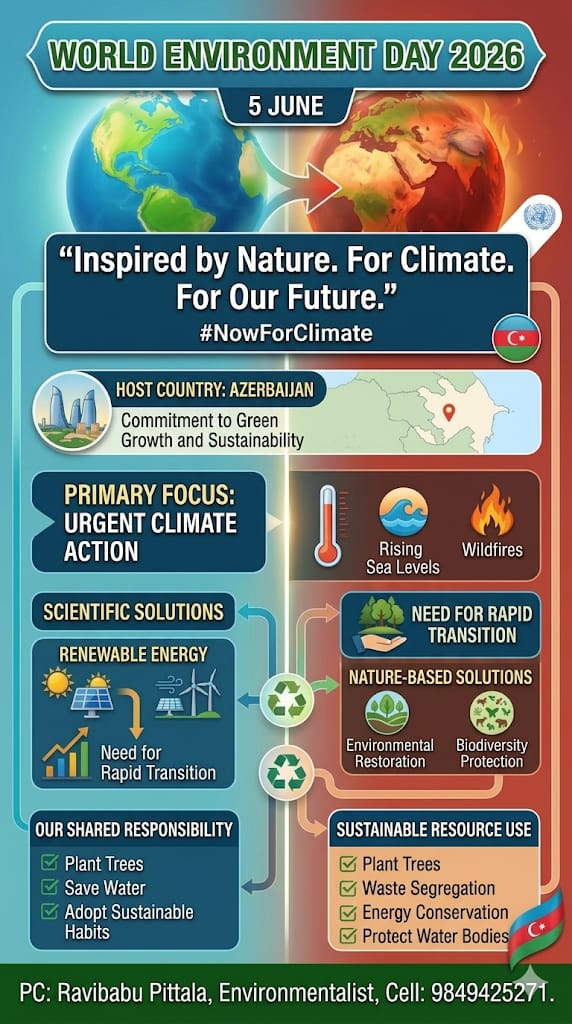
Against this backdrop, environmental conservation is no longer merely a responsibility; it has become an urgent struggle for our very survival. World Environment Day, observed annually on June 5th, serves as an international platform to remind us of the intrinsic link between nature and the survival of life forms on Earth. For the year 2026, the international community has officially announced a special initiative—hosted by Azerbaijan—focused on addressing climate change and ecosystem degradation. The local theme designed in alignment with this initiative— *“Inspired by Nature. For Climate. For Our Future.”*—is not merely a catchy slogan; it is an irrefutable scientific truth that dictates the very existence of modern humanity. The world remains secure only as long as human progress remains subservient to the laws of nature. *Ecosystem Services – A Life-Support System*
In scientific terminology, the services that nature provides to humanity free of charge are referred to as ‘Ecosystem Services.’ These primarily function across four categories: Provisioning (food, water), Regulating (climate control), Supporting (nutrient cycling, soil formation), and Cultural (spiritual and psychological well-being). According to reports from the United Nations Environment Programme (UNEP) and the World Bank, approximately $44 trillion worth of economic output—constituting a significant portion of the global GDP—relies directly on nature and its associated services. If these natural support systems are compromised, human economic progress would collapse entirely. For instance, 75% of the world’s food crops depend solely on insect pollination. If these pollinators were to vanish due to the use of chemicals, global food security would be placed in jeopardy. Therefore, environmental conservation entails more than merely saving trees; it is, fundamentally, about safeguarding our own survival and preserving this indispensable economic safety net that is provided to us freely.
*The Threat of Climate Change – IPCC Warnings*
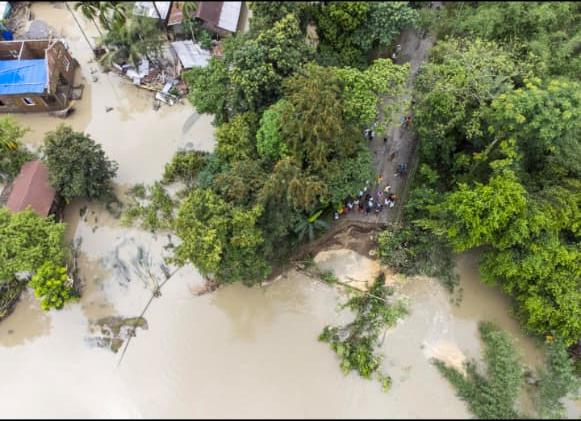
According to the latest research reports from the Intergovernmental Panel on Climate Change (IPCC), the Earth’s average temperature has already risen by *1.1°C to 1.2°C* compared to pre-industrial levels. This slight variation in temperature is triggering profound changes across the globe. Consequently, the world is witnessing a surge in abnormal heatwaves, unseasonal heavy rainfall, sudden floods, and severe drought conditions. Scientific data clearly indicates that, in India as well, the intensity of such extreme weather disasters has escalated by approximately 30% to 40% over the past five years (2020–2025). Due to shifts in monsoon patterns within our country, severe droughts and unexpected cyclones are occurring simultaneously—often in different regions. This instability results in annual losses amounting to billions of dollars for the nation’s GDP. Furthermore, the livelihoods of millions of farmers dependent on agriculture, along with the country’s food security, are being placed at risk. The IPCC has issued a stern warning that unless industrial emissions and greenhouse gases are brought under control immediately, the Earth’s temperature will breach the 1.5°C threshold by the end of this century, leading to irreversible devastation.
*Global Warming and Melting Glaciers – A Flood in the Making*
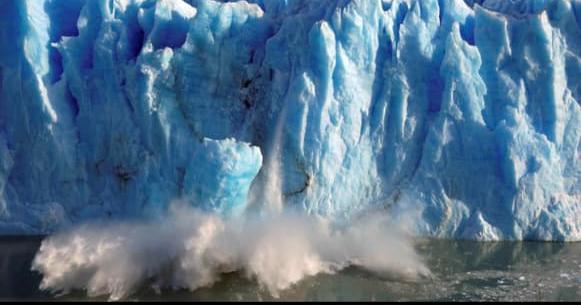
The earth’s temperature is constantly rising due to the uncontrolled release of greenhouse gases into the atmosphere for human needs. Due to global warming, ice caps in polar regions and glaciers in mountain ranges such as the Himalayas are melting at a very rapid rate. This raises the risk of rising sea levels and inundating coastal cities, while changing the flow patterns of rivers is a concern. According to one estimate, if atmospheric carbon emissions are not controlled now, by the end of this century, there is a risk of millions of environmental refugees around the world due to rising sea levels. According to scientific research, the ice caps in the Himalayas have been melting at twice the rate in the past few decades.
Billions of tons of additional water are entering the oceans due to melting glaciers. This is causing sea levels to rise rapidly around the world. Indian cities like Mumbai, Kolkata, Chennai, as well as international cities and islands like New York, London, Tokyo, Maldives are at risk of disappearing into the ocean in the next few decades. *Changing River Flow Patterns – Drought:* Himalayan glaciers are the source of life-giving rivers like the Ganges, Brahmaputra, and Indus. Initially, rapid melting of the ice causes sudden floods in these rivers (glacial lake outburst floods). However, once the glaciers melt completely, these rivers dry up permanently, leaving millions of people dependent on them facing severe water shortages for drinking and irrigation.
This is not just an environmental problem; it is a global crisis that is leading to border disputes between countries, severe economic and social instability. If we are to survive, it is an urgent task to reduce carbon emissions and control global warming. 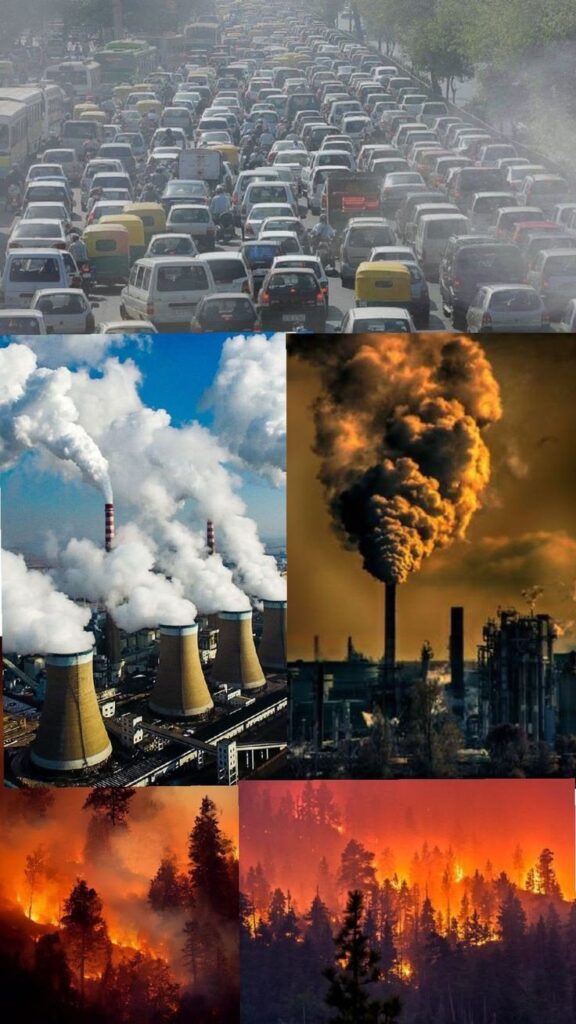
*Deforestation – Destruction of Carbon Sinks*
According to the latest statistics from the Food and Agriculture Organization (FAO), about 10 million hectares of forests are being destroyed every year worldwide. Humans are cutting down forests indiscriminately for their own selfishness, urbanization and industrial needs. Forests are like the lungs of the earth. They absorb a large amount of harmful carbon dioxide (CO_2) gas from the atmosphere through photosynthesis and release oxygen, acting as a natural ‘carbon sink’ for the earth. When we cut down forests, we are not only losing trees; the carbon stored in those trees is also released back into the atmosphere, further warming the planet.
According to IPCC reports, the threat of global climate change can be effectively reduced by up to 28% by simply protecting existing forests and undertaking new afforestation. Amazon Rainforest Degradation – A Case Study: The Amazon, the world’s largest rainforest, has lost about 20% of its area in the last century. The scientific consequence of this is that local rainfall has decreased by up to 15%. As a result, the Amazon forests, which were once constantly drenched in rain, are now subject to frequent and devastating forest fires. Forest protection has become crucial in India too. Forests not only reduce local temperatures by 2°C to 3°C, but also help raise groundwater levels. If deforestation continues at this rate, the natural system that balances carbon in the atmosphere will be completely destroyed, threatening human survival.
*The Biodiversity Crisis and Zoonotic Diseases – The Extinction of Species*
According to reports by United Nations scientists, nearly 1 million (10 lakhs) plant and animal species—out of the total species inhabiting the Earth—are at risk of permanent extinction within just the next few decades. Scientists warn that, due to human activities, the Earth is currently facing its “Sixth Mass Extinction.” Biodiversity is not merely about the presence of a variety of animals and plants; it serves as a protective shield that maintains the balance of life on Earth and ensures ecosystem stability. If even a single link in this chain is broken, the repercussions will be felt by all of humanity.
Two major threats to human survival arising from the decline of biodiversity are: 1. A Threat to Food Security: Globally, more than 75% of the food crops cultivated by humans rely entirely on natural pollination facilitated by honeybees, butterflies, and other insects and animals. If these insects were to vanish due to pollution and the use of chemical fertilizers, crop yields worldwide would plummet drastically, triggering a severe food crisis. 2. The Resurgence of New Pandemics: Due to rampant deforestation, mining activities, and the illegal trafficking of wildlife, animals are losing their natural habitats. Consequently, they are encroaching upon human settlements, or their direct contact with humans is increasing. As a result, the threat of “zoonotic spillover”—the transmission of dangerous viruses and bacteria harbored by wildlife to humans—has risen by nearly 75%. Data from the World Health Organization (WHO) clearly establishes a scientific fact: more than 70% of the novel infectious diseases that have plagued humanity over the past few decades—such as Ebola, Zika, Nipah, Bird Flu, and COVID-19—are “zoonotic” diseases that originated in wildlife and spread to humans following the destruction of forests. Scientists warn that if we continue to disregard nature and destroy wildlife habitats, humanity will inevitably face even more terrifying health crises and pandemics in the future. Preserving biodiversity is not merely about protecting animals; it is, fundamentally, about safeguarding our own health and survival.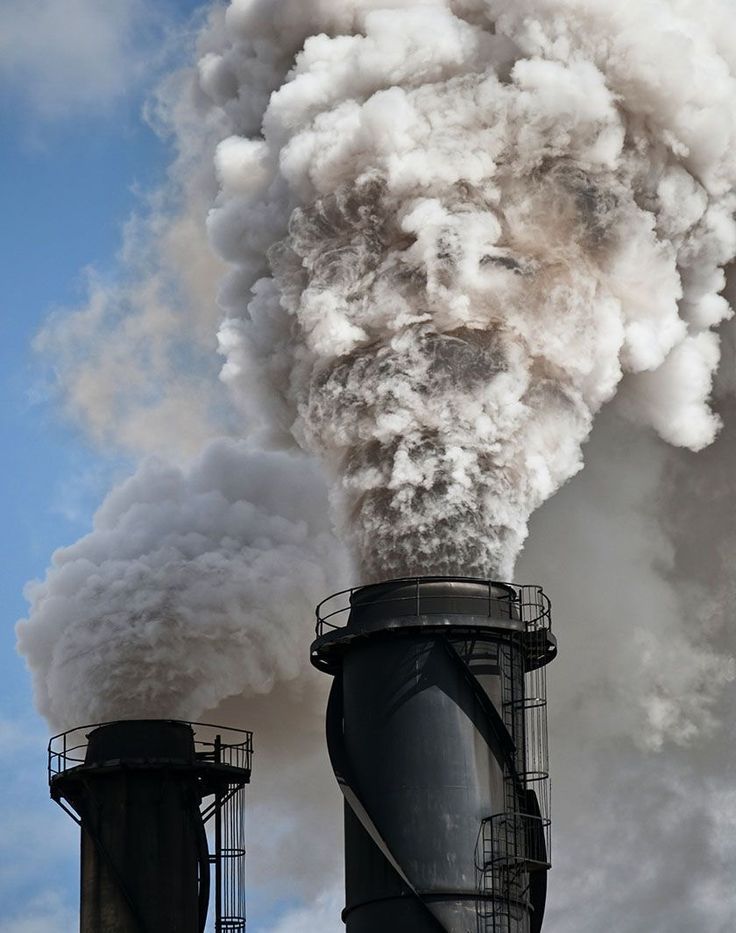
*The Intensifying Water Crisis – Water Footprint and Groundwater Depletion*
The fundamental principle that “Water is the source of life” is facing its most severe challenge in the modern era. Today, more than 2 billion people worldwide live in dire conditions where they lack access to even basic safe drinking water. Due to the indiscriminate exploitation of water resources and the absence of proper management practices, this crisis is intensifying year after year. In India, this issue has become even more alarming. In our country, over 60% of agricultural activity relies exclusively on groundwater. International reports indicate that India extracts more groundwater than any other nation in the world. A stark testament to this is the situation in various regions of Punjab, Haryana, Tamil Nadu, and the Telugu-speaking states, where borewells fail to yield even a single drop of water, despite being drilled to depths of hundreds of feet. Furthermore, rapid urbanization has led to the encroachment upon natural ponds and tanks. The discharge of chemical waste from industries and untreated sewage into rivers and lakes is rendering the remaining water resources toxic as well.
*What is a ‘Water Footprint’?:* The concept of a ‘Water Footprint’ refers to the method of quantifying the total volume of water consumed—not merely the water we use directly for drinking or bathing—but also the amount of water expended in the production of every object and food item we utilize in our daily lives. For instance, the production of a single cup of coffee—from the cultivation of the beans to the moment it reaches our hands—consumes approximately 140 liters of water. Similarly, cultivating one kilogram of rice requires approximately 3,000 to 5,000 liters of water, while manufacturing a single cotton T-shirt consumes about 2,500 liters. By examining this embedded water usage—often referred to as “virtual water”—we can grasp the alarming rate at which we are depleting our water resources. To ensure that future generations do not face a desperate struggle for even a single drop of water, the implementation of rainwater harvesting methods must be made mandatory. It is imperative to revitalize traditional water sources, adopt effective watershed management strategies, and promote scientific agricultural techniques—such as drip irrigation—that yield higher returns with minimal water consumption.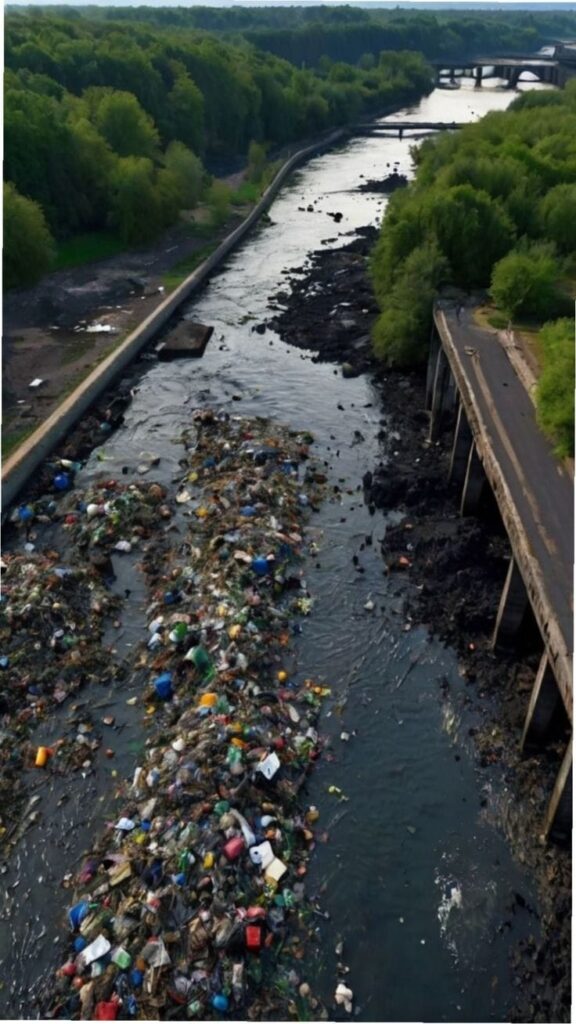
*Pollution – Serious Consequences on Human Health*
In modern society, pollution is not just a threat to the environment; it is a silent health crisis that is threatening the survival of humanity. Our industrial progress, the use of vehicles, and the disposal of plastic waste are becoming a threat to our lives. According to the World Health Organization (WHO) reports, more than 70 million (7 million) people die prematurely every year worldwide due to environmental and air pollution. Pollution mainly affects human health in three forms: *Air pollution – the silent killer:* The most dangerous fine particles found in smoke emitted from industries and vehicles are called PM2.5 (Particulate Matter 2.5). These are so small that when we breathe, they bypass the natural filter system in our nose and go directly deep into the lungs, from there into the bloodstream. This leads to fatal diseases like lung cancer, chronic asthma, heart attack and brain stroke at a young age. This problem has become more acute in metro cities of India.
*Water pollution and toxic food:* Untreated industrial chemical waste and pesticides are getting into rivers and groundwater, which is poisoning the water resources. Drinking this polluted water not only damages the liver and kidneys, but also the crops and vegetables grown with that water cause ‘heavy metals’ (heavy metals – lead, arsenic, mercury) to enter the human body, causing severe neurological disorders and cancer. *The threat of microplastics:* Plastic waste does not dissolve in the ground even for hundreds of years. Over time, these break down under the influence of sunlight and air and turn into very fine ‘microplastics’ that are invisible to the eye. Plastic chemicals in the food chain: These microplastics have now entered the human food chain not only through the tap water and bottled water we drink but also through marine organisms (fish, shrimp) and cultivated crops. Recent scientific research has found that microplastic particles are present in human blood, lung tissue, and even in the placenta, which protects the fetus. They disrupt the hormonal balance in the human body, weaken the immune system, and lead to cancer and infertility. Controlling pollution is not just about keeping the environment clean, but also about protecting our bodies and the health of future generations.
*Legal Protection – Indian Environmental Laws*
According to Articles 48A and 51A(g) of the Constitution of India, protecting the environment is a fundamental responsibility of the government and every citizen. India has strong laws for environmental protection, which need to be studied and implemented thoroughly: *Wildlife Protection Act, 1972 (Wildlife Protection Act), *Water Pollution Prevention Act, 1974 (Water Act), *Forest Conservation Act, 1980 (Forest Conservation Act), *Air Pollution Prevention Act, 1981 (Air Act), *Environmental Protection Act, 1986 (Environmental Protection Act), *Biological Diversity Act, 2002 (Biological Diversity Act), *National Green Tribunal Act, 2010 (NGT Act)* If legal action is taken against those who violate the above laws and punishment is implemented, environmental degradation will be under control.
*Scientific Solutions – Sustainable Development*
The only unified way that science shows to save the planet from the environmental crises and threats of destruction that humanity is currently facing is to adopt the ‘sustainable development’ model. Sustainable development does not mean just stopping progress; it means moving forward by balancing the three main pillars of economic development, environmental protection and social equality. Simply put, the main purpose of this theory is to use the natural resources on earth economically and responsibly without compromising the survival and needs of future generations while meeting the needs of the present generation.
The most critical scientific fields for achieving this sustainable transformation are: *The Renewable Energy Revolution (Renewable Energy Shift):* We must rapidly reduce our reliance on traditional fossil fuels—such as coal, crude oil, and petrol—which are the primary drivers of global warming. In their place, the world must transition toward inexhaustible, pollution-free sources such as solar energy, wind energy, and green hydrogen—often hailed as the fuel of the future. Increasing the adoption of electric vehicles (EVs) within the transportation sector constitutes an integral part of this transition. *Green Technology and Energy Efficiency:* By utilizing technologies that deliver high performance with lower energy input—such as LED bulbs and star-rated home appliances—within both industrial and residential settings, we can significantly reduce electricity consumption and, consequently, alleviate the pressure on coal-based power generation. *Sustainable Construction (Green Buildings):* By constructing eco-friendly structures designed to maximize natural ventilation and lighting, and incorporating facilities for rainwater harvesting, we can effectively mitigate the environmental damage associated with rapid urbanization. *India’s (Panchamrit) Pledge – The Net Zero Goal* According to the ‘Panchamrit’ plan announced by India at international climate summits, our country aims to meet 50% of its energy requirements through renewable energy sources by 2030. Furthermore, it has formulated a scientific roadmap to achieve ‘Net Zero’ status—meaning net-zero carbon emissions—by 2070, by balancing the volume of carbon emissions released into the atmosphere with the volume of carbon absorbed. Achieving this goal requires not only government policies but also the industrial sector’s inclination towards Green Bonds and the undertaking of eco-friendly investments. Sustainable development is not merely an option; in the current era, it stands as the sole scientific solution for safeguarding our present survival while bequeathing a safe and habitable Earth to future generations.
*Circular Economy and Waste Management – Waste Revitalization*
The most significant environmental challenge facing modern society today is the accumulation of waste. The waste management approach we have followed thus far relies entirely on a ‘Linear Economy’ model. This entails—extracting resources, manufacturing products, utilizing them, and subsequently discarding them (Take-Make-Waste). As a result of current practices, not only are mounds of waste accumulating on the land, but natural resources are also being depleted at an alarming rate. We must abandon this destructive trend and rapidly implement the ‘Circular Economy’ model advocated by science. The primary objective of a Circular Economy—or ‘Chakriya Arthika Vyavastha’—is to ensure that no manufactured product becomes mere waste; instead, through the regenerative ‘3Rs’ (Reduce, Reuse, and Recycle), the waste generated by one product serves as a resource for another. This approach not only alleviates environmental pressure but also enhances opportunities for entirely new ‘Green Jobs.’
In this direction, the scientific changes that need to be implemented in waste management include: *Segregation at Source:* Separating wet waste, dry waste, and hazardous chemical waste right at the household level makes the subsequent recycling process significantly easier. Organic fertilizers (compost) or bio-gas can be produced from wet waste.
*Extended Producer Responsibility (EPR):* This is a scientific principle mandating that the very company responsible for manufacturing a product—or its plastic packaging—must take responsibility for collecting and recycling that item after its consumption, thereby ensuring it does not cause environmental harm. *Legal Advancements in India:* The Solid Waste Management Rules and E-Waste Regulations—which have recently come into stricter force in India—have made it mandatory for industries and local municipal bodies to scientifically process waste and to reduce the percentage of waste sent to landfills. In particular, the complete prohibition of single-use plastics constitutes a pivotal component of this strategy. Plastic chemicals leach into the soil, destroying beneficial microorganisms and thereby compromising the land’s fertility. Similarly, plastic waste flowing through rivers into the oceans is responsible for the deaths of hundreds of thousands of marine creatures every year. A sustainable future becomes possible only when we cease viewing waste merely as something to be discarded and instead adopt scientific methods to transform it back into a valuable resource.
*Nature-Based Solutions (NBS)*
Currently, the modern concept of “Nature-Based Solutions (NBS)” is gaining great importance in international climate conferences and environmental science. This theory states that problems can be solved permanently by restoring natural forces and natural ecosystems, rather than relying on artificial methods such as heavy machinery and cement buildings to deal with environmental crises. That is, instead of destroying nature and looking for solutions, its main purpose is to improve the environment by making nature a partner. Three main strategies that have been successful internationally in this nature-based model are: *Mangrove (forest) conservation – Coastal protection zone:* The conservation and expansion of mangrove forests (relaxation forests/mangrove forests) that grow naturally in coastal areas is a key part of this. The roots of these forests effectively block the impact of strong waves and the speed of storms. They are better at preventing soil erosion than artificially constructed concrete walls, protecting the lives and livelihoods of coastal people.
*Watershed Management – Groundwater Regeneration:* By undertaking rainwater harvesting structures in scientific methods, digging cisterns in hill slopes and restoring traditional ponds, rainwater is absorbed into the ground instead of being wasted in the sea. It has been proven that these natural methods can increase groundwater levels in local areas by 20% to 30%. *Urban Green Spaces – Greenery in Concrete Forests:* The rapid increase in cement buildings and asphalt roads in cities is increasing the heat intensity and creating ‘urban heat islands’. To avoid this, urban forests and parks should be developed through the *‘Miyawaki Method’*, a Japanese technique that creates dense forests in empty spaces in the middle of cities in a short time. These not only significantly reduce urban temperatures but also absorb air pollution. *Environmentally friendly economic benefits:* According to the United Nations Environment Programme (UNEP), investing in nature-based solutions can not only prevent climate change but also prevent billions of dollars in losses due to droughts and floods. They also provide safe habitats for endangered local biodiversity. Only by incorporating these scientific solutions linked to nature into rural and urban planning can we build sustainable, safe societies that can withstand climate change.
*Individual Responsibility – Path to Collective Change*
As Mahatma Gandhi once said, “Nature can meet man’s needs, but not his greed.” This statement reflects the current environmental crisis of 2026. Government laws and high-level policies alone are not enough to address global issues like global warming, biodiversity loss, and water crisis. Environmental protection is not just the responsibility of rulers; it is the fundamental duty of everyone who breathes on earth. Real change is possible only when ‘local actions — global impact’ occurs at the grassroots level. We do not need to devise global strategies to protect the balance of nature; it is enough to change some small habits in our daily lives. Small actions like planting at least one sapling on their birthday or on an important occasion and protecting it, using water sparingly at home, single-handedly stopping the use of plastic and promoting eco-friendly items (cloth bags) are the foundations of tomorrow’s big change.
On the occasion of World Environment Day 2026, let us all pledge to live with a scientific approach and collective responsibility, respecting the limits of nature. Let us change our thinking and lifestyle in favor of nature and give a beautiful and safe world to our future generations.
*”Saving nature means actually saving ourselves!”*
*– Ravi Babu Pittala, Environmentalist, Former Assistant Professor and Joint Secretary, Orugallu Wildlife Society (OWLS), Telangana, Cell: +91 9849425271.*