Failure to Act Now Will Lead to Severe Water Crises in Cities
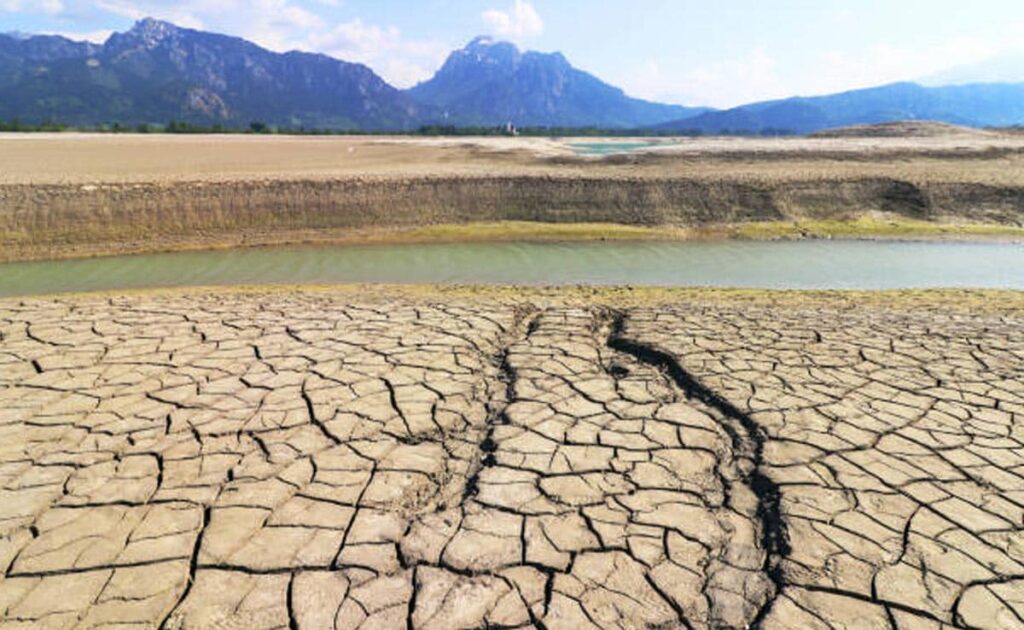
*Failure to Act Now Will Lead to Severe Water Crises in Cities*
*— Urban Drinking Water Issues: A Comprehensive Analysis*
*— Without Proactive Planning and Precautionary Measures, Urban Residents Will Face Extreme Thirst!*
*Article by: Ravibabu Pittala, Environmentalist*
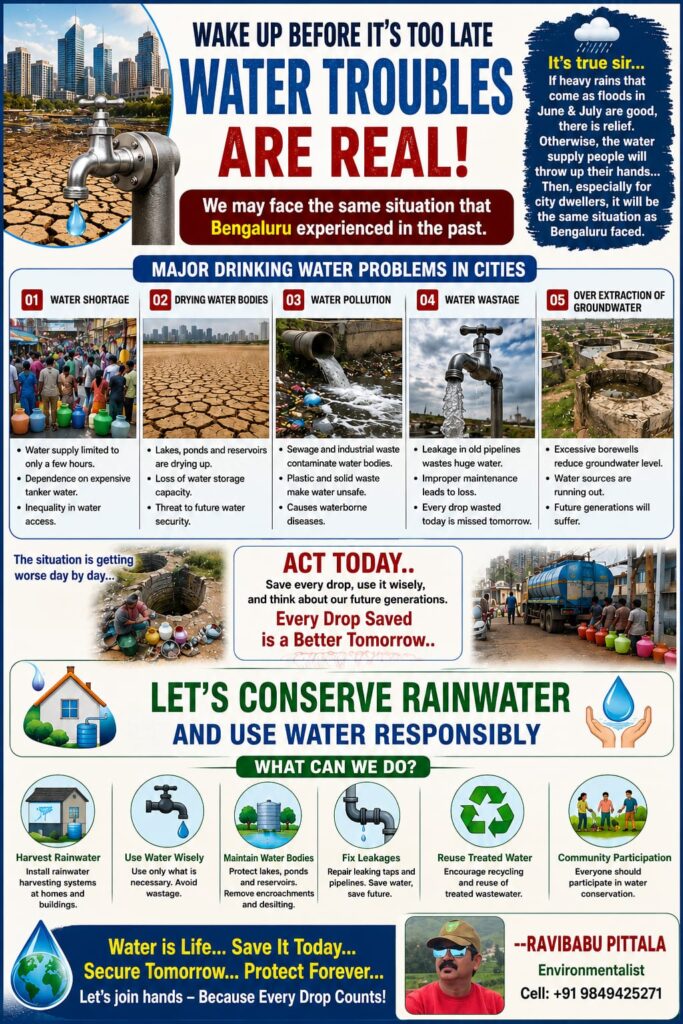
*Chaotic Urbanization — Depleting Groundwater Levels:*
Due to rapid urbanization, a population explosion, and haphazard urban planning, the urban drinking water system has plunged into a severe crisis. According to scientific research and hydrological data, the proliferation of concrete structures in cities prevents surface runoff from percolating into the ground, causing groundwater levels (water tables) to drop at an alarming rate every year. On the other hand, traditional tanks and reservoirs are falling victim to encroachment, thereby losing their water storage capacity. Consequently, whenever drought-like conditions arise, cities are forced to rely solely on external water sources—specifically, water transported via pipelines from projects located in distant regions. However, the crisis is further exacerbated by a 30% to 40% loss of “Non-Revenue Water” (water wasted due to leaks and unauthorized connections) within distribution networks, coupled with a complete lack of regulation regarding per capita water consumption. According to scientific meteorological forecasts, if the monsoon rains prove elusive during the months of June and July, even the “dead storage” (minimum reserves) in reservoirs will be depleted; consequently, much like Bengaluru, IT corridors and residential areas will inevitably be forced to rely on the “tanker mafia” and IT-based water rationing systems. Therefore, unless a comprehensive “Water Management Plan”—one that immediately adopts “Sponge City” principles, mandates the restoration of urban water bodies and the construction of rainwater harvesting structures, facilitates wastewater treatment and recycling, and curbs water wastage through digital flow meters—is implemented without delay, the impending urban drinking water crisis is bound to evolve into a catastrophic disaster that cripples both the social and economic fabric of the region.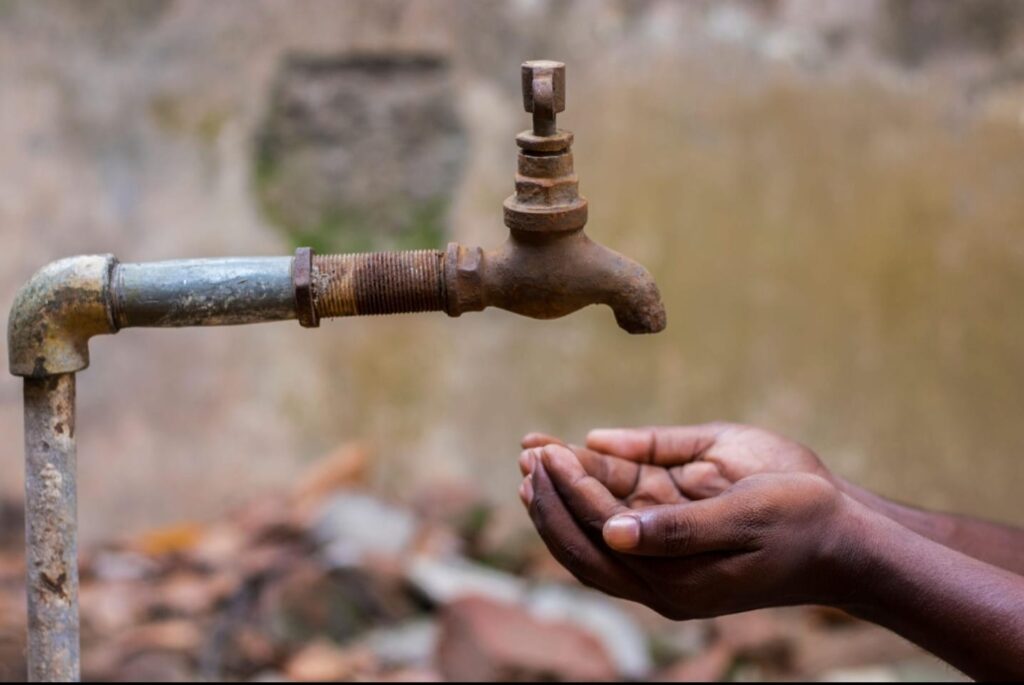
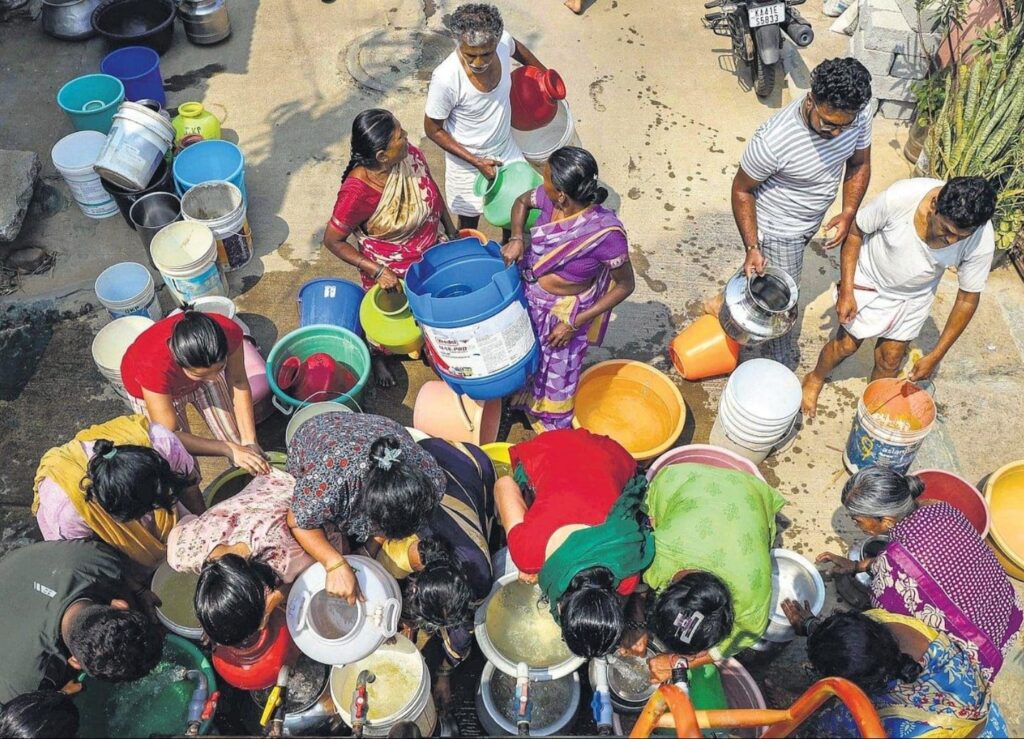
*Excessive Migration into Hyderabad – A Severe Shortage of Infrastructure Resources:*
This is a comprehensive investigative article analyzing the failure of infrastructure to keep pace with the unchecked surge in migration into the metropolis of Hyderabad—a migration driven by the pursuit of employment, educational, and industrial opportunities. While the rapidly expanding IT, Pharma, and construction sectors within the Greater Hyderabad Municipal Corporation (GHMC) limits are attracting massive migration from all corners of the country, the lack of adequate water supply and other public amenities to support this population explosion is pushing the city toward a major environmental crisis. According to scientific data, Hyderabad’s population has already crossed the 10-million mark and continues to surge; however, the water currently being pumped into the city from hundreds of kilometers away—sourced from the Krishna and Godavari rivers (via the Sunkesula and Yellampalli projects)—is woefully insufficient to meet current demand. Due to increased population density and the failure of the municipal water network to fully extend into residential areas—including IT corridors such as Gachibowli, Manikonda, and Miyapur—more than 35% of the city’s population relies exclusively on private water tankers and deep borewells. This has resulted in the over-exploitation of groundwater, causing the city’s water table to plummet to depths of hundreds of feet; furthermore, it has led to the contamination of groundwater, with rising concentrations of chemicals such as fluoride and nitrates. Compounded by water scarcity and immense migratory pressure, drainage systems are becoming paralyzed (sewerage overload); solid waste management has failed—turning dumping yards like Jawaharnagar into environmental curses—and the proliferation of “concrete jungles” has intensified the “Urban Heat Island” effect, resulting in record-breaking temperatures. Unless the decentralization of migration is immediately undertaken through the development of satellite townships surrounding Hyderabad, and a comprehensive urban water conservation plan is implemented, the city’s infrastructure system is bound to collapse completely, inevitably triggering a severe socio-economic crisis.
*Urban Population Growth – Infrastructure Failure Issues:*
The failure to provide basic infrastructure commensurate with the rapidly escalating population density in urban areas is pushing contemporary cities into a severe systemic crisis. According to demographic and urban planning research data, as the population growth rate surges in geometric proportion relative to the rate of urban expansion, an unbearable burden is being placed upon civic utility systems—such as safe drinking water supply, drainage networks, and scientific waste management. Particularly against the backdrop of the current acute water scarcity, municipal administrative bodies are utterly failing to provide the minimum per capita water supply to the ever-growing population; consequently, newly emerging suburban colonies, multi-storied complexes, and slums are facing a severe water famine. Based on hydrological and scientific assessments, this imbalance in water distribution—stemming from infrastructure deficits—is driving the excessive extraction of groundwater within cities, thereby posing the imminent risk of permanently depleting urban aquifers. Furthermore, due to unplanned urbanization—which has resulted in a shortage of Sewage Treatment Plants (STPs) relative to the population size—tons of untreated sewage are flowing into local water bodies, thereby contaminating even natural resources. Therefore, unless ‘Smart Infrastructure Planning’ and comprehensive water decentralization policies—which take into account population projections for the next 20–30 years as well as environmental carrying capacity—are implemented on a war footing (with utmost urgency), there is a grave risk that urban drinking water systems will collapse, rendering cities uninhabitable.
*The True Nature of Urban Water Crises:*
In cities, the continuously rising population density, unchecked industrialization, and evolving modern lifestyles are placing unprecedented pressure on urban water supply systems. According to scientific data, the average per capita water demand in a metropolitan city stands at 135 liters per day (LPCD); however, due to the current water scarcity, the actual supply falls short of even half that amount. Consequently, the municipal water supply is now restricted to just a few hours a day—and, in many cases, is available only on alternate days. As cities pump groundwater beyond their sustainable capacity to bridge this deficit, hydrological surveys indicate that the water table in urban areas is dropping by an average of 1 to 3 meters annually—a trend that threatens to lead to permanent aquifer depletion in the future. Conversely, the “tanker economy”—or “tanker mafia”—that has emerged due to the failure of centralized water systems is expanding rapidly, effectively commodifying water. This phenomenon disproportionately affects economically disadvantaged groups and residents of slums, who face severe “water poverty” and inequality as they are unable to afford the exorbitant prices charged for tanker water. Therefore, unless scientific strategies for demand-and-supply management—along with groundwater recharge and equitable distribution mechanisms—are implemented to balance urban population growth with limited resources, the urban water crisis risks escalating into uncontrollable social unrest in the near future.
*Root Causes of the Urban Water Crisis:*
A scientific analysis—grounded in environmental and demographic research data—of the underlying factors driving the current severe water scarcity and systemic breakdown in urban areas reveals several harsh realities. First, rampant pollution has transformed the natural ecosystems within cities—such as lakes and rivers—into dumping grounds for industrial chemical effluents, plastics, and untreated sewage, causing surface water bodies to completely lose their ecological viability. To compensate for this shortage of surface water, the excessive extraction of groundwater has led to a drastic drop in water levels; according to hydrological surveys, levels that were once accessible at a depth of 100 feet have now plummeted to depths ranging from 500 to 1000 feet—a trend that is permanently depleting the subsurface aquifers. Furthermore, the substantial leakage and loss of “Non-Revenue Water” (NRW)—estimated at approximately 35–40%—within water distribution networks due to aging infrastructure stands as clear evidence of systemic oversight failures. On one hand, the prevalence of concrete surfaces has led to a lack of effective rainwater harvesting—causing precious rainfall to run off and go to waste instead of percolating into the ground—while on the other, a glaring deficiency in long-term planning, characterized by a failure to anticipate future demographic needs, is clearly evident. At the epicenter of all these issues lies uncontrolled migration, which is pushing cities beyond their carrying capacity. Because administrators and governments—driven by vote-bank politics—have failed to curb this illegal and unregulated migration, the pressure on urban resources is mounting to unprecedented levels. A scientific analysis of Hyderabad’s demographic data over the past two decades (2006–2026) clearly demonstrates that the primary cause of the current water crisis is the near-doubling of the population due to migration, coupled with a corresponding failure to augment water resources to meet this growth. *Hyderabad Population Growth – Water Demand (2006 vs. 2026): A Decadal Shift*
A clear and scientific analysis reveals how Hyderabad’s population has surged due to uncontrolled migration, and consequently, how rapidly per capita water availability is declining. Regarding the “Population Explosion” (2006–2026): over the past two decades—driven by migration related to the IT and industrial sectors—the population of the Hyderabad metropolitan area has grown from approximately 6 million to 10.5 million (a growth of nearly 75%). An examination of the “Declining Per Capita Water Availability” shows that as the population increases, the standard quantity of water ideally available per individual (135 LPCD—Liters Per Capita Per Day) has been steadily diminishing. Currently, municipal systems are able to supply an average of only 50 to 60 liters per person. Regarding the “Water Requirement for Hyderabad’s Current Population” (2026 Data): based on per capita demand and in accordance with the standards set by the CPHEEO (Central Public Health and Environmental Engineering Organization), every individual requires 135 liters of water per day. When assessing the “Total City Demand,” Hyderabad (including both the core metropolitan area and its suburbs) requires approximately 2,500 to 2,600 MLD (Million Liters Per Day) of water. Regarding population and water consumption over the past 20 years—specifically in 2006—the population stood at 6.7 million. At that time, prior to the advent of major projects like the Krishna and Godavari schemes, the city relied primarily on groundwater and other limited resources to meet a demand of 900–1000 MLD. However, looking at the current scenario in 2026, government statistics indicate that the population has surged rapidly to 11.6 million. To cater to this population, the Hyderabad Metropolitan Water Supply & Sewerage Board (HMWSSB) is currently supplying over 2,600 MLD of water against a total demand of 2,950–3,000 MLD. Due to urban expansion and ever-increasing demand, the need for water tankers spikes significantly during the summer months. There exists a substantial disparity between demand and supply. It is this massive gap that is driving environmental hazards within the city, such as the rampant use of water tankers and the drilling of borewells to depths exceeding 1,000 feet. A crucial point to note here—as highlighted by demographic reports—is that over 75% of the population growth witnessed over the last two decades is attributable solely to migration from other states, as well as from rural areas and smaller towns. In the absence of regulated migration and scientific water planning, these trends threaten to cast serious doubt upon the very sustainability of the city in the future.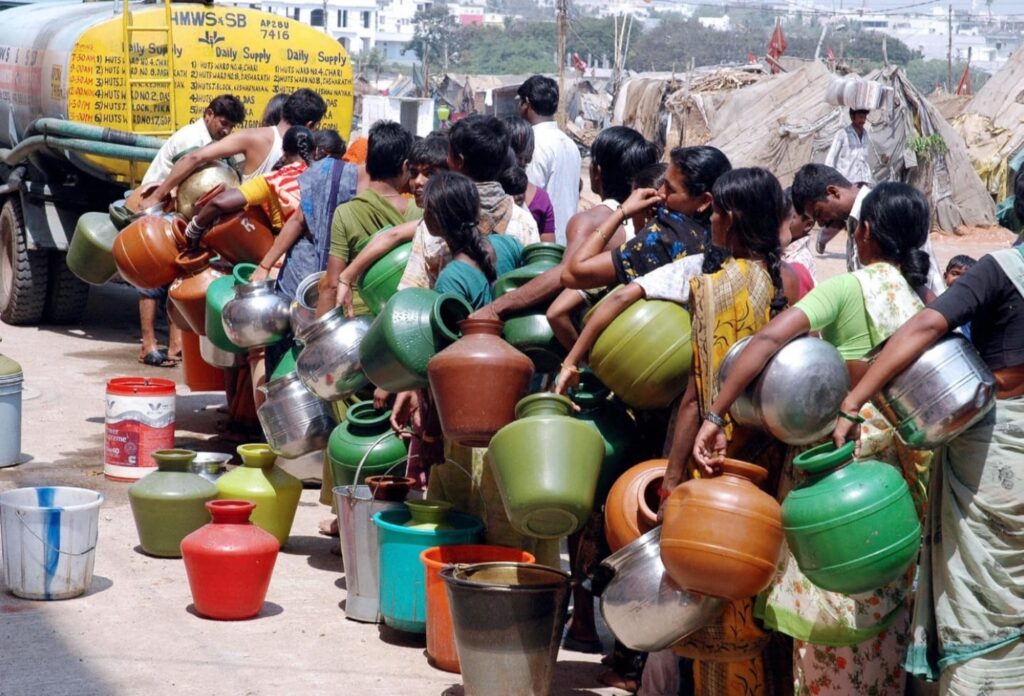
*Urban Water Crisis – Socio-Economic and Health Impacts on Civil Society:*
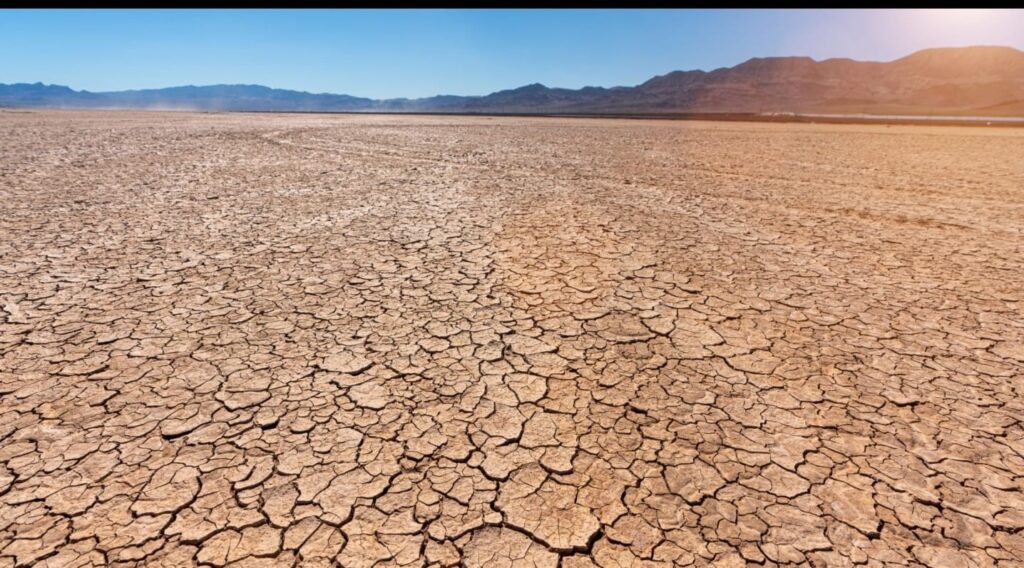
The rapidly escalating water scarcity in urban areas is transforming from a mere environmental issue into a severe humanitarian crisis that threatens the very survival of civil society, public health, and social equilibrium. According to public health and socio-economic research data, the lack of access to safe, protected drinking water in cities compels residents to rely on contaminated water sources; this reliance annually drives up the prevalence of life-threatening waterborne diseases—such as typhoid, cholera, gastroenteritis, and amoebiasis—by over 25%. The economic burden of this crisis falls most heavily upon economically weaker sections of society, particularly those residing in slums and low-income communities; these groups are forced to spend approximately 15 to 20 percent of their daily earnings solely on purchasing water from tankers or private vendors—a phenomenon scientifically termed ‘Water Poverty.’ From a social perspective, the additional physical burden of fetching water falls disproportionately upon women and school-going children, thereby eroding their productivity and educational opportunities. Above all, this scarcity of resources is leading to severe ‘water conflicts’—ranging from the daily skirmishes over water distribution occurring between colonies in metropolitan areas, between apartment complexes, and even between families, to disputes over river waters spanning across state and district borders. In certain IT corridors and industrial zones where the current water crisis has assumed a severe form—creating a situation where even basic necessities cannot be met—a phenomenon known as ‘reverse migration’ (or the exodus of ‘water refugees’) is being scientifically documented; this involves the migrant population, who originally moved to cities in search of a livelihood, now turning back and returning to their native villages. To avert this social catastrophe, there is an immediate need for comprehensive public protection plans in cities that ensure the provision of quality water supply on an equitable basis.
*Example: The Bengaluru Water Crisis – A Grave Warning to Urban Centers:*
The unprecedented water crisis recently experienced by the metropolis of Bengaluru—characterized by incidents such as even the IT corridors falling completely under the control of a private water-tanker mafia, and both IT professionals and the general public abandoning the city to return to their native villages due to unmet basic needs (a phenomenon termed ‘water-led migration’)—serves as a clear and stark warning to our contemporary urban centers. From a scientific perspective, this is not merely a drought created by nature; rather, it is an artificial crisis—a “man-made crisis”—that we have brought upon ourselves through the encroachment of lakes, unbridled concrete construction, the excessive exploitation of groundwater, and unregulated migration. To ensure that an ecological collapse and social displacement—akin to the situation witnessed in Bengaluru—do not recur in our own cities, it is absolutely critical that both administrators and citizens wake up immediately and implement scientific water conservation measures.
*Water Crisis for the Metropolis: The Deterioration of Hyderabad’s Historic and Modern Water Bodies*
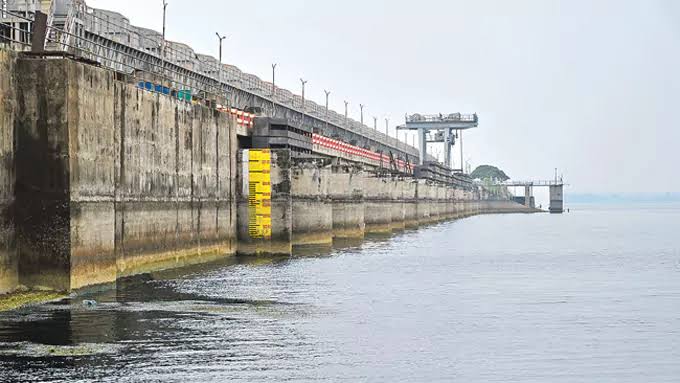
For decades, the historic reservoirs of Osman Sagar (Gandipet) and Himayat Sagar have served as lifelines for the metropolis of Hyderabad. Alongside these, the Krishna River—which currently quenches the thirst of the modern city—stands as the single largest source for the city’s water supply. Water is drawn from the Krishna River and pumped into the city via the Akkampally Reservoir. The Godavari River constitutes the second major riverine resource, delivering water from the Sripada Yellampalli Project. The Singur Dam, situated upstream on the Manjeera River, serves as a primary reservoir for the city and its surrounding areas. Finally, the Manjeera Barrage represents another significant traditional water source located on the Manjeera River. Osman Sagar (Gandipet) and Himayat Sagar are the historic twin reservoirs situated on the Musi River. Although they currently contribute only a small fraction of the total water supply, they remain an integral component of the city’s gravity-based pipeline network. A highly alarming scientific reality regarding the city’s water security is the day-by-day depletion of water reserves within this critical infrastructure project. According to hydrological data and current reports from the Irrigation Department, indiscriminate urbanization surrounding the city—coupled with the encroachment upon catchment areas and the concretization of inflow channels—has completely halted the natural flow of floodwaters into Osman Sagar and Himayat Sagar, thereby confining them to merely ‘dead storage’ levels.
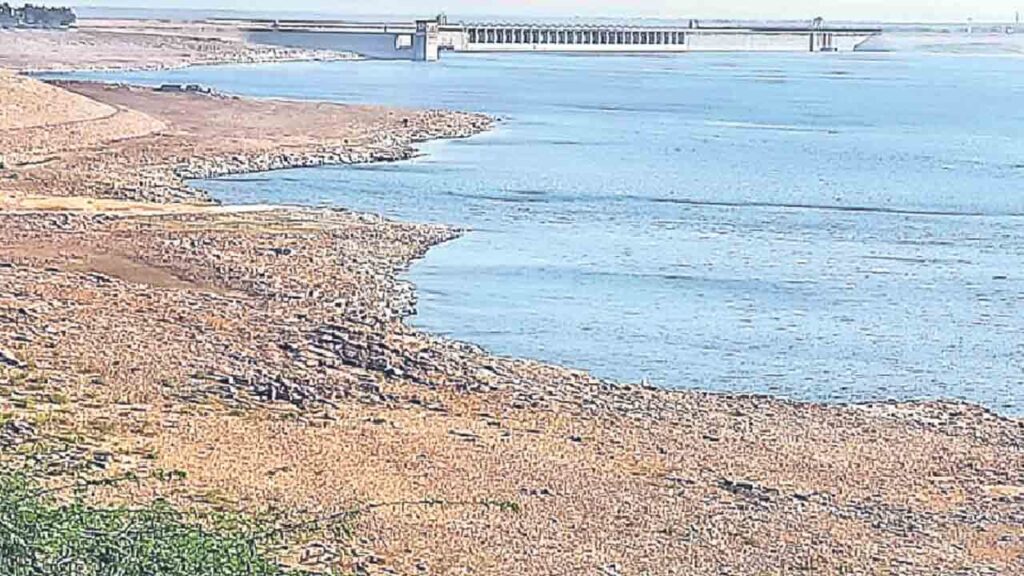
Meanwhile, the Nagarjuna Sagar reservoir—which supplies drinking water to the vast majority of Greater Hyderabad’s population of over ten million—is gradually depleting its Minimum Drawdown Level (MDDL) due to poor rainfall in the upstream regions and excessive water consumption. Scientific assessments warn that when the depletion of these massive reservoirs is weighed against the city’s current population density and daily water demand, municipal water supply systems are bound to face severe strain during the upcoming summer season. As surface reservoir reserves run dry, the city’s peripheral areas are being forced to rely entirely on groundwater, a situation that will ultimately lead to the collapse of urban aquifers. Therefore, unless long-term, scientific, and eco-centric reforms—such as the immediate restoration of catchment areas, the preservation of lakes, and the desilting of reservoirs—are undertaken, rather than relying solely on pumping water from hundreds of kilometers away, the metropolis of Hyderabad is inevitably destined to plunge into a severe water crisis.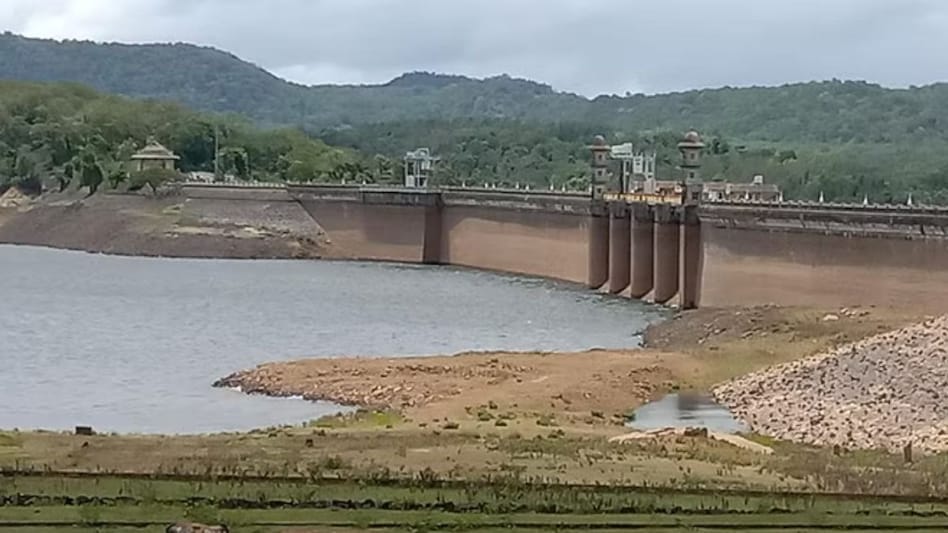
*Scientific Solutions for Mitigating the Urban Water Crisis:*
To effectively address the rapidly rising population density in cities and the prevailing acute water scarcity, it is an urgent necessity to move away from traditional methods and implement a comprehensive ‘Water Management Plan’ grounded in scientific and eco-centric data-driven strategies. Firstly, rainwater harvesting must be implemented mandatorily—not merely as a regulatory formality—in every residential and commercial complex, utilizing geo-tagging technology; this allows for the direct diversion of rainfall into underground aquifers, thereby scientifically recharging the depleting water table. Secondly, regarding water usage control—water auditing must be conducted in urban areas using ‘smart water meters’ (digital flow meters) to curb per capita water wastage, and a tariff policy involving heavy penalties must be introduced for industrial and commercial sectors that consume water beyond their actual requirements. Thirdly, concerning the control of severe pollution—in addition to enforcing strict laws to prevent sewage, plastics, and industrial chemical waste from entering urban lakes and ponds, decentralized ‘Sewage Treatment Plants’ (STPs) should be constructed to divert treated water (recycled water) for use in the construction sector and for landscaping purposes. Fourthly, regarding governmental responsibility—governments must cease encouraging uncontrolled migration and unauthorized real estate layouts for the sake of vote banks and short-term political gains; instead, they must formulate a long-term ‘Urban Water Policy’ that remains strictly within the limits of the city’s ecological carrying capacity. Fifth—and most critically—is public participation (community engagement). Through ‘Citizen Science’ initiatives and the involvement of Non-Governmental Organizations (NGOs), every citizen must be made a stakeholder in water conservation by facilitating the restoration of local water bodies and establishing committees dedicated to the preservation of lakes and ponds. Only the restoration of internal water resources—achieved through a scientific synthesis of these five principles—can safeguard our cities from a looming, severe water crisis in the days to come.
*Water Conservation is the Essence of Life—Our Foremost Environmental Duty:*
Comprehensive hydrological studies, coupled with data regarding the current population explosion in cities and the intensifying water scarcity, reveal one undeniable truth: water is not merely a natural resource; it is a vital life source absolutely critical to the economic and social survival of our cities. According to scientific projections, if we do not immediately transform our water-consumption culture—as well as the urban planning policies of our administrators—to align with the accelerating pace of urbanization and the pressure of unchecked migration, there is a grave risk that, within the coming decade, our cities could devolve into uninhabitable ‘Dry Zones.’ The water crises plaguing metropolises like Bengaluru serve as nothing less than stark warnings issued by nature itself. To prevent social catastrophes—such as internal societal conflicts, severe health crises, and ‘reverse migration’—from occurring in the future solely due to water scarcity, scientific water management remains the only viable solution. It is imperative that citizens and governments, working in coordination, adopt ‘Sponge City’ strategies to divert rainwater into underground aquifers and reuse every single drop, thereby preserving ecological balance. Lasting water security for the future of our cities will be realized only when the slogan—*“Let us conserve rainwater… Let us utilize water wisely… Let us preserve water for future generations…”*—transcends mere rhetoric to become a daily responsibility for every urban citizen and a long-term policy decision for governments.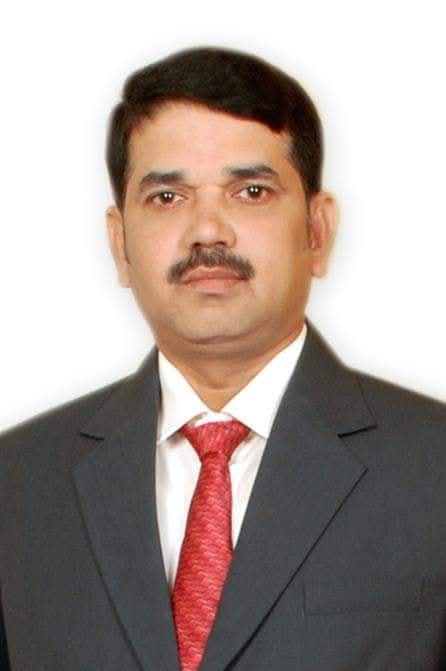
*– Ravi Babu Pittala, Environmentalist; Former Assistant Professor, Centre for Water Resources, JNTUH, Hyderabad. Cell: +91 9849425271.*