Forests Are Our Future – Uncompromising Law Enforcement Is Essential to Protect Forest Wealth
*Forests Are Our Future – Uncompromising Law Enforcement Is Essential to Protect Forest Wealth!*
*— Encroachments upon forest resources cannot be tolerated; strict enforcement of laws is imperative.*
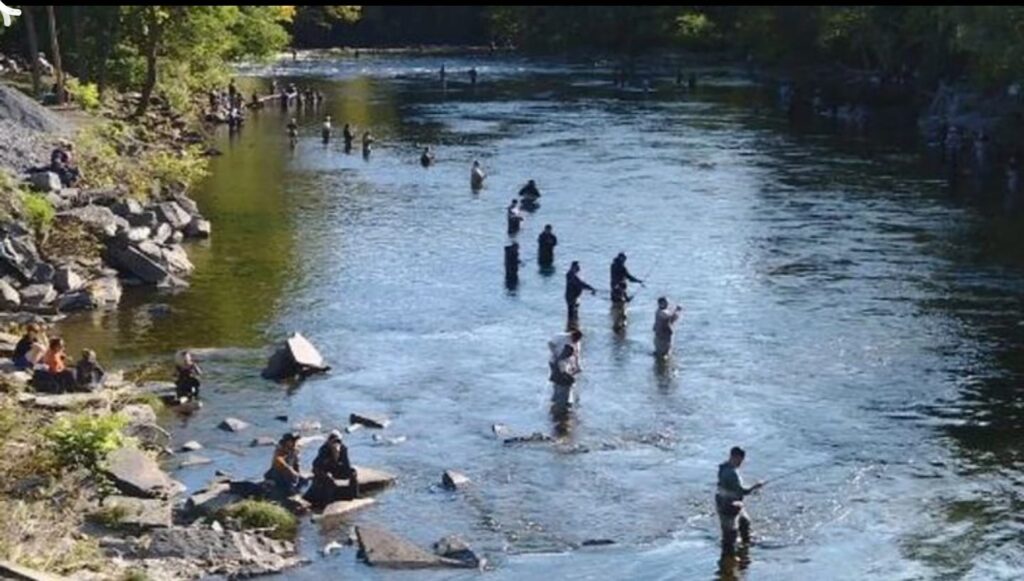
*— Strict action by forest officials against illegal fishing in protected forest areas is justified.*
*— A comprehensive analytical article on forest ecosystem conservation.*
*— Authored by: Ravi Babu Pittala, Environmentalist.*
*Conservation of Reserve Forests: A Legal Obligation and an Urgent Necessity:*
Forests are not merely scenic landscapes offering natural beauty; they are complex ecological and biological systems vital for the survival of all life on Earth. Reserve forests, in particular, serve as safe habitats for rare species of flora, fauna, and aquatic life, playing a crucial role in safeguarding the nation’s biodiversity and ecological balance. However, in recent times, there has been an alarming rise in illegal activities within these sensitive zones—such as unauthorized fishing in rivers, streams, ponds, and tanks; tree felling; illegal *Podu* (shifting) cultivation; and the destruction of aquatic life using chemicals or electric wiring. It is entirely unjustifiable for some to criticize Forest Department officials when they take strict, lawful measures to curb such illegal activities. Under the Wildlife Protection Act, 1972, causing harm to biodiversity or natural resources within protected areas is a punishable offense. Furthermore, Article 51A(g) of the Indian Constitution explicitly establishes the protection of forests, lakes, rivers, and wildlife as a fundamental duty of every citizen. Illegal hunting in water bodies disrupts the food chain, leading to food scarcity for wild animals and waterbirds; additionally, constant human intrusion results in forest fires, plastic pollution, and the destruction of wildlife habitats. Therefore, the surveillance, fines, and legal actions undertaken by forest officials are not merely routine administrative duties; they are essential, firm, and justifiable measures taken to ensure environmental conservation and the survival of future generations.
*Importance of Reserve Forests and the Legal Protection Framework:*
A Reserve Forest is a highly sensitive forest area that receives official protection through specific government laws to safeguard biodiversity and maintain ecological balance. In these vast habitats, flora, fauna, and aquatic life are conserved holistically, with each element depending on the others. The ponds, lakes, rivers, streams, and rivulets located deep within the forest are not merely sources of water; they are the lifeblood of the forest ecosystem. Every living creature—from the smallest bird to the largest mammal—relies on these water bodies for drinking water, food, and natural habitat. If these water sources are compromised or polluted, the entire food chain could be disrupted, risking the collapse of the forest ecosystem itself.
Recognizing this importance, India has implemented robust legal provisions to protect its forests and wildlife. Comprehensive laws such as the Indian Forest Act, 1927, and the Wildlife Protection Act, 1972, strictly curb any illegal human interference in reserve forests. Additionally, the Environment Protection Act, 1986, reinforces the protection of these natural resources. Under these laws, activities such as entering reserved forests, fishing, destroying aquatic life using electricity or poison, hunting, or encroaching upon other natural resources without prior permission from the Forest Department are considered serious, non-bailable offenses. Furthermore, Article 51A(g) of the Constitution explicitly establishes the protection of the environment as a fundamental duty of every citizen. Therefore, safeguarding the water resources within reserved forests is not merely a matter of law enforcement; it is a crucial measure for the survival of biodiversity as a whole.
*Legal Provisions (Legal Protection):*
According to the Wildlife Protection Act, 1972, it is a serious offence to destroy or poach biodiversity, including aquatic animals, in reserve forests, national parks and sanctuaries. According to the Constitution of India, it is the fundamental duty of every citizen to protect forests, lakes, rivers and wildlife through Article 51A(g) of the Constitution. Necessary preventive measures, patrolling should be intensified by the forest department personnel at the forest borders and river basins. Surveillance should be established through the use of technology such as drones and CCTVs. Awareness should be created among the people of forest border villages about the importance of aquatic animals and forests and alternative livelihood opportunities should be improved in partnership with local communities. Strict measures should be taken to curb illegal fishing in reserve forests (protected forest areas). Forests are not limited to trees only; The rivers, streams, and ponds there are also a crucial part of that ecosystem.
The main reasons why strict measures are effective are: Damage to the food chain: Fish and aquatic organisms in the reservoirs in the reserve forests are the primary food source for the wildlife there (waterfowl, crocodiles, and other mammals). Illegal fishing causes food shortages for these organisms and disrupts the ecological balance. Use of current, toxic chemicals, and nets: Illegal fishermen often use artificial nets, electric wires, or toxic chemicals. This kills not only small fish and shrimp, but also turtles, water snakes, and water birds. Disturbance of wildlife due to human activities: Illegal encroachment into forests leads to forest fires, accumulation of plastic waste and destruction of natural habitats of wildlife.
*Role of Biodiversity Act in Forest Conservation:*
The Biological Diversity Act, 2002, which is a key piece of forest conservation in India, aims to conserve biodiversity, promote sustainable use of natural resources, and share benefits with local communities. Under this act, the National Biodiversity Authority (NBA) at the national level, State Biodiversity Boards (SBBs) at the state level, and Biodiversity Management Committees (BMCs) at the village level are set up to regulate the use of biological resources. Prior permission is mandatory for foreign companies or individuals to use Indian biological resources. Similarly, the act provides for the power to take legal action against acts that cause loss of biodiversity, while protecting traditional knowledge and local rights.
*Impact of fishing in forest reservoirs and scope and control of tribal rights:*
Fishing in water bodies in forests has a serious and irreversible negative impact on the ecosystem. Fish and other aquatic organisms in reservoirs are the most important primary resources in the complex food chain of the forest environment. Fish are the main food for many species of birds such as water crows, hawks, and herons, and for crocodiles, water cats, and other mammals. Uncontrolled or illegal fishing in forests leads to a severe shortage of food for these organisms and their populations decline rapidly. This imbalance in one area affects the entire biodiversity and endangers the ecological balance of the forest. Moreover, poisonous experiments, electric wires, and plastic nets used for hunting pollute the water, making it a life-threatening situation for wildlife. On the other hand, when it comes to the rights of tribal and forest dwellers, they have a responsibility to recognize their centuries-old traditional and cultural association with forests. Their traditional livelihood rights are legally protected under the Forest Rights Act, 2006. However, these rights should always be subject to the carrying capacity of the forest and environmental protection provisions. While tribals are allowed to use resources in traditional ways for their own family self-sufficiency or limited livelihood, it should be strictly controlled to prevent it from becoming a commercial enterprise. Commercial exploitation of forest resources for commercial purposes (commercial exploitation) with the involvement of outsiders or brokers should be completely prohibited. If commercialization of natural resources takes place in the name of traditional rights, it becomes a threat to the survival of the forest. Therefore, it is imperative to legally control any illegal or commercial hunting beyond ecological limits in reserve forests and wildlife habitats, while respecting the overall welfare of the tribals and their traditional way of life.
*Human Encroachment, Protection of Authorities and Law Enforcement Responsibility:*
Encroachment of outsiders or illegal traders into reserve forests for fishing and other natural resources is not only a completely illegal act, but it also comes under the category of serious exploitation of nature. These illegal encroachments seriously disturb the natural habitats of wildlife. Noise at night, leaving plastic and waste, causing fires and using plastic nets or chemicals pose a devastating threat to the ecosystem inside the forest. In such circumstances, the inspections carried out by the forest department officials, the cases registered against illegal hunters and preventive measures are completely justified and legal. The primary duty of the authorities is to protect forests and water bodies as per the powers conferred by the Indian Forest Act, 1927 and the Wildlife Protection Act, 1972. To criticize or oppose their protection measures is to stand against not only the ecosystem but also the constitutional rule of law.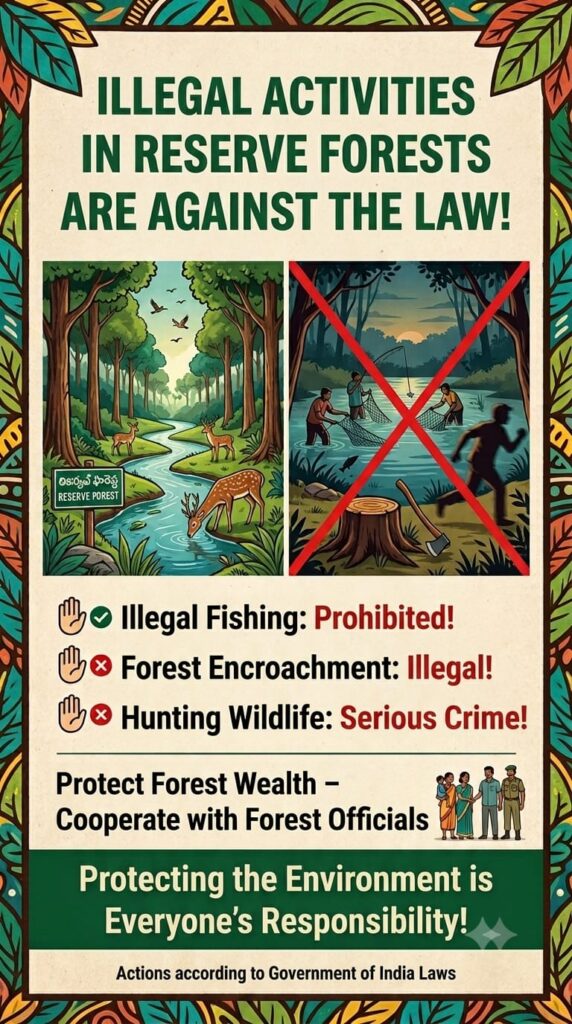
*Obstruction, intimidation and coercion of forest officials is illegal:*
A matter of great concern in recent times is that some local brokers, traders and politically influential people who are deriving illegal benefits are threatening forest officials, resorting to physical attacks and seriously obstructing their duties. Such coercion or intimidation of government officials and law enforcement officials is a serious offence under the Indian Penal Code (IPC). Obstruction and intimidation of government employees while on duty are considered non-bailable offences under the law. The government, district administration and police protection forces should fully support the forest officials who are working at the risk of their lives to protect forests and biodiversity. Since the future of forests and environment is more important than political or local interests, it is urgent to ensure that anyone who obstructs the duties of the authorities is punished by strict legal penalties.
*Environmental Conservation as National Wealth: Civic Responsibility and Collective Participation:*
Forests, wildlife and water resources do not belong to any one region, community or individual; they are the collective national wealth of all the people of the country, essential for the survival of future generations. Conserving and developing these invaluable natural resources is not only the responsibility of government departments but also the moral and integral responsibility of every citizen. Article 51A (g) of our Indian Constitution clarifies a fundamental duty for every citizen — it is the responsibility of everyone to preserve, enhance the natural environment including forests, lakes, rivers and wildlife and to be kind to all living beings. Ignoring this constitutional principle and destroying forest resources for selfish purposes will be detrimental to the interests of the country.
*If forests are not protected, the ecosystem is at risk:*
The challenges of climate change and global warming that are currently unfolding around the world are putting the very survival of humanity in question. Extreme variations in rainfall, depletion of groundwater, flash floods and loss of biodiversity are all direct consequences of the reduction in forest area. At such a critical time, illegal activities such as illegal entry into reserve forests and fishing, setting fire or extracting resources further disrupt the ecological balance. Therefore, the society should fully support the strict actions of the forest department officials who are constantly working to protect forests and wildlife at the field level. Collective participation: Forest conservation cannot be achieved by implementing laws alone; a powerful protection system should be formed by the coordination of civil society, environmental NGOs, local people and government machinery. Strict preventive measures: Strict legal measures should be taken against any forces that encroach on forests and water bodies or engage in illegal trade. Future perspective: Human society has a future only if the environment is safe. Therefore, it is imperative that everyone becomes a partner in protecting the national asset of forests.
*Law is paramount, forest wealth is preserved and future security is assured:*
Actions such as abusing the press or media to openly threaten forest department officials and inciting local people against government institutions in the matter of protection of reserve forests should be stopped immediately; because no matter how influential or in what position, people have to abide by the law and cannot be above the law. Attempts like illegally converting forests into wastelands, poaching fish in water bodies or plundering other natural resources, even though they may seem like small things, pose an irreparable threat to the entire ecosystem. That is why the strict legal action being taken by the authorities against those who commit illegal acts on forest boundaries and in protected areas is completely justified and very necessary. It is the fundamental responsibility of everyone to respect the constitutional law and to support the officials who are performing their duties impartially. Since the future of our future generations will be safe only if we can strictly protect nature and forest wealth today, it is an urgent situation that the entire society should set aside selfish interests and become a partner in the protection of forests.
*— Ravi Babu Pittala, Environmentalist, Former Assistant Professor, J.N.T.U.H., Hyderabad and J. S. Orugallu Wildlife Society NGO, Telangana. Contact: +91 9849425271*