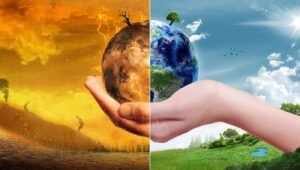
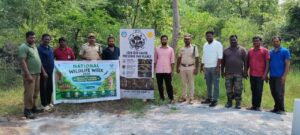
Disrupting the Dharma of Nature.. Human Writing Biome’s Death Warrant
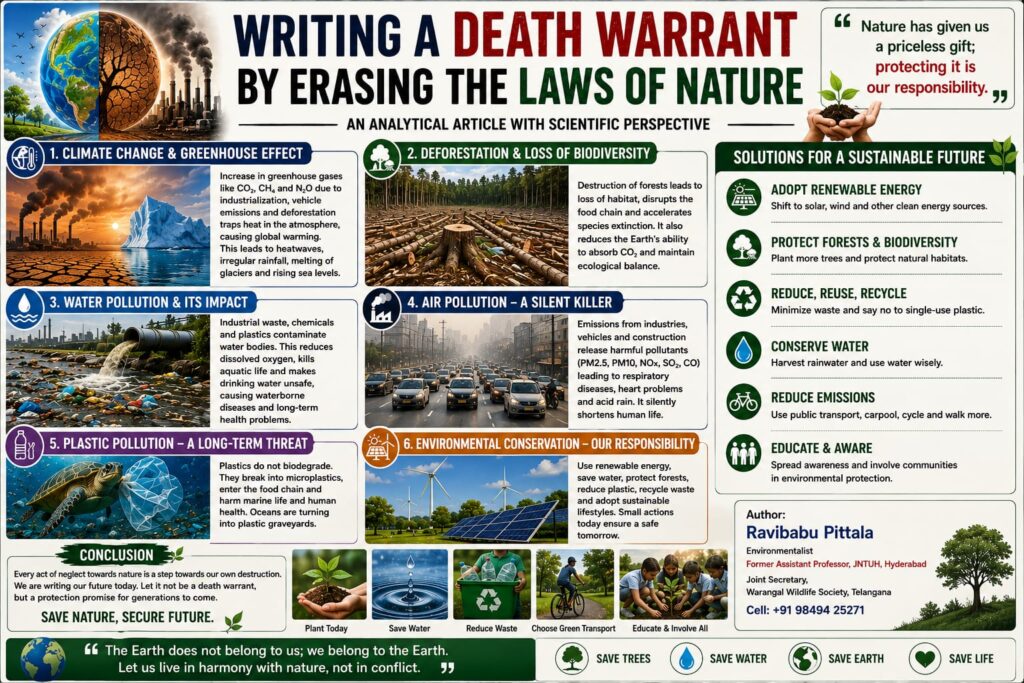
*Disrupting the Dharma of Nature.. Human Writing Biome’s Death Warrant*
*Author: Ravi Babu Pittala, Environmentalist.*
*Balance of Nature – Human Responsibility*
Nature is a wonderfully balanced ecosystem formed by the combination of billions of living beings, flora, air, water, and soil. Each small element has a unique role in this; while trees provide oxygen, animals and microorganisms revitalize the environment through an interdependent life cycle. However, the technological and industrial progress achieved by modern man is putting this natural balance in serious danger. Our small carelessness and immediate selfishness, such as cutting down forests indiscriminately, getting rid of plastic waste, and polluting water resources with industrial chemicals, are turning into major disasters such as global warming, untimely rains, and severe droughts that are shaking the world today. Once the balance of nature is disturbed, all the climatic systems will be disrupted, and ultimately the survival of humanity will be threatened. Therefore, if our future generations are to live safely, it is absolutely essential that we act responsibly towards the environment, use resources economically, and preserve biodiversity.
*Climate Change – Greenhouse Effect and Global Warming*
The greenhouse effect is a wonderful natural process that regulates the temperature necessary for the survival of life on Earth. This is possible by absorbing the heat from the sun by certain gases in the atmosphere and keeping the Earth warm; without this process, the Earth would turn into ice and be lifeless. However, in the modern era, due to human activities such as excessive industrialization, excessive use of vehicles, burning of fossil fuels (coal, petrol) and widespread deforestation, the amount of greenhouse gases such as carbon dioxide (CO_2), methane (CH_4), and nitrous oxide in the atmosphere is increasing to dangerous levels. These excess gases are trapping the heat from the sun into space and forming a dense layer around the earth, which we call “global warming”. Due to this abnormal increase in temperatures, climate change is occurring worldwide, causing severe heatwaves, erratic monsoons and severe imbalances in rainfall, and the rapid melting of glaciers in the polar regions, leading to rising sea levels. This environmental crisis is not just limited to climate change, but is also becoming a major challenge to biodiversity loss and the very survival of humanity.
*Deforestation – Biodiversity Loss and Environmental Threat*
Forests act as the lungs of the Earth; they purify the atmosphere by absorbing carbon dioxide and releasing the oxygen essential for all forms of life. However, indiscriminate deforestation driven by urbanization, agricultural expansion, and industrialization is inflicting irreparable damage on this ecosystem. The destruction of forests leads to the loss of not only trees but also the habitats of countless animals, birds, and microorganisms that depend on them. This causes severe instability in the food chain, pushing numerous species to the brink of extinction as the survival of one species impacts another. Biodiversity is the cornerstone of environmental stability; a reduction in forest cover and the consequent loss of biodiversity not only accelerate climate change but also strip nature of its ability to regenerate. The loss of this biological wealth jeopardizes future food security, water availability, and a healthy environment; therefore, preserving forests is not merely an environmental duty but a critical responsibility for the survival of humanity. *Water Pollution – Impact on Aquatic Life and Human Health*
Despite the fact that “water is the essence of life,” our water resources are being severely polluted in modern society due to the indiscriminate discharge of industrial waste, chemicals, plastics, and household refuse into rivers, lakes, and oceans. When these chemical and organic wastes enter the water, microorganisms like bacteria consume vast amounts of dissolved oxygen to break them down; this causes oxygen levels to plummet, leading to mass die-offs of fish and other aquatic creatures that are unable to breathe. Water pollution is not limited to surface water alone; as chemical wastes seep into the ground, groundwater becomes contaminated with toxic heavy metals (such as arsenic, fluoride, and lead), causing a drastic decline in drinking water quality. Consuming such contaminated water leads to infectious diseases like cholera, typhoid, and jaundice in humans, as well as long-term health issues such as cancer, kidney ailments, and skin diseases. Failure to protect our water resources will not only result in a severe drinking water crisis in the future but also threaten the very survival of all life on Earth; therefore, it is imperative for everyone to use water judiciously and safeguard it from pollution.
*Air Pollution – A Silent Disaster and Its Impact on Public Health*
Air pollution is a silent epidemic that degrades human health and the environment, often without being visible to the naked eye. Rapid industrialization and urbanization have led to toxic fumes from factories, vehicular emissions (such as carbon monoxide and nitrogen oxides), and fine dust particles (PM2.5 and PM10) from the construction sector, all of which severely compromise the quality of the air we breathe. As these microscopic particles enter our lungs through inhalation and pass directly into the bloodstream, there has been a significant rise in respiratory ailments—such as asthma, bronchitis, and lung cancer—as well as life-threatening cardiovascular conditions like heart attacks and strokes. Beyond its impact on human health, air pollution contributes to acid rain caused by the release of sulfur dioxide (SO2) and nitrogen oxides into the atmosphere; this acid rain not only damages historical monuments but also depletes soil fertility, harms crops, and acidifies water bodies, leading to the death of aquatic life. Therefore, breathing clean air is not merely our right but a fundamental responsibility we owe to future generations; to achieve this, measures such as reducing energy consumption and increasing greenery are essential.
*Plastic Pollution – A Long-term Threat to the Environment and Impact on the Food Chain*
Although plastic has become an integral part of modern human lifestyles, it represents a long-term environmental crisis causing irreversible damage to nature. Plastic materials are non-biodegradable; instead of decomposing naturally, they persist in the soil for centuries, severely degrading soil fertility and groundwater quality. Over time, exposure to sunlight and climatic changes causes plastic to break down into tiny fragments known as microplastics. These hazardous microplastics infiltrate crops through the soil and aquatic life through water, eventually entering the bodies of humans and other organisms via the food chain. This leads to serious health issues, including cancer, hormonal imbalances, and a compromised immune system. Meanwhile, as millions of tonnes of plastic waste enter the oceans annually, marine life—particularly whales, turtles, and seabirds—mistake the debris for food; ingesting it leads to digestive system blockages and, ultimately, death. To curb this plastic menace that is turning the land and oceans into graveyards, it is imperative to completely ban single-use plastics, adopt eco-friendly alternatives, and strengthen recycling practices.
*Environmental Protection – Our Responsibility and Solutions*
The truth that “if we ignore nature, nature will inevitably respond” is clearly visible to us today in the form of natural disasters such as untimely floods, prolonged droughts, and severe storms occurring around the world. The more we damage the ecosystem for our own selfish purposes, the more powerfully it will be reflected on humanity in the form of disasters. To protect the earth and our future from this global environmental crisis, comprehensive solutions need to be implemented immediately. The first of these is to reduce the use of fossil fuels such as coal and petrol and take rapid steps towards renewable energy sources such as solar energy and wind energy. Also, it is very important to plant trees extensively to increase the declining forest area and strengthen laws against cutting down existing forests. To curb the plastic epidemic, single-use plastic should be completely stopped and biodegradable alternatives should be promoted; at the same time, every drop of wasted water should be returned to the ground through rainwater harvesting and pond restoration, and water conservation should be taken up as a movement. No government or law alone can change the environment; only when everyone acts responsibly by making small changes in their daily lives such as increasing greenery and reducing waste, can we overcome this environmental crisis and provide a safe and healthy earth for future generations.
*Last Edict – Death Sentence? Protection Edict?*
It is an undeniable truth that every small negligence and injury that humans show to nature can turn into a major disaster over time and ultimately threaten our own lives. The environmental destruction and excessive exploitation of resources that we are carrying out in the name of modernity is digging our own grave; That is, we are currently writing the future of our future with our own hands. What we are writing should not be a “death warrant” that will lead to the end of future generations, but a “protection warrant” that will keep society safe. It is our ultimate duty to protect nature by realizing the truth that the earth is not only for our needs, but also for the survival of millions of living beings. Only by maintaining greenery, using resources economically and respecting ecosystems can we pass on a safe and healthy earth as an inheritance to our future generations; accepting that responsibility for life is the only way and the ultimate last command before humanity today. Practice the Dharma of nature – that Dharma practice gives life and vitality.
*“Nature is a gift to us; it is our responsibility to protect it.”*
*– Ravi Babu Pittala, Environmentalist, Former Assistant Professor, JNTUH, Hyderabad and Joint Secretary, Orugallu Wildlife Society (OWLS), Telangana. Cell: +919849425271*