Only by preserving flowers can Bathukamma regain its former glory
*Only by preserving flowers can Bathukamma regain its former glory!*
*If forests are destroyed, customs will perish.. If nature disappears, the foundation of festivals will be lost!*
*A unique tradition of worshipping nature with flowers bestowed by nature..*
*There is a shortage of flowers for the Bathukamma festival! Only by preserving forests, trees, bushes, and natural flowers can Bathukamma regain its former glory!*
*Bathukamma is a symbol of the self-respect of Telangana women..*
*Author: Pittala Ravi Babu, environmentalist.*
*Bathukamma.. is a living symbol of Telangana culture!*
India is a diverse country that is flourishing with many languages, religions, cultures, traditions, and customs. Every region of this country has its own festivals, ways of life, and unique customs linked to nature. Among such unique cultural traditions, Bathukamma is a festival that gives special recognition to the state of Telangana. It is not just a festival; it is a symbol of the self-respect of Telangana women, the unity of women, family ties, love of nature, the beauty of flowers, and the diversity of life. Our culture, our tradition, and our philosophy of life are inherent in this festival, which has been going on for generations on the soil of Telangana. There is a social message in every ritual like stacking Bathukamma, gathering around it in a circle and singing and playing, worshiping flowers, and sharing saddi foods . The Bathukamma festival provides women with an unprecedented opportunity to reconnect with their childhood friends, relatives, village women, and childhood memories. This festival brings together the distant bonds between family responsibilities, jobs, married life, and other social situations. The group of women wearing beautiful sarees, clapping and singing around the Bathukammas decorated with flowers is a reflection of Telangana’s cultural life. However, the greatness of Bathukamma is not just in its colors, songs, or the grandeur of the festival. It lies in its core philosophy of collecting flowers naturally found in nature, making Bathukamma with them, and worshipping nature itself. Therefore, preserving Bathukamma is not just about preserving a festival; it is also about preserving the culture of Telangana, the social unity of women, our connection with nature, and the cultural heritage of future generations.
*Village life of that time when Bathukamma was made with wild flowers!*
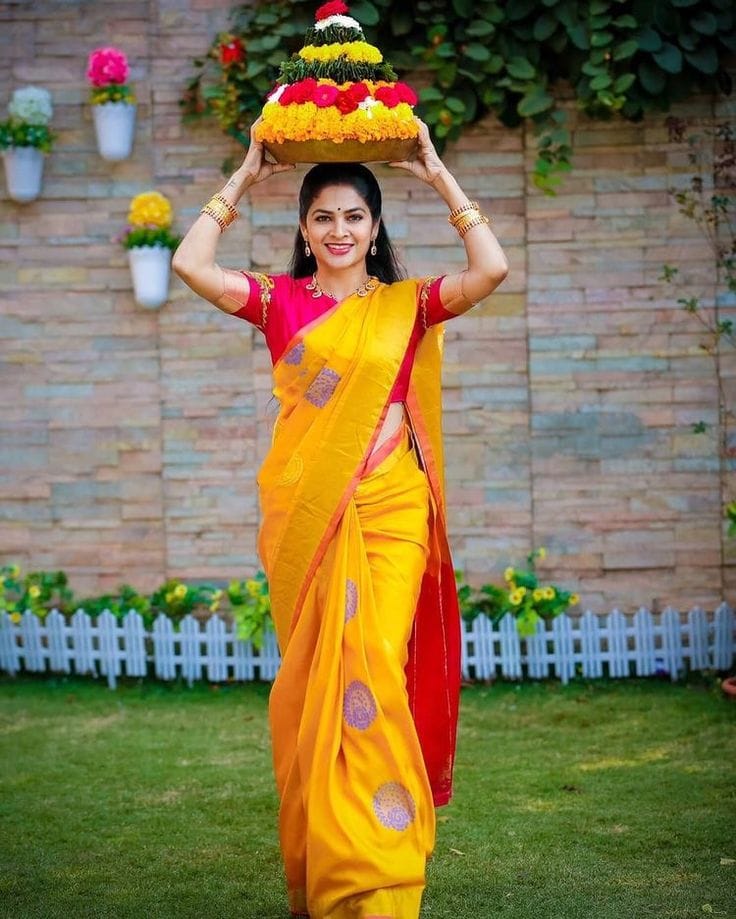
Once upon a time, the Bathukamma festival had a special atmosphere in the villages of Telangana. As soon as the festival approached, joy would spread in the homes. The women used to talk in advance about how to make Bathukamma, which flowers to collect, where to play, and what songs to sing. On the day of the festival, family members would wake up early in the morning. Especially brothers, fathers, husbands, and other family members would go to nearby hills, bushes, meadows, fields, and forest edges to collect seasonal flowers and bring them home. Tangedu flowers, Gunugu flowers, Adivasi Chamanthu, Katla flowers, and wild flowers known by various names locally would add special beauty to Bathukamma. Other local flowers available in some areas were also used as per tradition. Flower collection was not just a task; it was an associated event in which all family members participated. Children would get the opportunity to learn about the names of plants, flower colors, their growth period, and the nature around the village. The elders would explain to the children things like which flowers bloom where, which bushes are most abundant, and in what season wild flowers bloom. Thus, the festival would also continue as a natural environmental education program. The women would clean the flowers brought home and arrange them beautifully according to their colors, shapes, and sizes. Each row was decorated with a different type of flower, starting from the bottom and getting smaller as they went up. Gouramma was made of turmeric and installed at the top. The fragrance of the flowers, the noise of family members, the singing of songs, and the laughter of women mixed together to create a festive atmosphere in the villages. This tradition had an underlying message that man is not the master of nature, but that he should respect and live with gratitude for the wealth bestowed by nature. In the village life of that time, flowers were not just things to be bought; they were living symbols of the biodiversity around us.
*From Tangedu flower to Gunugu flower.. The splendor of nature in every flower!*
The flowers used in the Bathukamma festival have special significance in terms of colors and culture. Tangedu flowers in particular have earned a special place in the Telangana Bathukamma tradition. The recognition of Tangedu flower as the Telangana state flower also indicates its association with the nature and cultures of this region. The areas where Tangedu plants grow naturally, the edges of hills, fields, and bushes along the roads were once adorned with yellow flowers. Gunugu flowers bring another beauty to Bathukamma with their unique appearance. Wild chamanthulas and other regionally available flowers also add diversity to Bathukamma. Although each of these flowers belongs to a different plant, their collection creates a natural masterpiece in Bathukamma. The colors, shapes, and fragrances of the flowers are a testament to the creativity of nature. However, the importance of flowers should not be limited to just Bathukamma decoration. Flowering plants are a food source for many insects. Bees, butterflies, and other pollinators visit flowers to support pollination, a vital process in the ecosystem. The relationships between plants, insects, birds, and other organisms are the basis of the balance of nature. However, we should not assume that every flower is equally useful to every organism; each plant has a unique ecological role. We can help maintain these biological relationships by conserving native wildflowers. Even when collecting flowers for Bathukamma, it is necessary to act without harming the plants. Actions such as cutting down entire bushes, uprooting plants along with their roots, and cutting all the flowers at once should be avoided. Leaving some flowers on the plant, allowing seeds to form, and growing native flowering plants can help with natural reproduction. If we worship flowers, we should also protect the plants that provide those flowers. Respecting flowers means respecting the blooming nature.
*Nine-day Bathukamma.. symbolizes women’s unity and family bonds!*
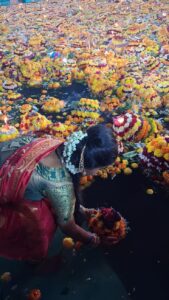
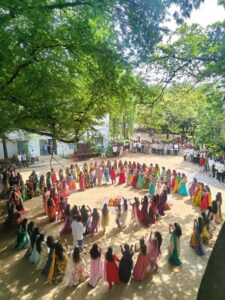
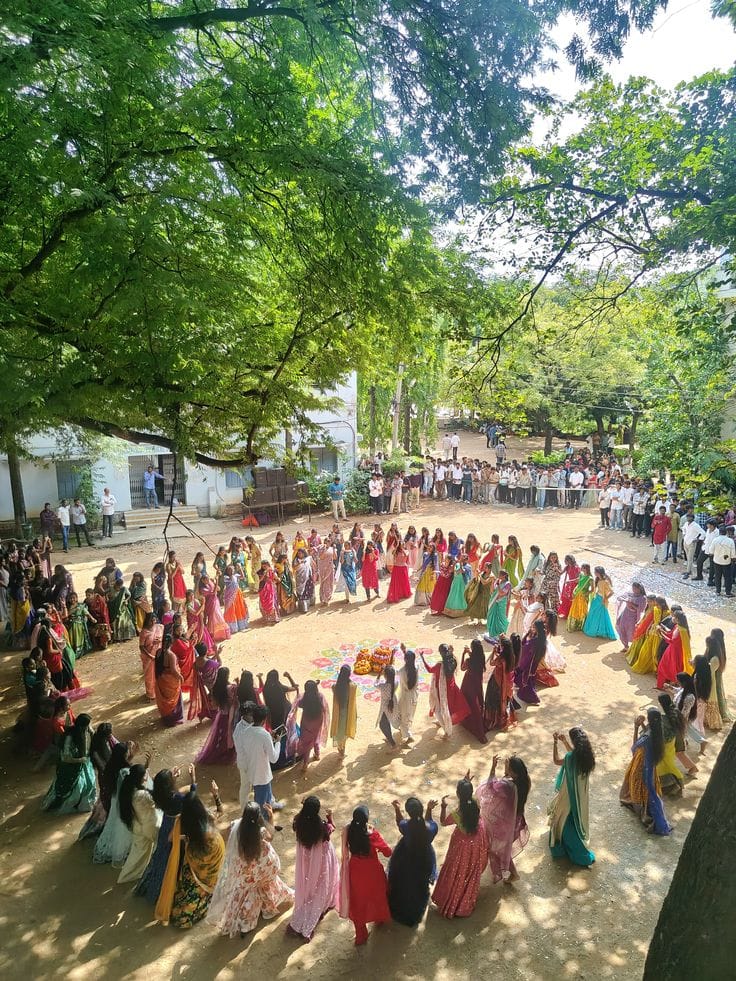
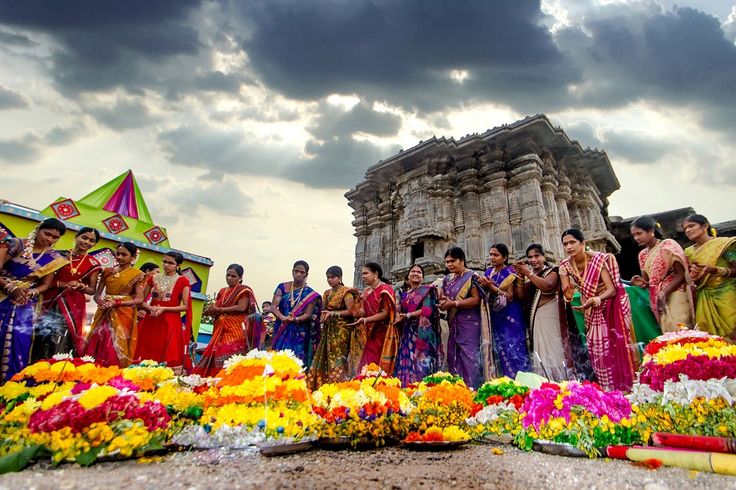
The Bathukamma festival usually lasts for nine days with various rituals. Depending on the regional traditions, the festival is celebrated with names like Engilipoola Bathukamma on the first day and Saddula Bathukamma on the last day. During these nine days, every day, Bathukamma is celebrated, and women gather in groups and sing songs, clap their hands, and dance around the Bathukamma. The Bathukamma songs reflect nature, flowers, family relationships, social life, women’s experiences, local history, and spiritual beliefs. These songs are a cultural treasure that has been passed down from one generation to another through oral tradition for generations. Saddula Bathukamma on the last day is even more special. Women participate in the festival along with their family members and share traditionally prepared saddulas, jaggery roti dishes and other prasadams with each other. Social ties are strengthened by the coming together of childhood friends, relatives, in-laws, and women of the village. It is not necessary for all participants in the festival to be from the same social or economic status. A collective celebration can foster mutual respect, intimacy, and cooperation. On the last day, the Bathukammas are traditionally taken to ponds and other water bodies and immersed while singing songs. Afterward, the women greet each other spiritually and return home happily. This tradition serves as a platform for women to express their social presence. However, in today’s times, while organizing this festival, attention should also be paid to issues such as cleanliness of ponds, water quality, use of natural flowers, and waste management. It is our responsibility not only to continue the tradition, but also to ensure that nature is not harmed in any way. If the unity of women in Bathukamma is linked to environmental protection, this festival will become a more powerful platform for social consciousness.
*Are flowers the only thing missing from the nature festival? Changing environmental conditions!*
The most important thing to think about during the Bathukamma festival is the public perception that the availability of natural flowers is decreasing. In the past, many types of wild flowers were found seasonally on hills, field ridges, roadsides, ponds, meadows, and forest edges in rural areas. Now, that natural environment has changed in many areas. Many factors such as village expansion, urbanization, road construction, agricultural land use changes, removal of shrubs, decline of natural grasslands, deforestation, land encroachment, and excavation of hills are affecting the local flora. Excessive use of chemical herbicides may also pose a threat to naturally growing flowering plants in some areas. Changes in temperatures, rainfall, and flowering periods are likely to occur due to climate change. However, it is not scientifically correct to say that there is a single reason for the shortage of flowers in all areas. Field observations are needed to determine which plants are declining locally, where their habitats are being destroyed, and during which periods flowers are less visible. However, there is a clear concern that loss of natural habitat, decline in plant life, and environmental changes could impact nature-related traditions like Bathukamma. In the past, when people went out of the village to collect flowers, they would see plants painted in different colors. Now, in some areas, people say that they have to travel far away to collect those flowers. Where there is a shortage of flowers, they have to buy them in markets. This change should not be seen simply as an inconvenience in organizing the festival. It could be a social indicator of the changes in the natural flora around us. If flowers are declining for the festival, it also raises the question of how well we are protecting nature. Solving this problem requires not only emotion but also scientific observation, identification of local plants, conservation of natural habitats, and public participation.
*Destruction of forests, hills and bushes threatens the Bathukamma tradition!*
Nature is not only a system that provides air, water and food for human survival; it is also the source of our culture, traditions, festivals, arts, literature and folk songs. The Telangana Bathukamma festival is a great example of this. Many of the natural flowers required for this festival grow under specific soil, humidity, temperature, rainfall and light conditions. If the hills, forest edges, bushes, grasslands and field ridges suitable for their growth disappear, there is a risk of damage to the natural expansion of those plants. Destruction of forests does not only mean the reduction of large trees. The entire ecosystem of small plants, vines, bushes, medicinal plants, flowering plants growing under the trees, insects, birds and other living creatures that depend on them is damaged. Deforestation, illegal encroachment, destruction of hills, expansion of structures, and fragmentation of natural lands can all degrade this biodiversity. Once a native plant community is lost, it is not always easy to restore it in the same area. Therefore, nature conservation should not be limited to a program of increasing the number of trees. Natural forests, shrubs, grasslands, pond surroundings, and native flowering plant habitats should be protected. If the tradition of collecting flowers for Bathukamma is to continue, the natural systems that provide flowers must be alive. If we celebrate this festival with great pomp and at the same time destroy the hills where flowers bloom, it will be a contradiction in our practice. Destroying nature while celebrating a festival that worships nature is not in keeping with our culture. We should not only hold flowers in our hands on the day of the festival, but also protect the plants that provide them throughout the year. Only by protecting forests, increasing native plant wealth, preventing encroachment of natural habitats, and enforcing environmental laws can we give a real future to the Bathukamma festival. If we lose nature, we lose the foundation of tradition; if the foundation is weak, no matter how grandly the festivals are organized, their original spirit will not survive.
*Plastic flowers instead of Bathukamma flowers? A change that goes against the spirit of tradition!*
Today, the use of artificial flowers seems to be increasing due to the decreasing availability of natural flowers in some areas, the increase in flower prices in the market, lack of time, and reliance on decorative items made for convenience. In some places, Bathukammas are being made with plastic flowers, artificial decorations, and other decorative items. However, the real specialty of the Bathukamma festival lies in collecting natural flowers and stacking them to make Bathukamma. Plastic flowers may look beautiful in color. They may not spoil for a long time. Some may choose them because they can be used again and again. But they do not have the same environmental properties as natural flowers. If plastic items are disposed of incorrectly, they can increase the problem of waste in areas such as soil, water sources, canals, and ponds. Due to sunlight and weather effects, some plastic materials break down into small pieces and can also contribute to the problem of microplastics. Plastic flowers, wires, and artificial decorations should not be allowed into the water bodies where Bathukamma is immersed. However, whether there is a need to completely ban the use of plastic, and which materials are harmful in what way, should be examined based on local regulations and the nature of the materials. The main message should be clear: in a nature festival celebrated with natural flowers, natural and environmentally friendly materials should be used as much as possible. Rather than immediately choosing plastic as an alternative because flowers are not available, the root problem of why those flowers are decreasing should be addressed. Steps can be taken such as growing local plants like Tangedu in the backyard of the house, setting up flowering plant gardens in colonies, making plants available through local nurseries, and sustainably collecting flowers. Natural flowers used for the festival should also be used responsibly. Destroying rare plants, plucking them along with their roots, and harvesting excessive flowers should be avoided. Rather than making a big Bathukamma with plastic flowers and declaring it a symbol of environmental protection, it is better to become a society that grows natural plants and flowers. It is the responsibility of all of us to reduce habits that harm nature during this festival of nature worship.
*From a quarter-kilo flower bathukamma to the splendor of nature.. What are we missing?*
Elderly people recall that in the past, some families in rural areas used to arrange large bathukammas, arranging many types of flowers in rows and giving them a unique shape. Some bathukammas were very large and heavy. Family members, relatives, and friends would work together for hours to collect and arrange the flowers. However, memories of the earlier bathukammas weighing up to fifty or sixty kilos should not be considered as general standards applicable to all regions. Similarly, it cannot be said without reliable statistics that all bathukammas today have become smaller. However, in some regions, the size and preparation methods of bathukammas may have changed due to factors such as flower availability, family lifestyle, urbanization, lack of time, and costs. When we observe these changes, the thing we need to think about is not just how big and heavy the bathukamma is. How many types of local flowers are in it? How much damage was done to nature when they were collected? How much of the natural habitat that grows them is left around us? The questions are more important. Rather than thinking that the big Bathukamma is a great tradition, organizing Bathukamma with natural flower diversity, without harming the environment, and with collective participation is a real cultural glory. The family that made the small Bathukamma should not be looked down upon; even if the small Bathukamma is made due to lack of flowers, financial conditions, or other reasons, their devotion, faith, and love for tradition will not diminish. Our goal is not to turn the festival into a competition of sizes. We should protect nature so that flowers are available, teach children the names of flowers, grow local plants, preserve traditional songs, and respect the participation of women. The concern about the lack of flowers should be used for the restoration of nature, not for accusations. Even if the size of Bathukamma decreases, its spirit should not decrease; our efforts should be increased to ensure that the number of flowers does not decrease. What we are losing is not just the size of the flowers. There is also a risk of losing values such as the opportunity to get to know nature closely, the collective labor of families, awareness of local plant wealth, and the transfer of experiences from generation to generation. To get them back, the festival should be linked with the nature conservation movement.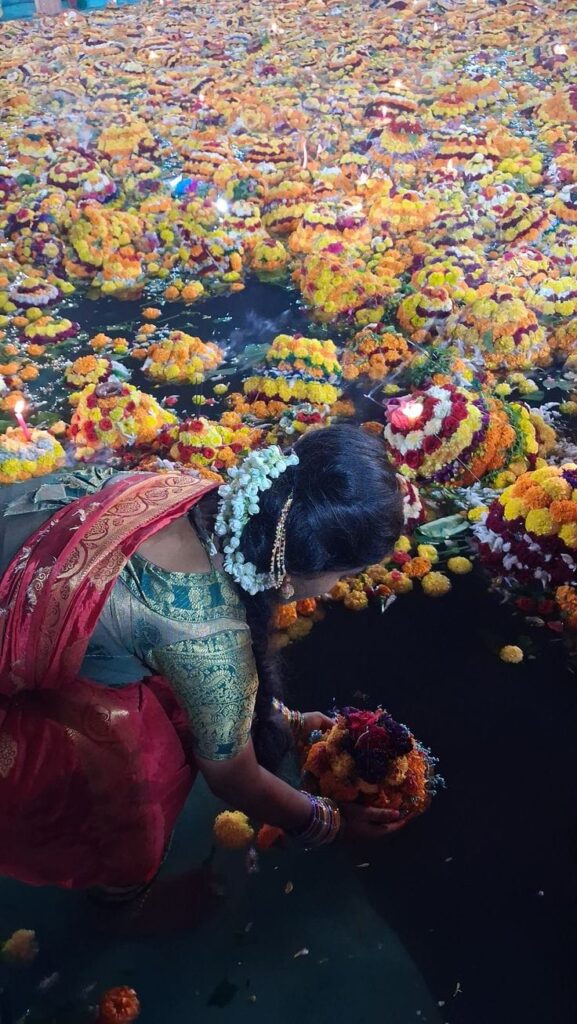
*Governments’ responsibility.. Restore natural wealth for Bathukamma flowers!*
The role of governments is crucial in bringing the Bathukamma festival back to its former glory. Coordination is needed between departments such as environmental conservation, forest conservation, biodiversity conservation, urban planning, pond restoration, and rural development. The Telangana government, forest department, environment department, gram panchayats, municipalities, and urban development organizations should work together to create an action plan for the conservation of local flowering plants. Scientific studies should be conducted on Tangedu, Gunugu, local wild Chamanthu, and other flowering plants found in the region. Which plants grow naturally in which area? How widespread are they? During what season do they bloom? Where are their natural habitats? Where are they declining? The details should be collected and recorded in local biodiversity registers. Plants suitable for local conditions should be identified and their cultivation should be encouraged through forest department nurseries, rural nurseries, schools and colleges. However, instead of planting all plants in the same way in all areas, species suitable for the local environment should be selected. Governments should recognize that environmental damage cannot be completely compensated by cutting down natural forests and simply planting them in their place. Preserving pre-existing natural habitats, preventing encroachment, and preserving the surroundings of hills, grasslands and ponds should be the main priority. Studies should be conducted on the availability of local flowers before Bathukamma and, if necessary, flower gardens should be developed in villages and towns. Local flowering plants can be provided to the public free of cost or at low cost. Guidelines for organizing the festival should include aspects such as reducing plastic decorations, ensuring that waste is not dumped in ponds, and collecting flowers after immersion and converting them into compost. Government schemes should not be limited to promotional activities only during the festival. Plant conservation, biodiversity monitoring, environmental education, and public participation should continue throughout the year. Bathukamma should be used not only as a cultural festival of Telangana but also as an inspiration for a public movement to protect local biodiversity. Then government programs, public participation, and scientific research can move forward with a single goal.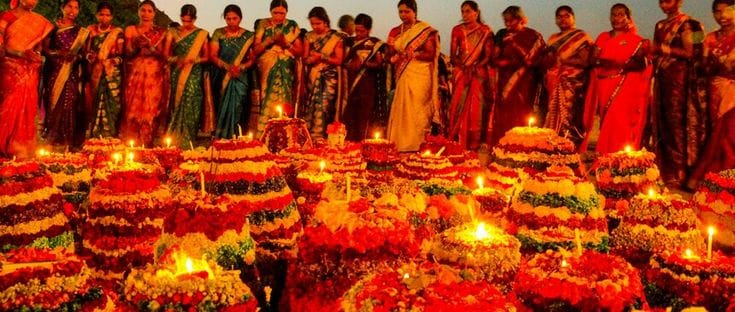
*Citizens, families, women’s groups, youth.. Nature conservation in everyone’s hands!*
Citizens should not ignore their responsibility, thinking that the responsibility to protect nature lies with the governments. Environmental protection should be a part of every person’s daily life. The Bathukamma festival is a wonderful opportunity to put this responsibility into practice. Every family can grow local flowering plants in their home compound, backyard, balcony or in a small available space. Apartment societies can set up community gardens. Colony societies, women’s groups, self-help groups, youth groups, and student groups can jointly undertake programs to grow local flowers used for Bathukamma. When going to the forests to collect flowers, do not pull plants along with their roots; do not cut down bushes; do not cut all the flowers at once. The parts necessary for plants to regrow and form seeds should be left. Rare or endangered plant species should not be collected. Know which flowers are available locally and use them responsibly. Plastic covers, synthetic decorations and other wastes that harm the environment should be reduced during the Bathukamma festival. After immersion, flowers, leaves and other biodegradable materials can be collected and used for composting. However, plastic, metal wires and other wastes should be separated first so that they do not mix. Women’s groups can organize awareness programs on local plant identification, flower conservation and eco-friendly festival management every year before the Bathukamma festival. Programs like teaching children the names of flowers, collecting their photos and recording the growth of plants can be started at the family level. The pledge to plant a tree on the occasion of every Bathukamma is useful; but providing water and care to the planted tree so that it survives and grows is even more important. Not only the number of trees planted but also the percentage of plants that survive should be monitored. The festival should not be concluded with one-day enthusiasm, but should be made a lifestyle of protecting nature throughout the year. Only if every citizen protects nature can the Bathukamma tradition be truly protected.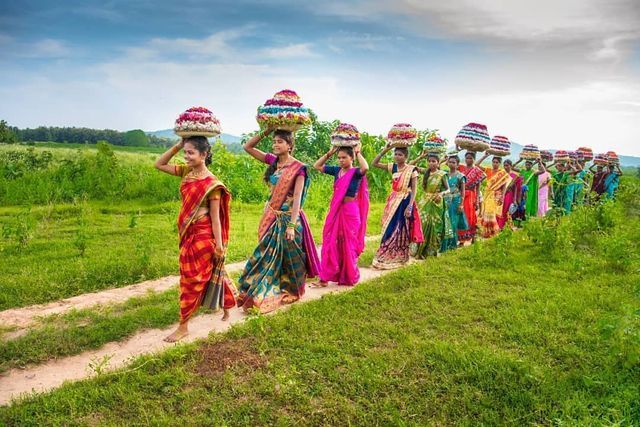
*Educational institutions, NGOs, cultural platforms.. Bathukamma should be turned into an environmental movement!*
To pass on the Bathukamma festival to future generations, educational institutions, NGOs, environmental groups, cultural platforms, and research institutions should work in coordination. Bathukamma should not be organized in schools and colleges just as a song, dance, and decoration competition, but should be made an educational program that introduces the biodiversity behind it. Students can identify flowering plants like Tangedu, Gunugu, Adivasi Chamanthi, etc. found in their area and record their photos, flowering period, growing area, and local names. Digital lists of local flowers can be created with scientifically correct plant identification. However, expert help should be taken in identifying plants; local names should not be confused with scientific names. College ecology departments, botany departments, and researchers can jointly conduct annual studies on the availability of Bathukamma flowers. They can record in which areas flowering plants are declining, what threats are there to their habitats, and what conservation measures are working locally. Voluntary organizations can organize awareness programs in villages and involve people in activities like collecting local seeds, growing plants, establishing flower gardens, and cleaning ponds. However, seed collection and growing plants should be done in a manner that is compatible with the local environment and legal. Environmental groups can develop model villages for the conservation of local flowering plants in collaboration with the forest department, gram panchayats, and schools. Cultural platforms can undertake programs like collecting Bathukamma songs, recording the experiences of older generations of women, documenting traditions, and encouraging local artists. The people of Telangana, who celebrate the festival abroad, can also organize Bathukamma in their residential areas with flowers that are compatible with the local environment. Instead of unnecessarily bringing plants that are not available locally from other places, they should choose alternatives that are suitable for the local environment. Environmentalists, researchers, and cultural activists should come together to introduce Bathukamma to the world as a living tradition, an environmental education platform, and a nature conservation movement. If we do so, along with Bathukamma songs, the message of nature conservation will also be heard all over the world.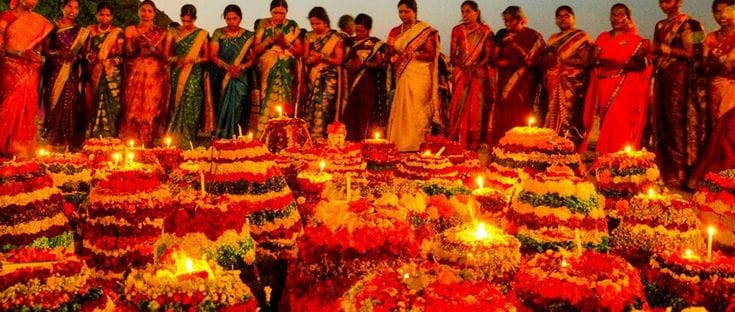
*Let’s give a flower bathukamma to the coming generations.. Culture will survive only if we protect nature!*
The most valuable message that the Bathukamma festival gives us is to live in harmony with nature. While we claim to worship nature, if we destroy forests, dig up mounds, encroach on ponds and neglect natural flowering plants, that worship will have no meaning. The splendor of the festivals lies in the values of life behind them. The flowers in Bathukamma are not just for decoration; they are symbols of the biodiversity of our soil, the seasonal cycles of nature, the collective memories of women, and family bonds. To protect this tradition, we need to take some clear decisions. First, we need to protect the natural forests, mounds, shrubs, grasslands, and ponds. Second, we need to grow local flowering plants in scientific ways and support their natural expansion. Third, we need to follow responsible practices in flower collection. Fourth, plastic flowers, unnecessary artificial decorations, and waste that pollutes water resources should be reduced. Fifth, Bathukamma songs, traditions, flower names, and local knowledge should be taught to children. Sixth, governments, citizens, NGOs, educational institutions, and women’s groups should work together. Seventh, we should examine the availability of flowers, plant growth, and changes in local biodiversity every year and take necessary measures. A plant we plant today can provide flowers to tomorrow’s generation. A mound we save today will provide shelter to many flowering plants in the future. A pond we save today will be useful for the livelihood of people and local biodiversity. To save the Bathukamma festival, we must save the flower that is called Bathukamma; to save the flowers, we must save the plants; to save the plants, we must save their natural habitats. This is the environmental truth that this festival teaches us. Telangana girls should not be in a situation where they have to show only plastic flower Bathukamma to tomorrow’s generations. We should see again the hills where natural Tangedu flowers bloom, the meadows filled with Gunuga flowers, and the countryside adorned with colorful wild flowers. The days when children would identify natural flowers with their mothers, grandmothers, and great-grandmothers and celebrate Bathukamma should return. Only then will our culture live; our tradition will remain alive; our gratitude towards nature will be passed on as a legacy to the generations to come.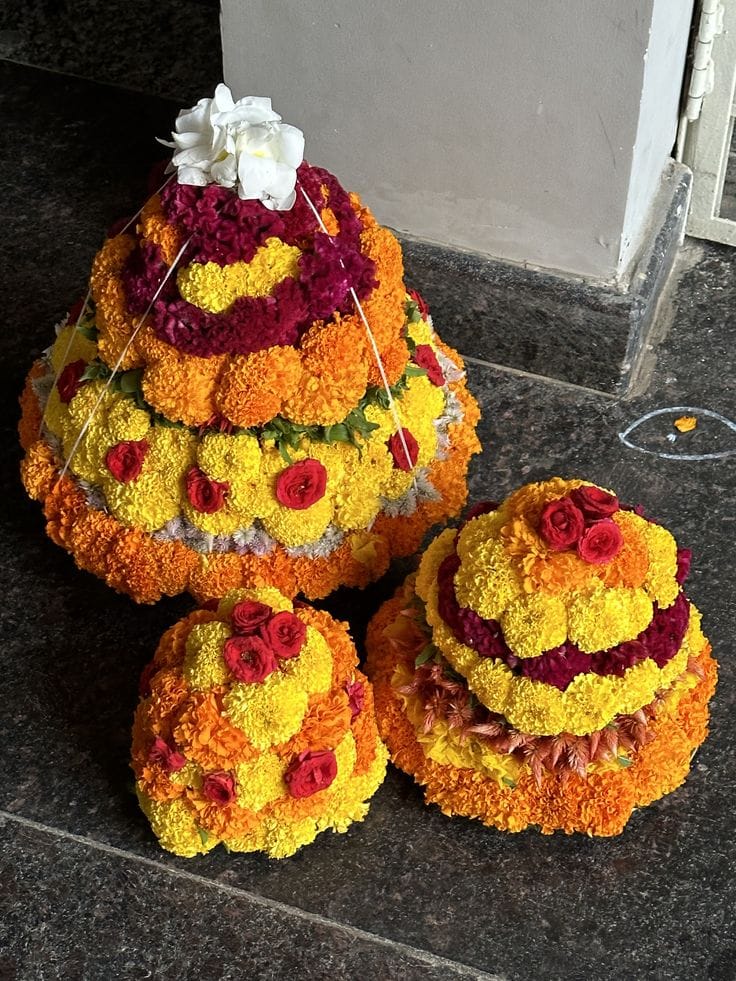
*Let’s protect Bathukamma as “Bathuku — Amma”*
Bathukamma is not just about celebrating flowers.. Loving the nature that provides flowers!. Bathukamma is not just about singing songs.. Preserving the rural nature that gives life to the Telangana songs of those cultures!. Bathukamma is not just about organizing a festival.. Preserving women’s self-respect, family bonds, Telangana culture, and biodiversity!. Bathukamma needs flowers.. Flowers need plants.. Plants need soil, water, and natural habitat. Let’s save the forests! Let’s save the hills! Let’s grow trees! Let’s protect native flowering plants! Let’s keep the ponds clean! Let’s reduce plastic use!. Let’s save nature.. Let’s bring back the former glory of Bathukamma!
This generation should play Bathukamma.. Let’s save nature so that the coming generations can also play Bathukamma with natural flowers!
*With best wishes for Saddula Pathukamma to all the Girlsand Women players…*
*— Ravi Babu Pittala, Environmentalist, Former Assistant Professor JNTUH, Hyderabad and Joint Secretary, Orugallu Wildlife Society (OWLS) NGO, Telangana.
Cell: +91 98494 25271.*