Today’s Biodiversity Conservation – Tomorrow’s Ecological Sustainability
*Today’s Biodiversity Conservation – Tomorrow’s Ecological Sustainability*
*– Comprehensive International Action is Essential for Sustainable Biodiversity Protection*
*– Coordinated Local Actions – Global Impact*
*– Holistic Conservation: From the Earth to its Biodiversity*
*– Our Collective Responsibility for a Sustainable Future of Air, Land, and Aquatic Biodiversity*
*A Call to Action for Resolving Local Issues on the Occasion of the International Day for Biological Diversity*
*– 2026 Theme: “Acting Locally for Global Impact”*
*Author: Ravibabu Pittala, Environmentalist*
*What is the International Day for Biological Diversity?*
The International Day for Biological Diversity is celebrated every year on May 22nd. Its primary objective is to raise public awareness regarding the protection of the diverse forms of life and ecosystems found on Earth, as well as to halt the destruction of nature. This date was chosen to commemorate the adoption of the international treaty known as the ‘Convention on Biological Diversity’ (CBD) on May 22, 1992. The main goals of this treaty are to conserve biodiversity, ensure the sustainable use of natural resources for the benefit of future generations, and ensure the equitable sharing of the benefits derived from genetic resources. Global biodiversity is currently facing a severe crisis due to rapidly changing environmental conditions. Anthropogenic factors—such as climate change, deforestation, pollution, and the overexploitation of natural resources—are disrupting the ecological balance and pushing numerous species to the brink of extinction. These changes are not limited merely to the loss of a few species; they undermine the stability of entire ecosystems, thereby endangering life systems across the planet. A decline in biodiversity manifests in consequences such as the disruption of food chains, the impairment of the water cycle, and the deterioration of air quality. Under these circumstances, the conservation of biodiversity is absolutely essential. This is not solely the responsibility of governments; it is paramount that every individual acts responsibly within their own capacity. We can effectively address this crisis only by conserving the natural resources within our local communities—including flora, fauna, microorganisms, macro-organisms, forests, wildlife, rivers, lakes, air, and soil. Small-scale actions undertaken locally can ultimately lead to significant global changes.
International Day for Biological Diversity is celebrated annually to commemorate the adoption of the ‘Convention on Biological Diversity’ (CBD) on May 22, 1992. The primary objective of this legally binding international treaty is to conserve biodiversity and ensure the equitable sharing of the benefits derived from genetic resources. The theme for the year 2026 is “Acting Locally for Global Impact.” In essence, this slogan underscores the fact that global environmental changes originate from the small, local actions we undertake. These local initiatives are pivotal in achieving the targets of the ‘Kunming-Montreal Global Biodiversity Framework,’ which aims to conserve 30% of the world’s land and water resources by 2030. This day serves as an urgent reminder of the current biodiversity crisis and the threats facing our planet.
To mark the International Day for Biological Diversity, a highly prestigious global flagship event is scheduled to take place in South Africa on May 22, 2026. This year’s campaign is being organized in alignment with the currently operational Kunming-Montreal Global Biodiversity Framework, under the special slogan “Acting Locally for Global Impact”—a theme that emphasizes the significance of local efforts in driving global change. The celebrations are set to commence on May 22 at 11:00 AM local time. Distinguished figures, including Astrid Schomaker—Executive Secretary of the Convention on Biological Diversity (CBD)—and H.E. Willie Aucamp, South Africa’s Minister of Forestry, Fisheries, and the Environment, will participate as guests of honor at this high-level gathering. This program will primarily focus on a key validation workshop centered on South Africa’s ‘National Biodiversity Strategy and Action Plan’ (NBSAP). For a global audience interested in environmental conservation, the official proceedings of this event will be live-streamed via the official platform of the ‘Convention on Biological Diversity.’
On the occasion of the 2026 International Day for Biological Diversity (May 22), a unique logo was released, reflecting the theme announced by the United Nations: “Acting Locally for Global Impact.” This logo package is available in the six official languages of the United Nations, adapted for both digital and offline use. The ‘fingerprint’ motif within the logo serves not only as a reminder of every individual’s personal responsibility in environmental conservation but also illustrates how our local actions can generate a positive global impact—a ‘rippling effect.’ Furthermore, the logo has been designed using various colors to represent the 23 targets of the Kunming-Montreal Global Biodiversity Framework (KMGBF). As partners in achieving the global goal of halting biodiversity loss by 2030, the Secretariat of the ‘Convention on Biological Diversity’ (CBD) requests that this logo be used during local celebrations to raise awareness through social media platforms (such as Trello boards).
According to United Nations (UN) reports, human activities have already severely altered three-quarters (75%) of the Earth’s land surface and nearly 66% of its marine ecosystems. Furthermore, the UN warns that approximately one million animal and plant species worldwide are currently at risk of extinction. To address this severe crisis and to become partners in environmental conservation, individuals, schools, and cities are urged to take initiative through the three key pillars of this International Day for Biological Diversity campaign: *Look and Learn:* First, explore the diverse forms of biodiversity and unique ecological features present in your local area to enhance your understanding of them. *Connect and Act:* Actively participate in local initiatives such as community nature walks, gardening projects, or citizen science data collection efforts. *Share:* Raise awareness among a wider audience by sharing your environmental conservation activities and photos with others on social media using the official hashtag, *#BiodiversityDay*. For additional resources related to this campaign, and to find details about environmental events taking place near your area, you may visit the United Nations’ ‘International Day for Biological Diversity’ or the official ‘Convention on Biological Diversity’ website portal.
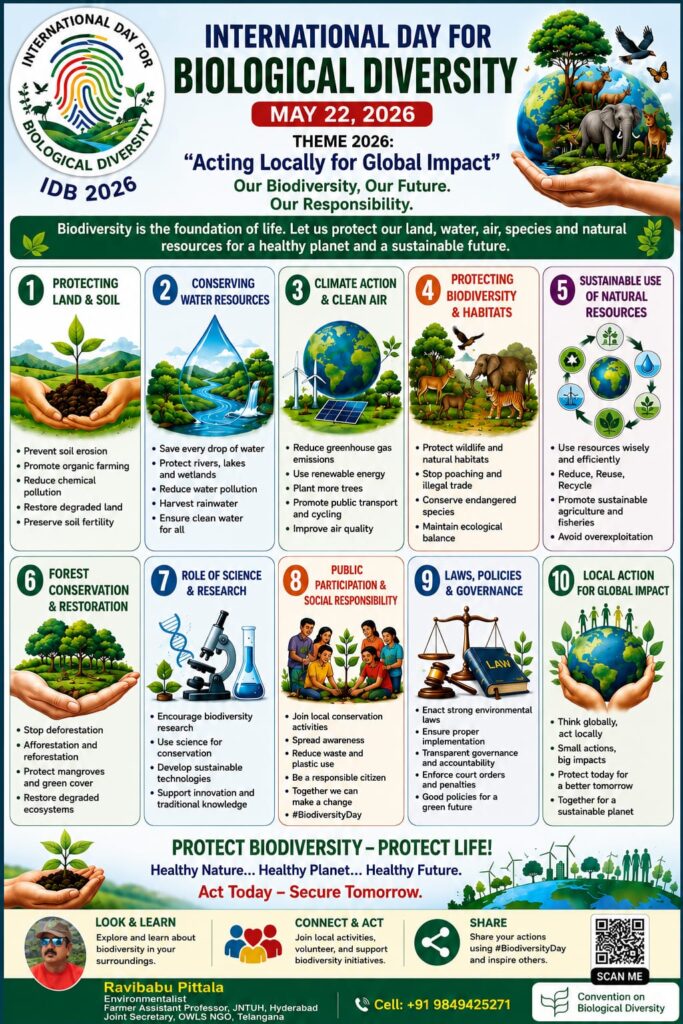
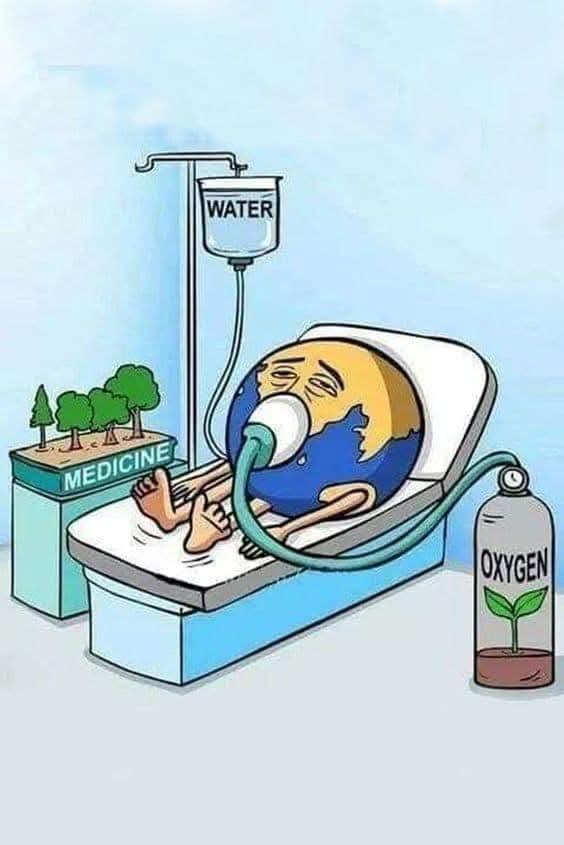
*Global Change through Local Action – Holistic Conservation from Earth to Biodiversity:* The concern I am expressing is, quite literally, a reality. Driven by self-interest and under the guise of development, humanity is misusing science and technology, thereby wreaking havoc upon nature. Against this backdrop, the International Day for Biological Diversity—which we are set to celebrate tomorrow (May 22, 2026)—along with its slogan, *”Acting Locally for Global Impact,”* presents us with a remarkable opportunity. Based on this theme, the following outlines how we can safeguard our ecosystem for future generations: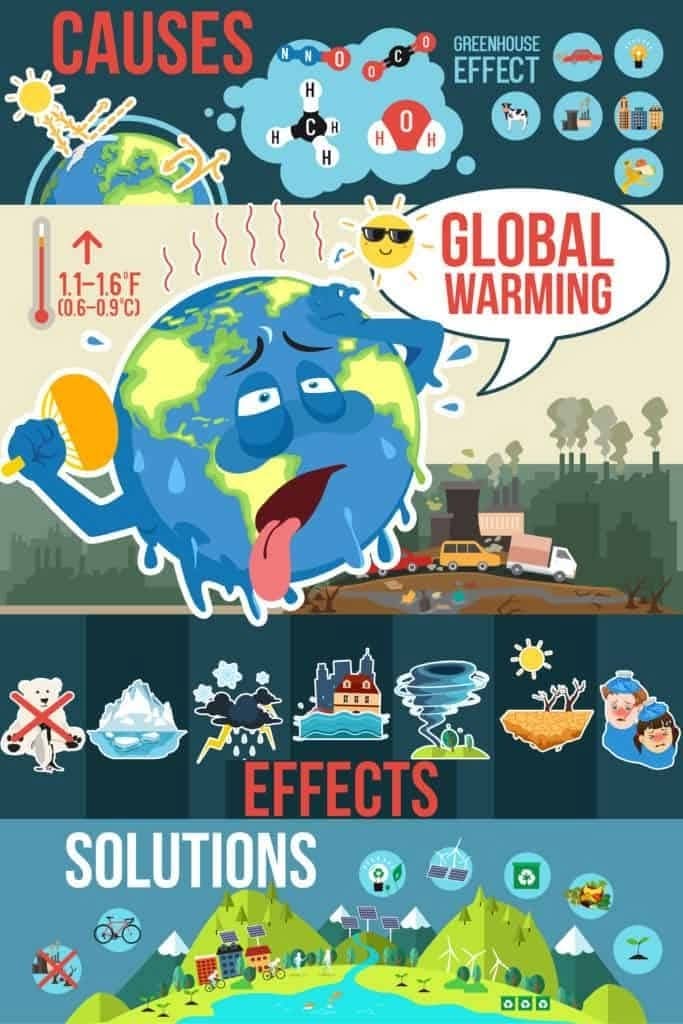
*1. Protection of the Terrestrial Environment and Soil (Protecting Earth and Soil);* The Earth and its soil are becoming severely polluted due to indiscriminate anthropogenic (human-induced) activities. Deforestation and the excessive use of chemical fertilizers are causing the soil to lose its fertility, leading to desertification. In alignment with the 2026 theme, we must promote organic farming at the local level to curb this trend. Everyone can help halt soil erosion by planting trees in their surroundings and undertaking afforestation efforts. We must exert pressure on local governments to enact stricter laws, preventing the destruction of lush forests and hills—under the guise of mining—for the benefit of a selfish few. It is only by protecting the soil that we can ensure the food security essential for the survival of all living beings.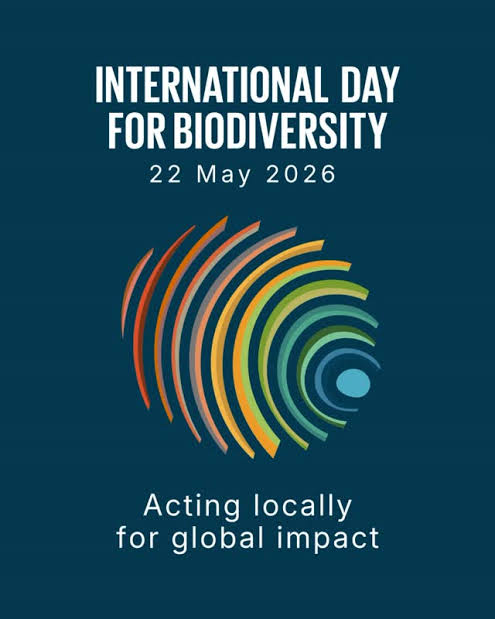
*2. Protection of Aquatic Ecosystems and Water Resources (Preserving Water Bodies and Oceans):* Aquatic ecosystems, such as rivers and oceans, are being severely damaged by industrial waste and plastic pollution. Consequently, over 66% of marine species have reached the brink of extinction. To safeguard our future, we must transform the conservation of water resources into a grassroots movement at the local level. Initiatives such as rainwater harvesting and the desilting and restoration of ponds and wells must be undertaken. Furthermore, the use of plastics should be completely banned, and stringent sewage treatment plants must be established to prevent chemical waste from entering the oceans. Water is the source of life; therefore, it is only by protecting our water resources that we can preserve the biodiversity of aquatic life.
*3. Improving Climate and Air Quality (Combating Climate Change and Air Pollution);* Driven by profit-oriented industries and excessive vehicular usage, greenhouse gas concentrations in the atmosphere are rising, accelerating global warming and climate change. Consequently, organisms are undergoing premature evolutionary changes. As a solution, we must reduce our reliance on traditional fossil fuels (petrol, diesel) and transition toward renewable energy sources such as solar and wind power. Air quality can be improved locally by utilizing public transportation systems and promoting cycling. We must hold our governing bodies accountable for strictly enforcing international regulations regarding industrial emissions at the local level.
*4. Protecting Habitats and Ecological Balance;* In an effort to expand human settlements, mankind is fragmenting the natural habitats of wildlife. This disruption to the ecological balance has placed nearly one million species at risk of extinction. To achieve the goal of the ‘Kunming-Montreal Global Biodiversity Framework’—which aims to conserve 30% of the Earth’s land and waters by 2030—we must safeguard local biodiversity hotspots. The survival of living beings can be ensured by protecting wildlife corridors, curbing poaching, and fostering ‘urban forests’ even within cities. True human development lies in recognizing that every living being possesses an inherent right to exist on this Earth.
*5. Awareness, Social Responsibility, and Local Initiative (Awareness and Local Action for Global Impact):* When self-serving forces manipulate laws to their advantage and exploit nature, the awakening of public consciousness serves as the only effective antidote. As emphasized by the call to action for Biodiversity Day 2026, monumental changes invariably begin with small, localized actions. Environmental awareness must be cultivated through schools, colleges, and local community groups. Citizens must raise their voices against government policies that lead to environmental degradation. Furthermore, local support should be extended to global movements through digital campaigns on social media platforms (for instance, by utilizing the #BiodiversityDay logo). We must act responsibly, realizing that the fingerprint on our hands is not merely a mark of our identity, but a powerful tool capable of transforming the future.
*Everyone’s Participation is Essential for Global Biodiversity Conservation:*
*The Role of the Public in Biodiversity Conservation:* People across the globe must transform their lifestyles to be environmentally friendly. Everyone should adopt measures such as reducing plastic consumption, conserving water, planting trees, and participating in initiatives aimed at protecting local biodiversity. Although these actions may appear minor individually, collectively they can generate a profound impact. By bringing about changes at the local level, environmental protection becomes achievable on a global scale.
*The Role of the Government in Biodiversity Conservation:* Governments must strictly enforce laws pertaining to environmental protection. It is imperative to formulate appropriate policies—and implement them rigorously—regarding the control of air, water, land, and plastic pollution, as well as forest conservation and wildlife protection. Politicians and administrators must refrain from adopting policies that destroy nature in the name of development, and instead make decisions that steer toward sustainable development. Government employees must discharge their duties with integrity and play a pivotal role in the enforcement of environmental laws. They should not limit themselves merely to enforcing regulations, but must also take the lead in raising public awareness. It is only through the strict enforcement of laws that we can effectively curb environmental destruction. *The Role of Non-Governmental Organizations (NGOs) in Biodiversity Conservation:* Non-Governmental Organizations (NGOs) play a pivotal role in environmental protection. They mobilize society by raising public awareness, marshalling resources, and identifying solutions to local environmental challenges. By collaborating with these organizations, individuals can bring about more impactful changes.
*The Role of Various Institutions in Biodiversity Conservation:* Educational institutions and scientists are also key stakeholders in the conservation of biodiversity. Measures such as fostering environmental awareness among students, discovering novel solutions through research, and harnessing technology for sustainable development serve as guiding principles for the future. The youth must come forward actively in this endeavor. Civil society must focus on legal measures; questioning activities that harm the environment, engaging in legal battles when necessary, and respecting court verdicts foster a sense of responsibility within society. The mere existence of laws is insufficient; their effective implementation and rigorous monitoring are equally crucial.
Every individual should cherish and care for the nature surrounding them. Every small action we undertake—whether it is planting a tree, conserving water, or reducing pollution—contributes significantly to the well-being of the world. We must move forward with the conviction that *“local actions create a global impact.”* Ultimately, safeguarding biodiversity is a collective responsibility shared by us all. For changes to occur on a global scale, everyone must fulfill their responsibilities at the local level. Only by protecting nature can we ensure a safe living environment for future generations. Therefore, let us take action now and become partners in the conservation of biodiversity.
“Conserving Today’s Biodiversity – Ensures Tomorrow’s Ecological Sustainability”
— Ravi Babu Pittala, Environmentalist, Former Assistant Professor, JNTUH, Hyderabad, and Joint Secretary, OWLS NGO, Telangana. Cell: +91 9849425271.